Hi, I'm Andie.
I live near the Swiss Alps, in Bern, and I love not only melting cheese, but all kinds of Swiss cooking.
Hi, I'm Andie.
I live near the Swiss Alps, in Bern, and I love not only melting cheese, but all kinds of Swiss cooking.

Ten Classic
Swiss Recipes
Although it takes a bit of time, I love making this cake. It looks impressive and tastes wonderful, especially if you aren’t shy with the kirsch that features throughout.
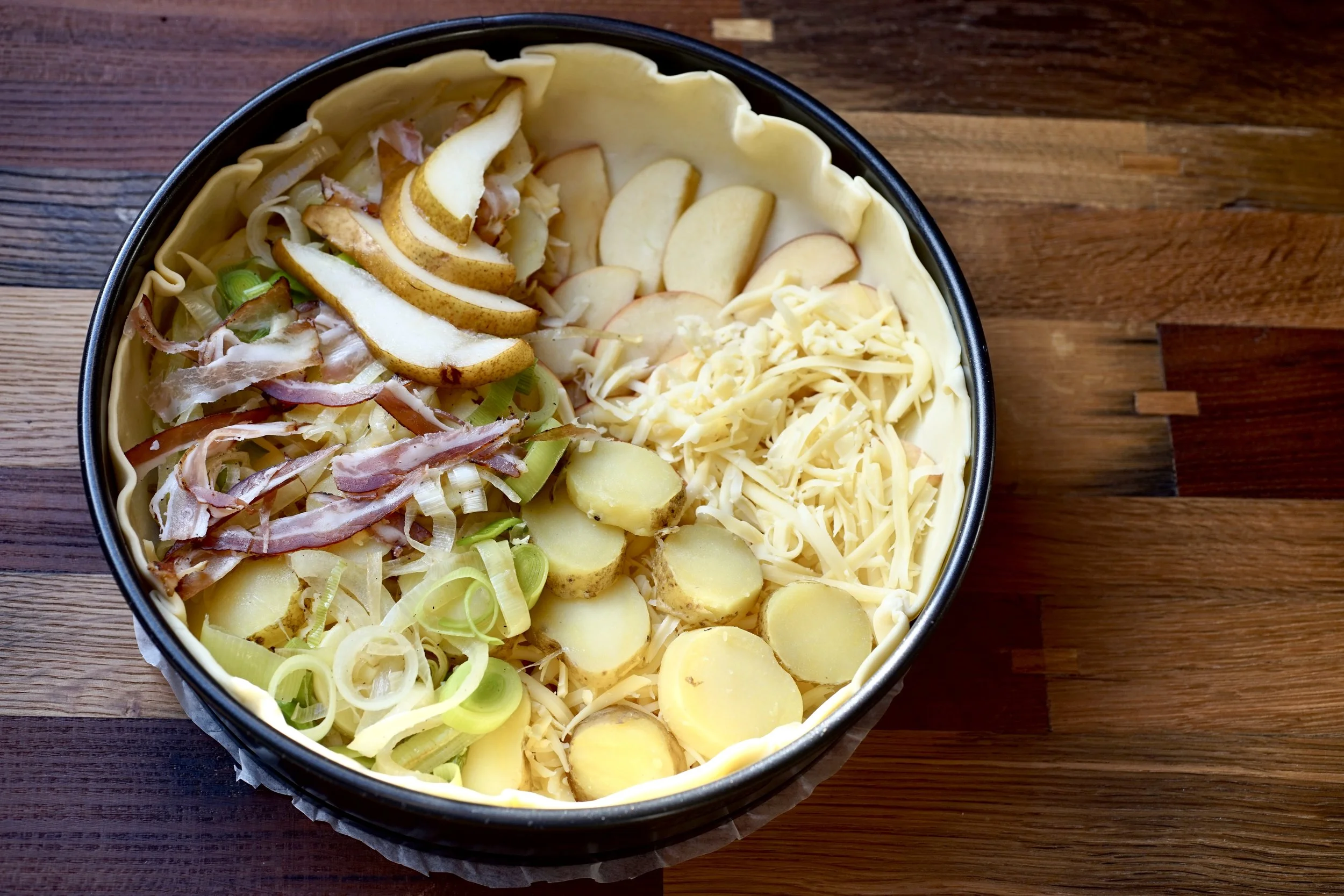
Flaky pastry stuffed with apples, cheese, potatoes, onions, leeks, bacon, and pears.
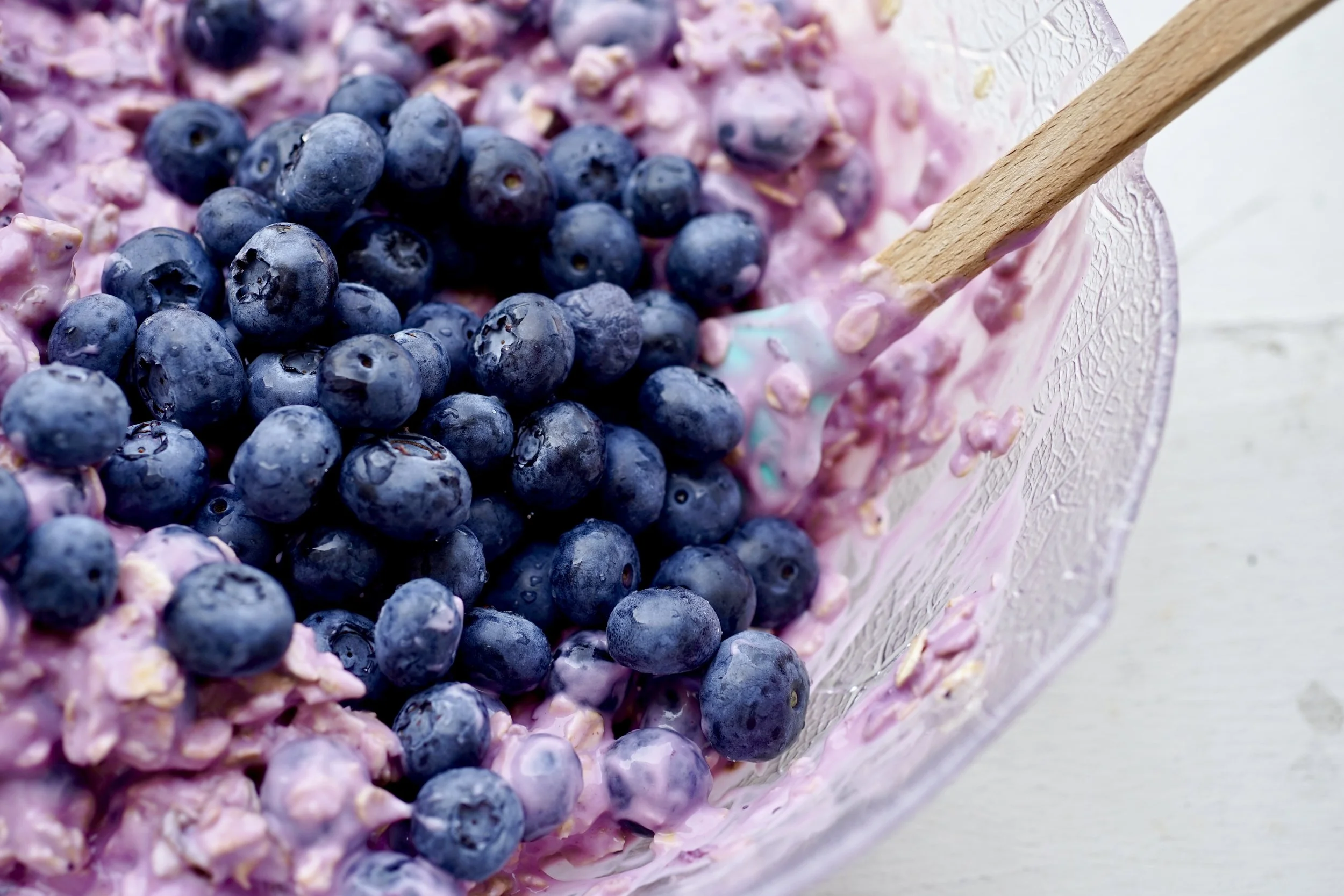
With the mercury just over 30°C at the moment, it's certainly too hot to cook, and luckily my Aunt Vreni recently gave me her super quick and easy recipe for Birchermüesli.
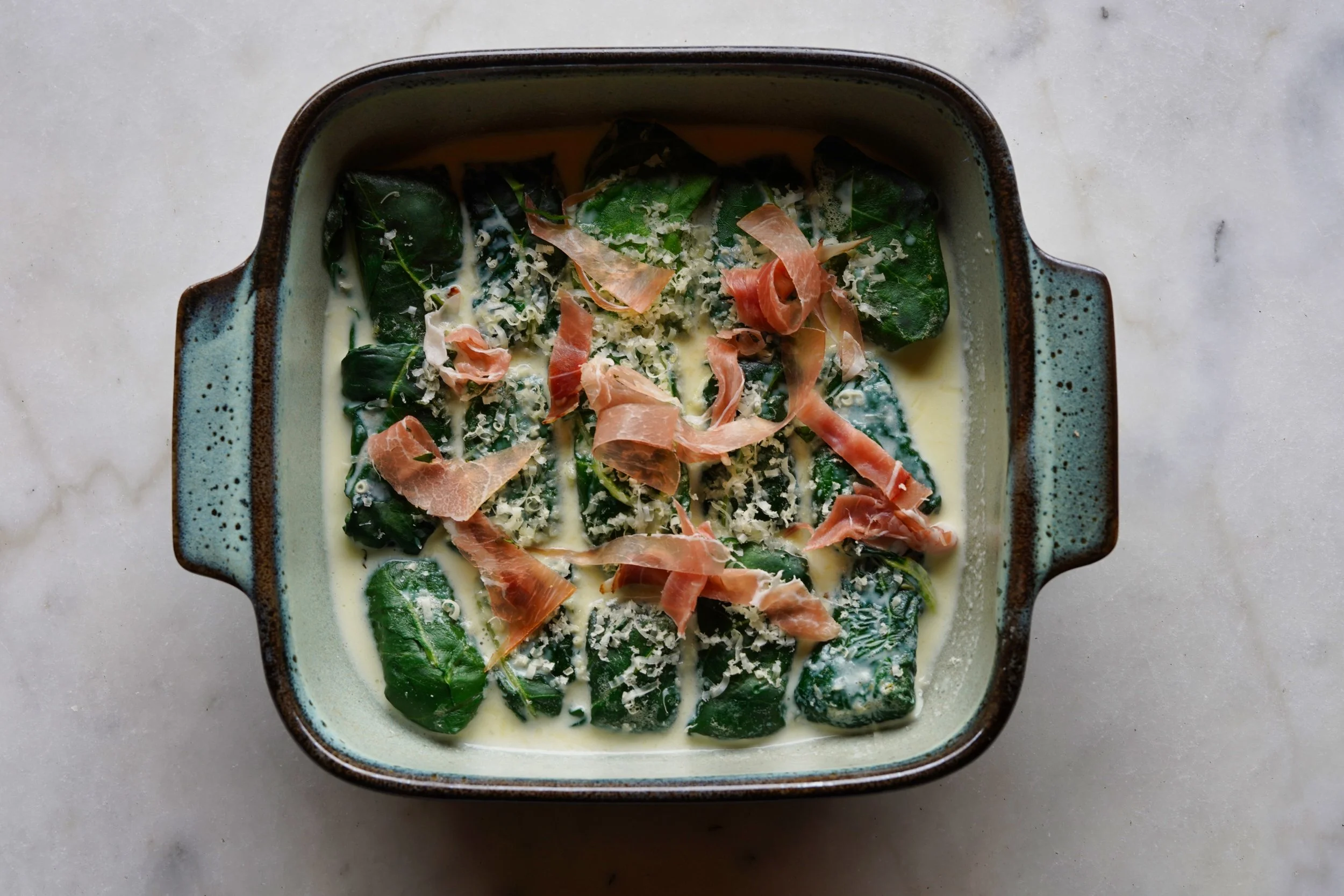
They weren't kidding when they said there were as many versions of Capuns as there are grandmothers in Graubünden.
Capuns are basically a kind of dumpling, wrapped in greens, and simmered in milk or cream.
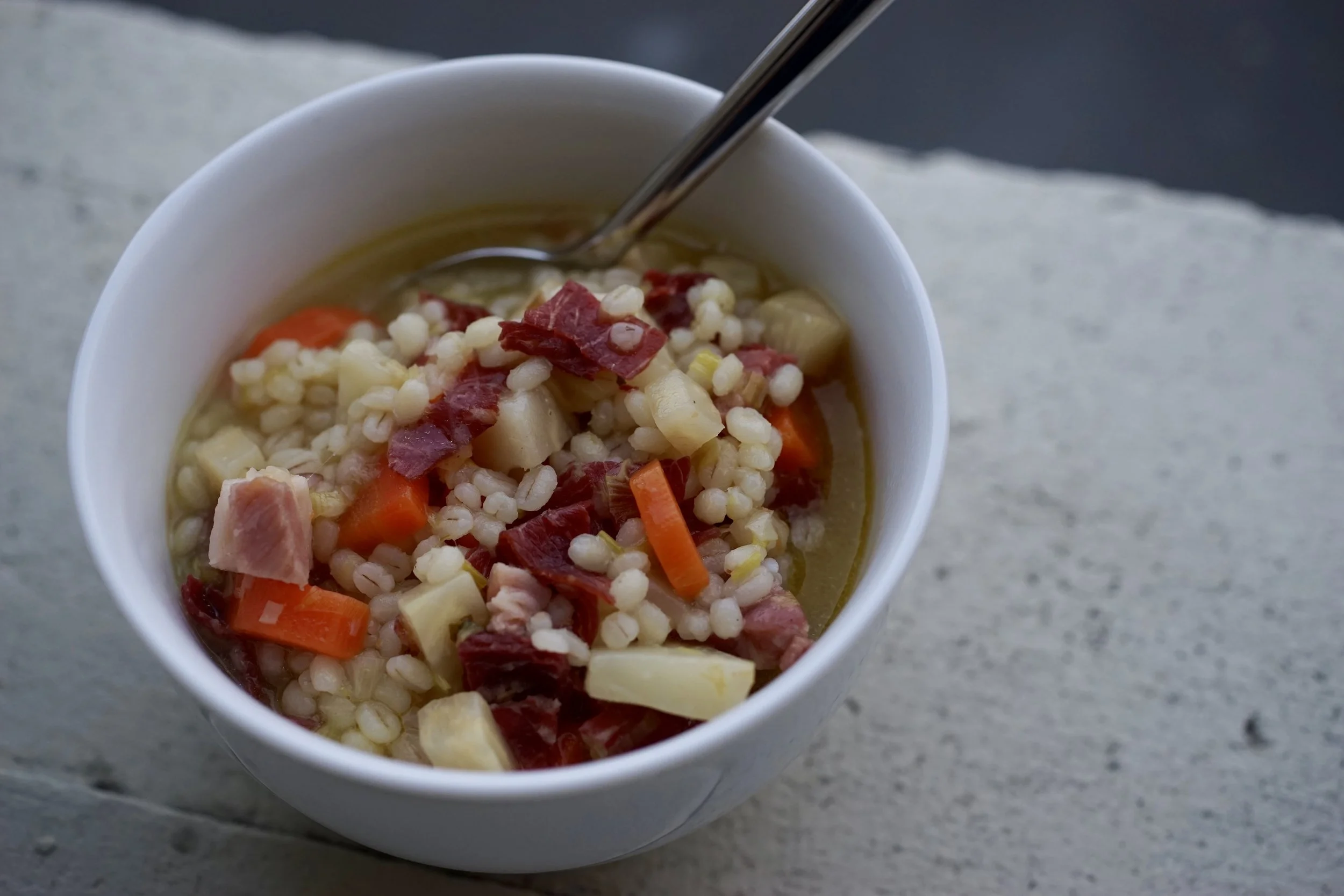
There are 150 valleys in the canton of Graubünden and each probably has a different version of this, the region's most famous soup.
Different meats and vegetables can be used, but the unchanging ingredient is pearl barley, and it's the texture of the barley that makes this soup particularly satisfying.
There is no better use for a bounty of cheese than this classic Swiss cheese tart.
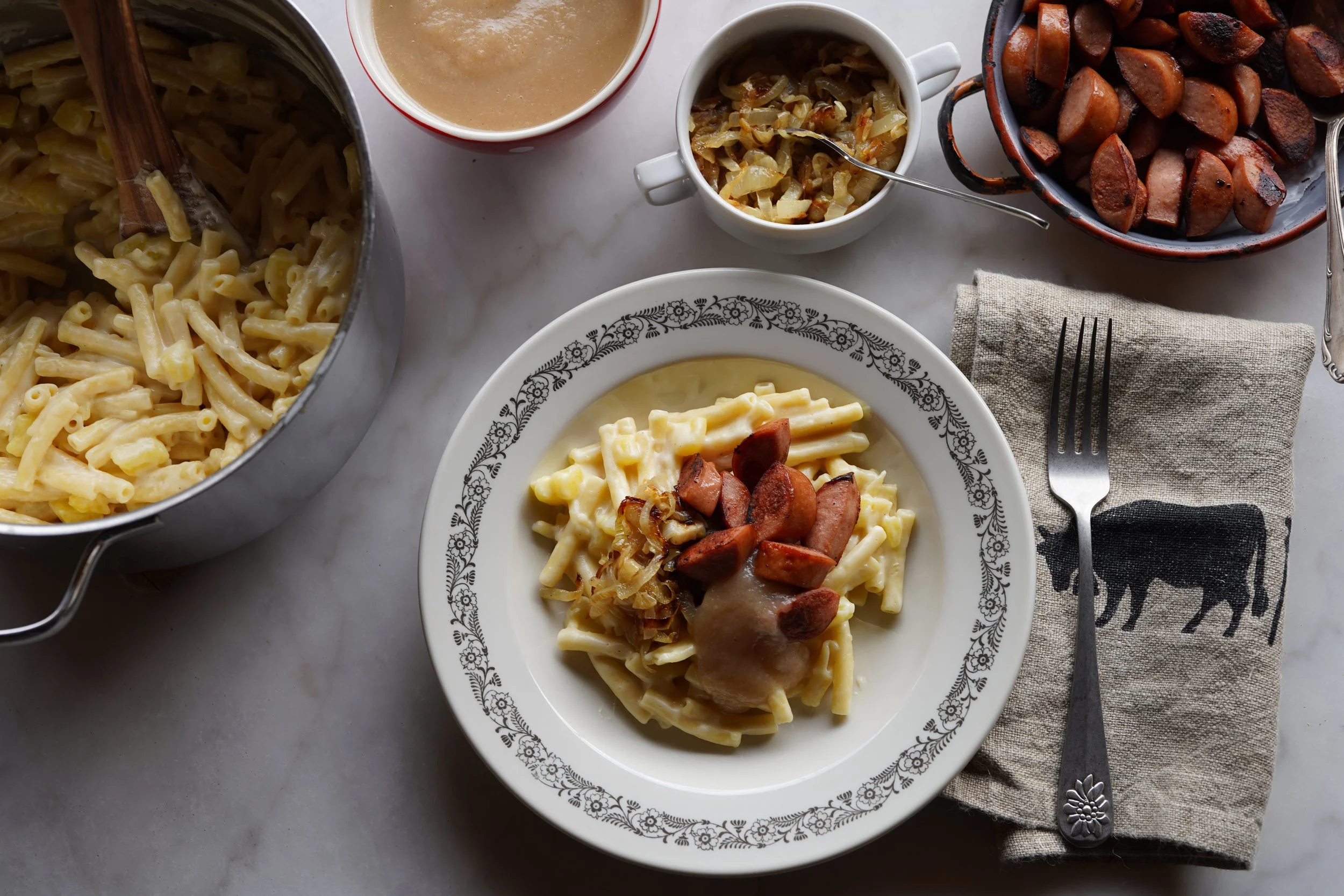
Älplermagrone (or Magronä, depending on your dialect) is the Swiss version of mac and cheese.

Regional Favourites
click here
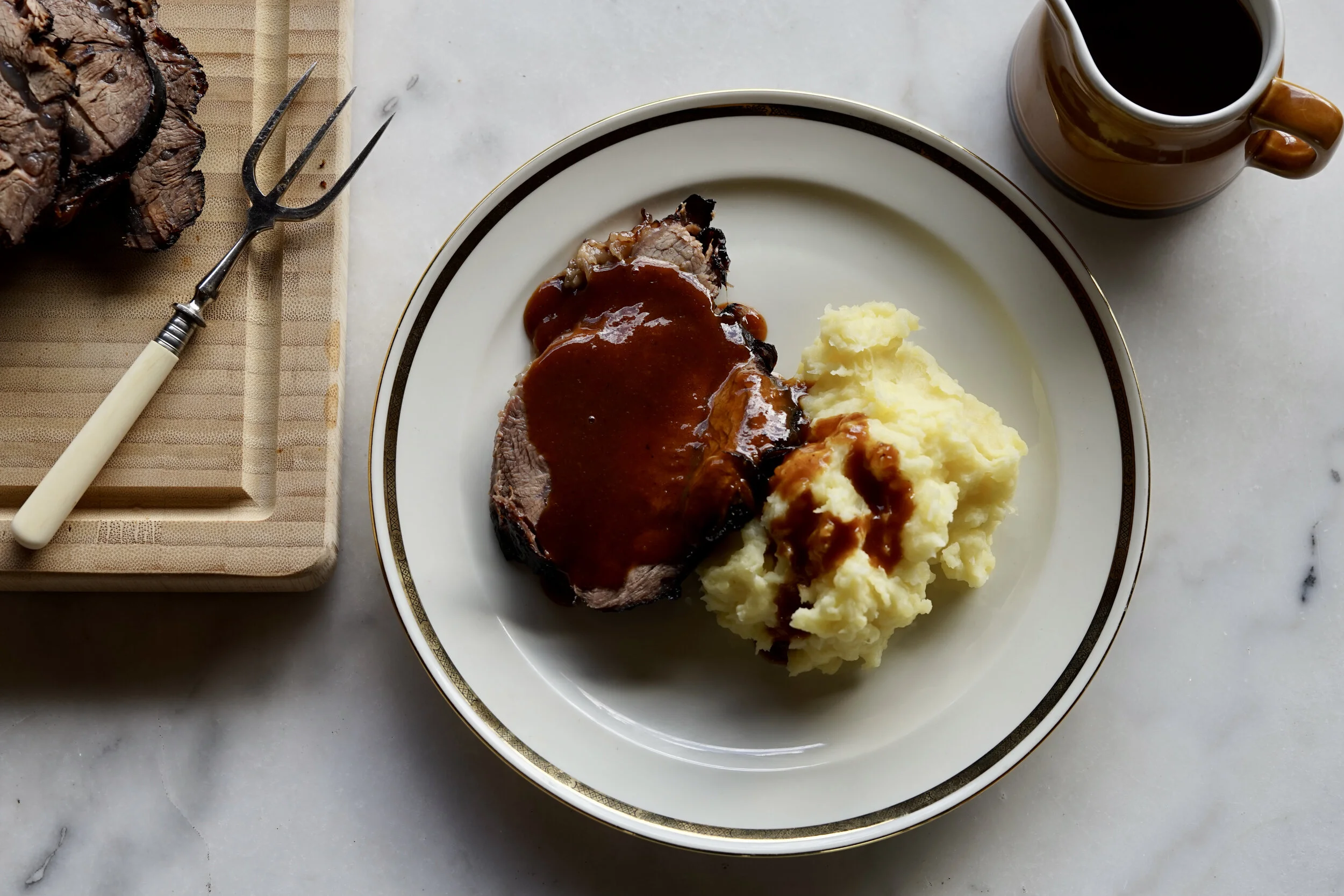
Suure Mocke is braised beef with a slightly sweet and tangy sauce. The sour part comes from a long soak in vinegar and red wine.
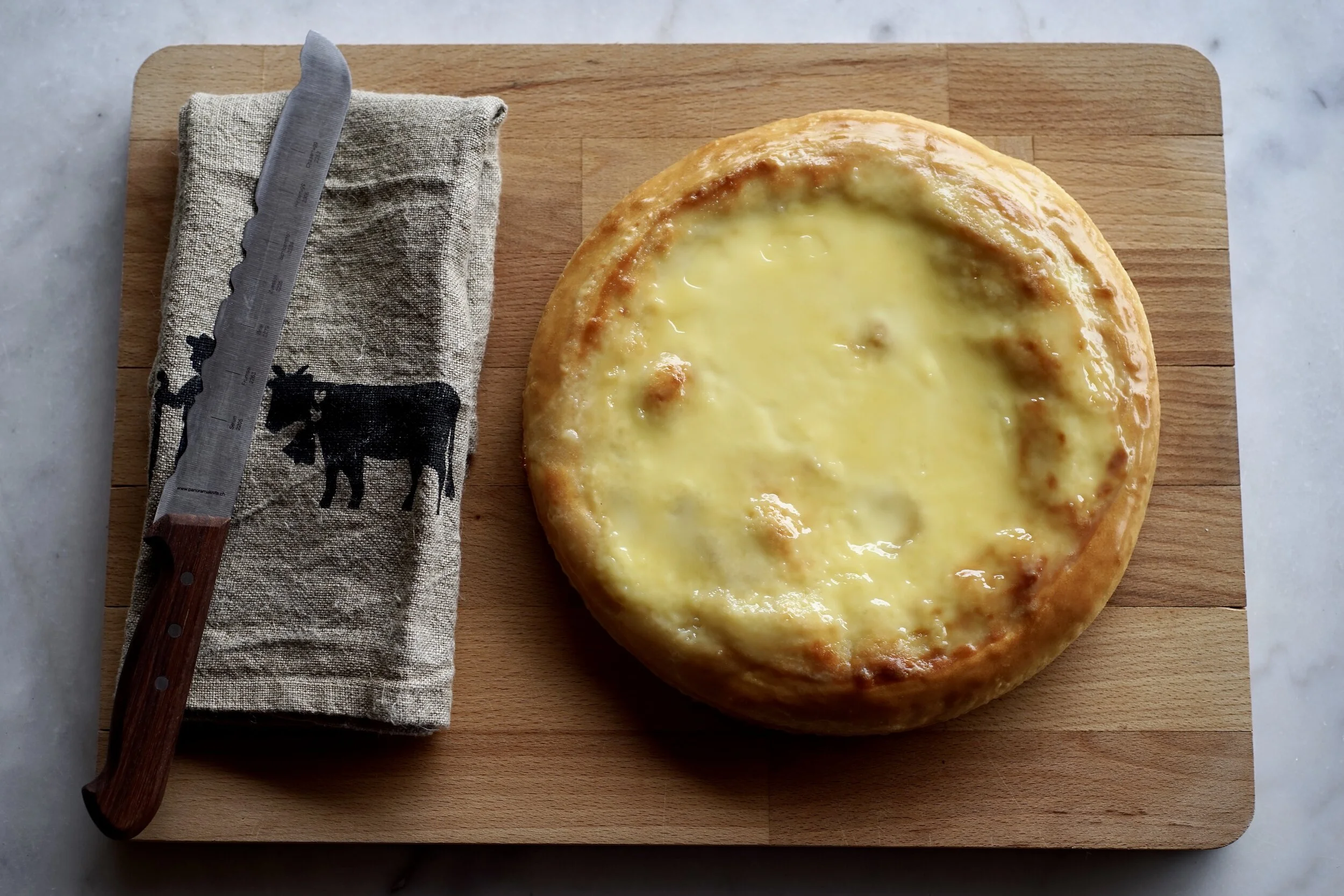
The version from Murten, this bready base is topped with slightly sour, slightly caramelized cream.
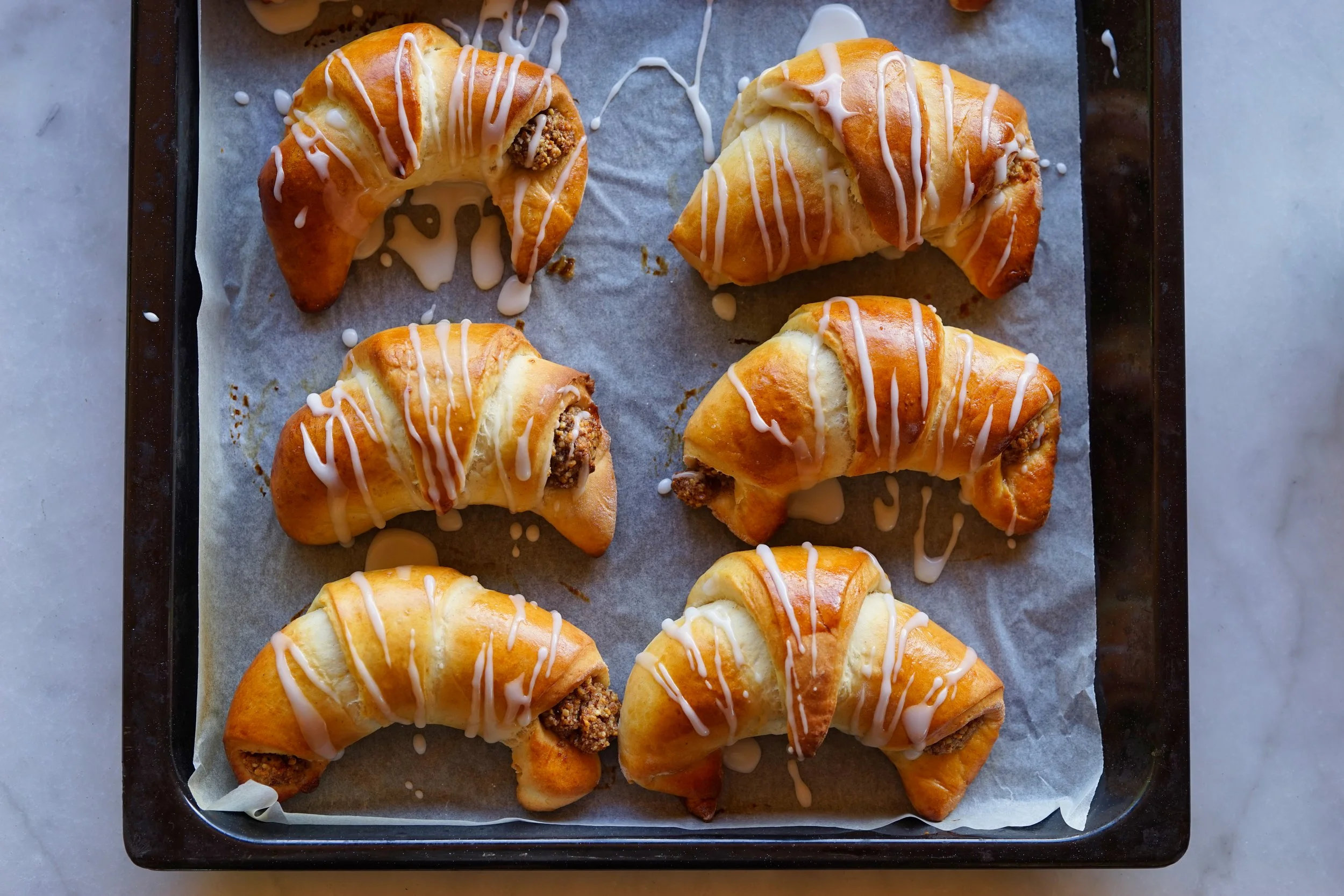
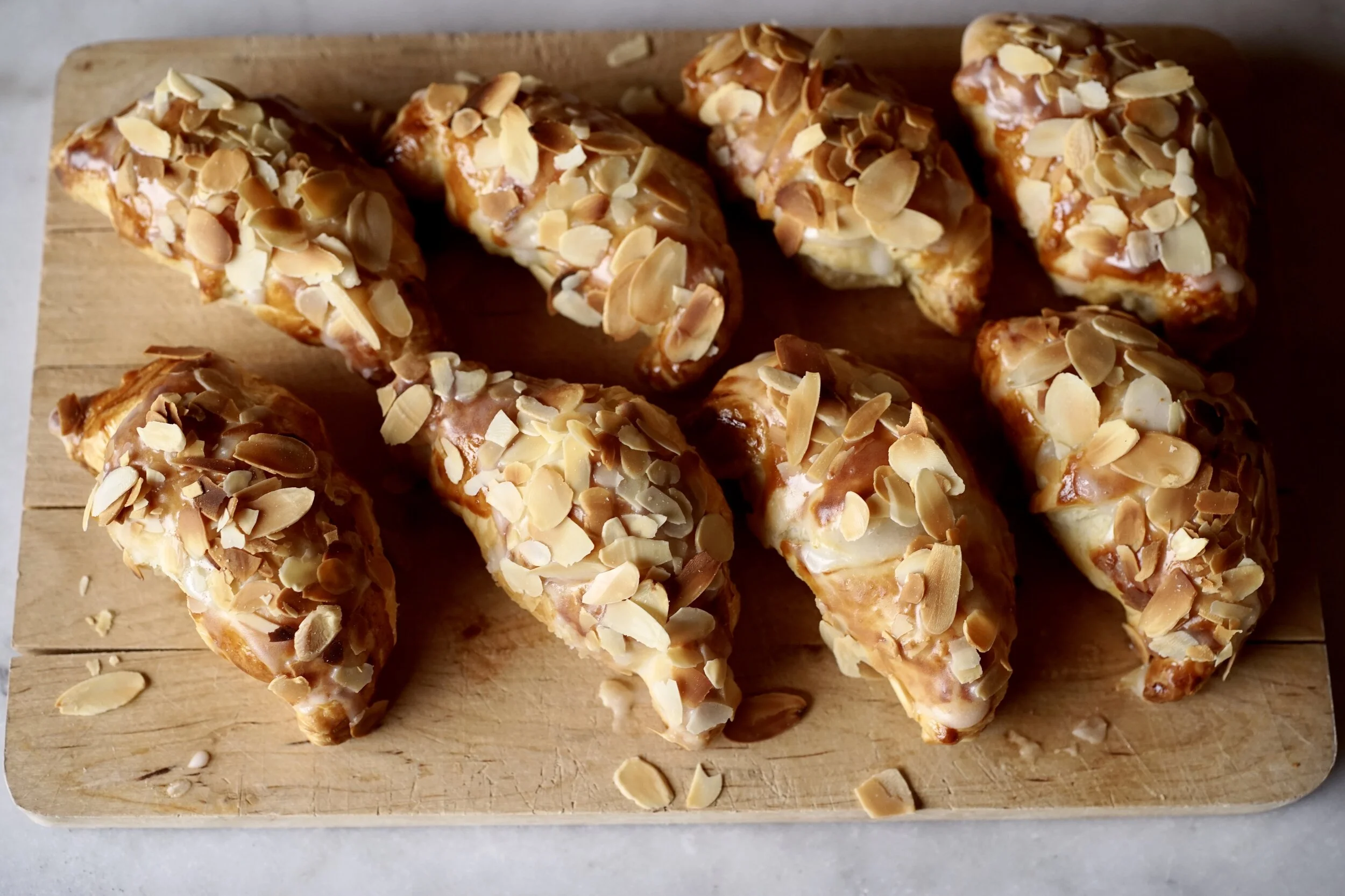
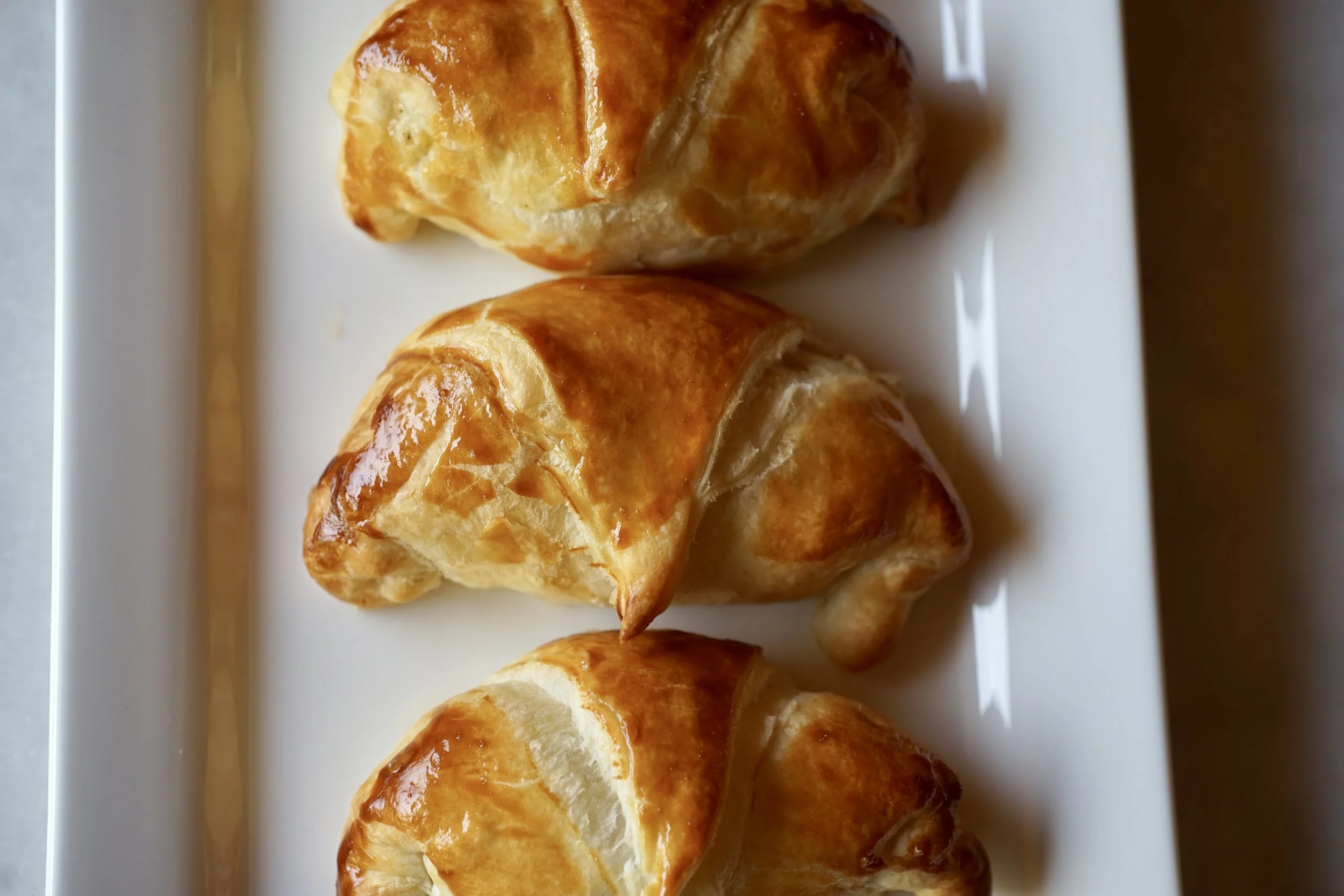
These plump croissants are a Swiss bakery staple, stuffed with a sweet nut filling.
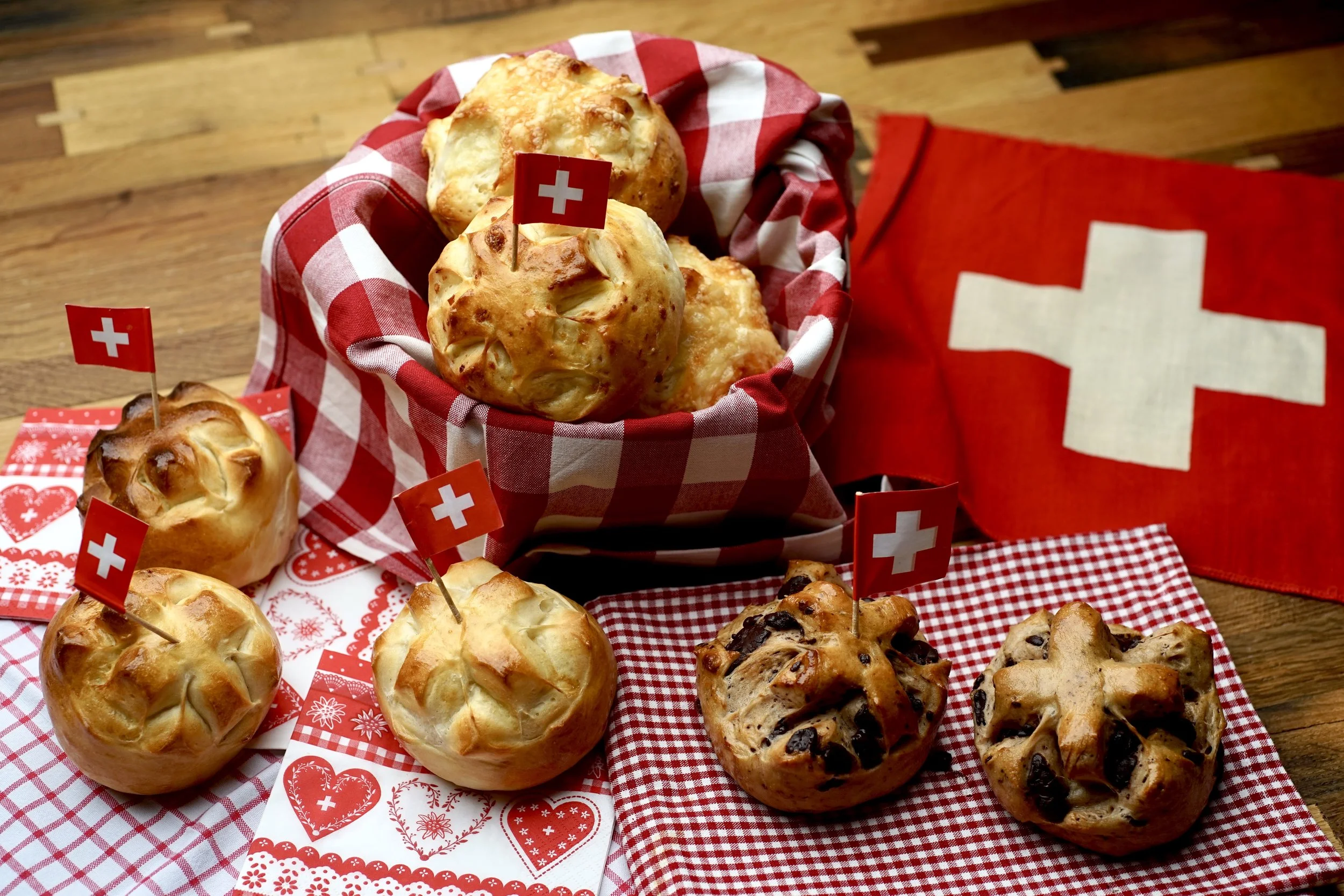
As a child, the start of Switzerland’s national holiday was always the same—breakfast at my grandmother’s house, a round little Weggli topped with a tiny Swiss flag on each plate.
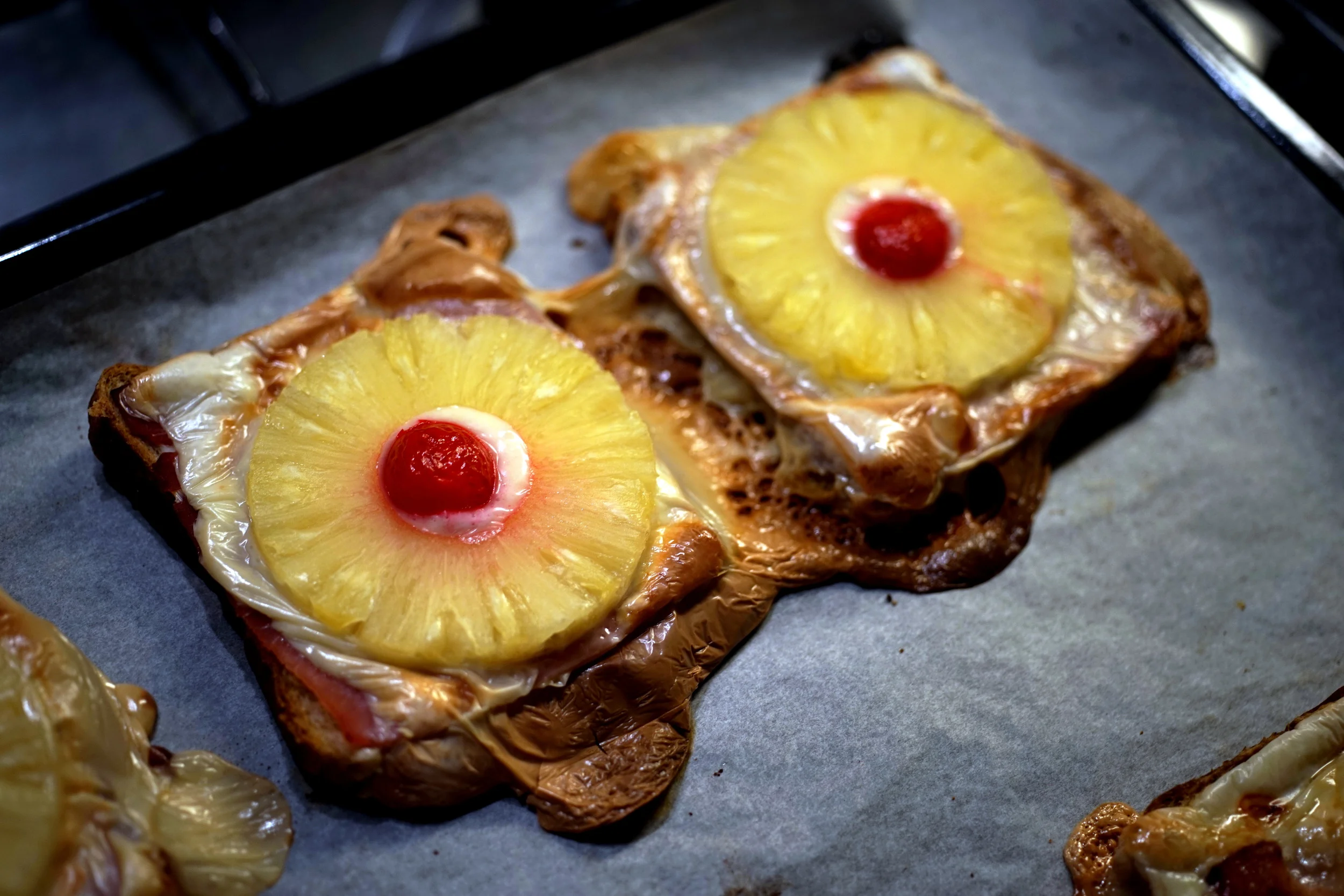
Perfect for apéro (or anytime), these ham croissants are flaky on the outside and savoury on the inside.
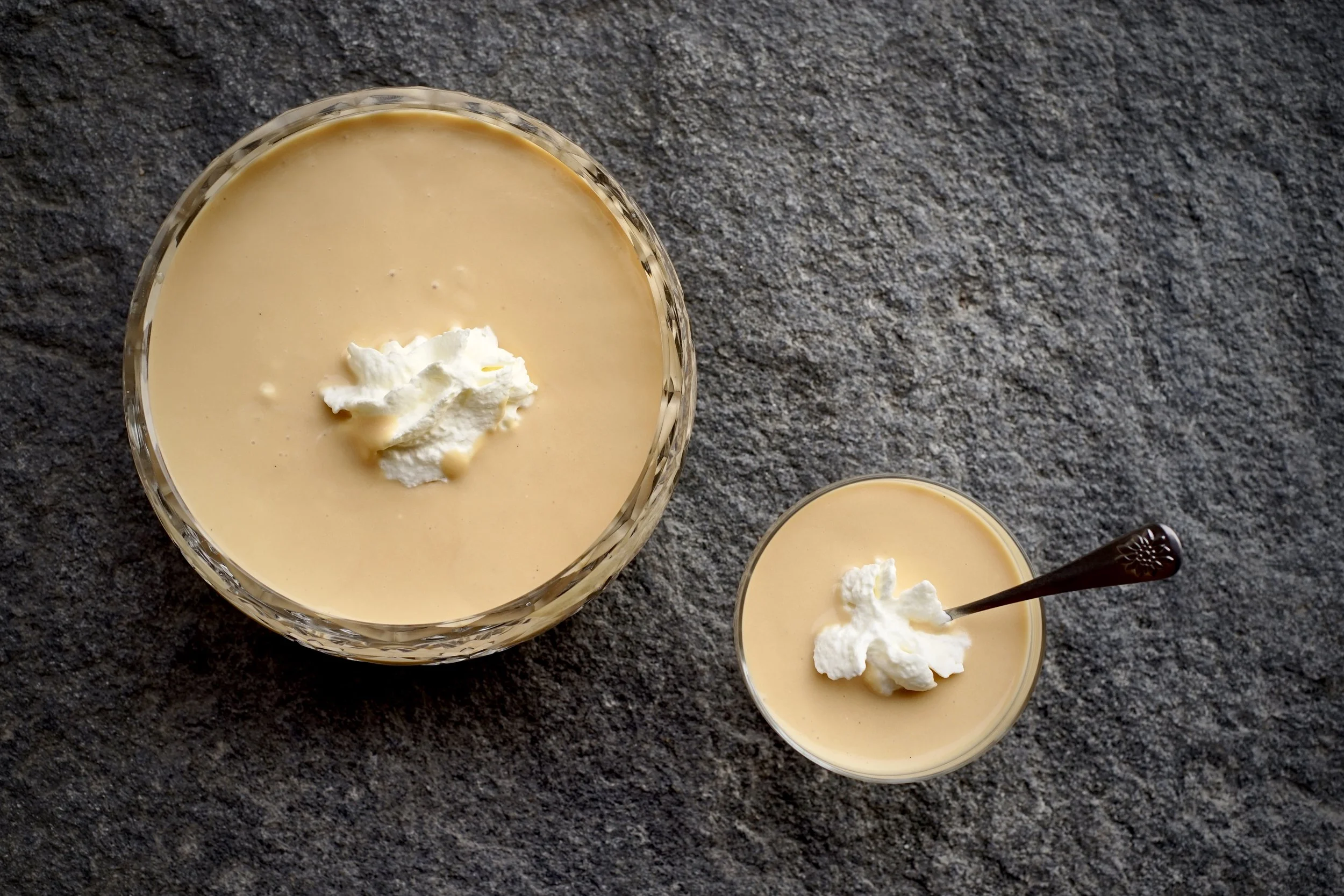
Brönnti Creme is a beloved Swiss dessert that you’ll find on the menu everywhere, from Grosi’s kitchen to high-end restaurants.
Although it’s a simple dish, there are still many ways to mess it up.
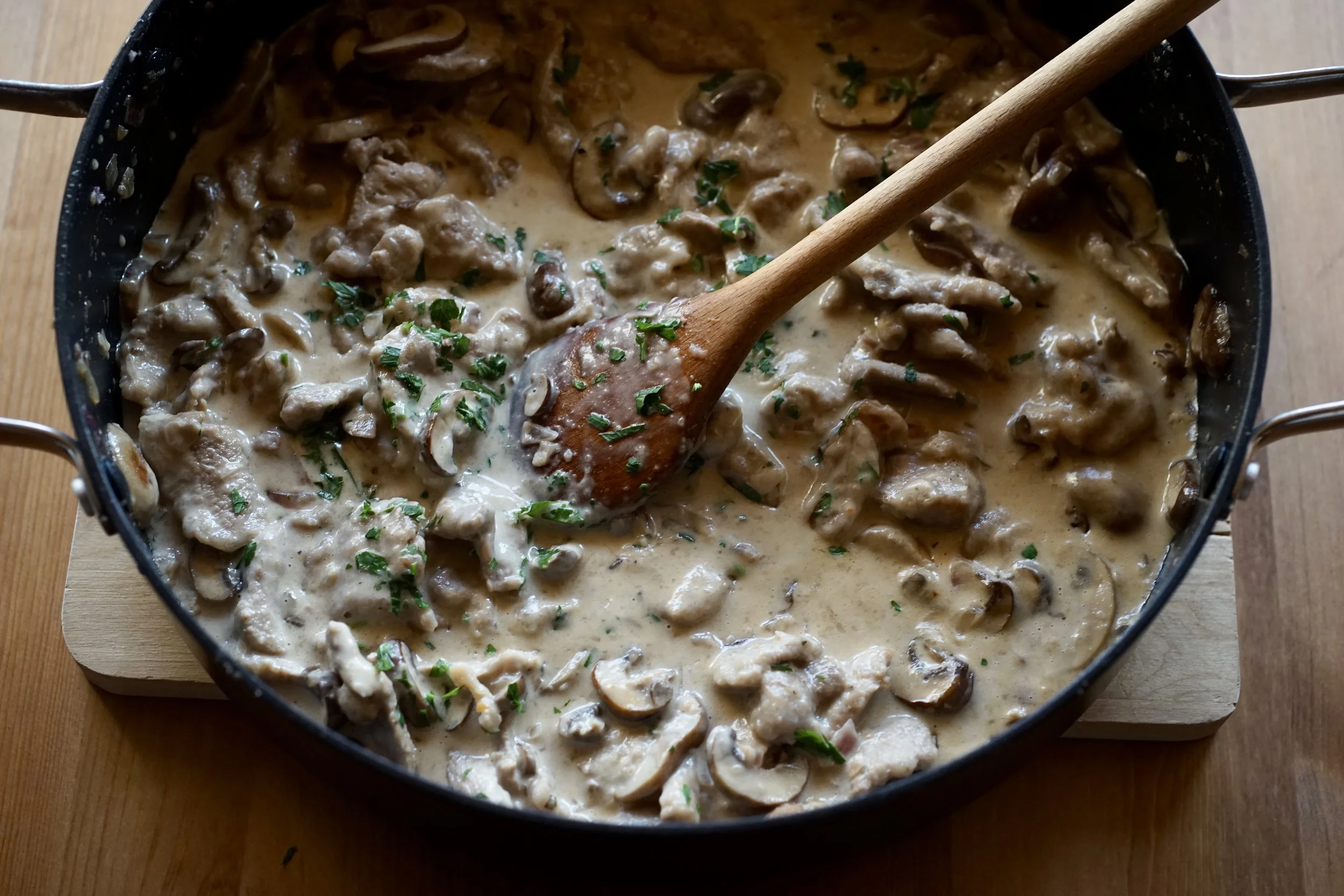
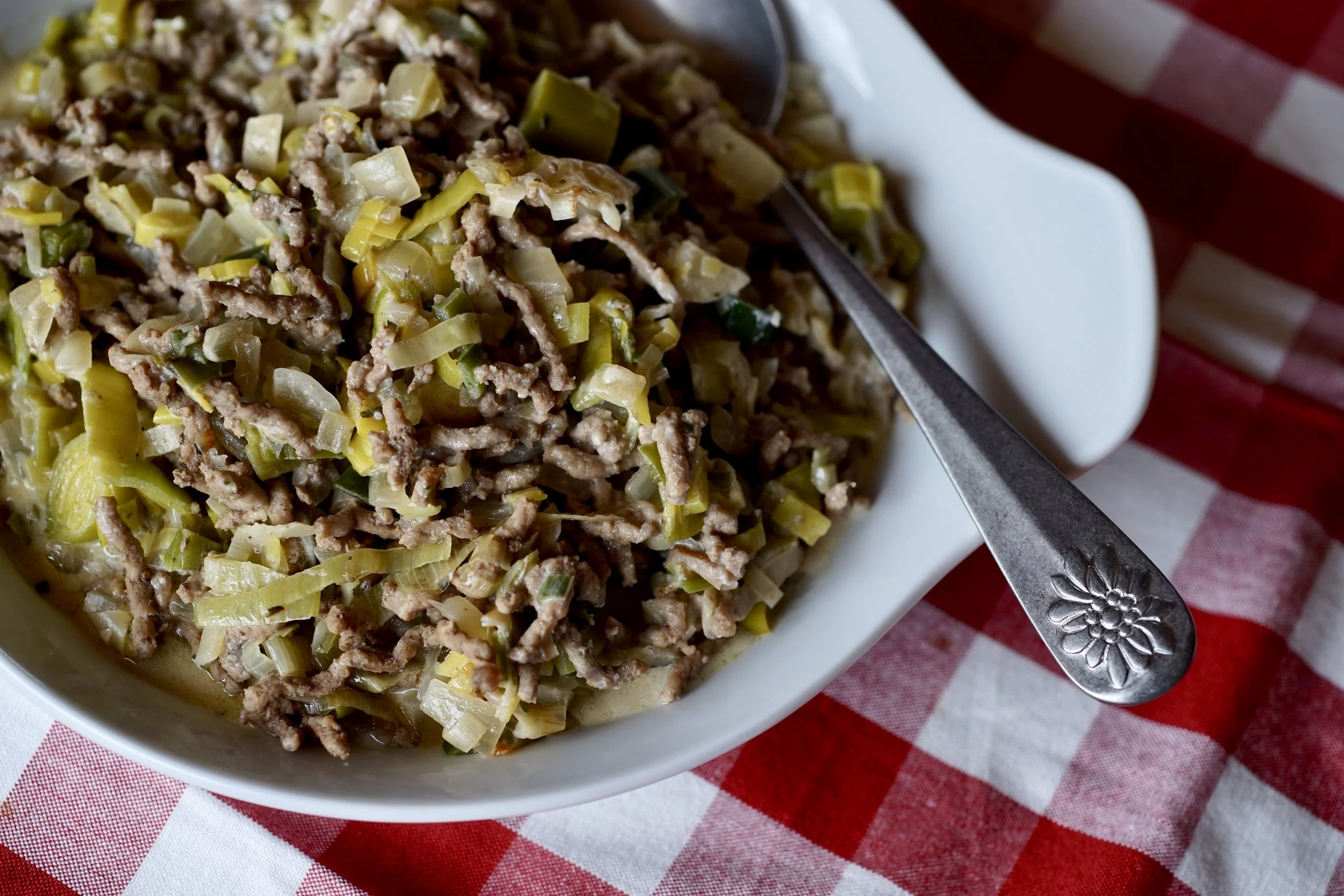
Although it’s now an absolute standard of Swiss cuisine, the famous dish Zürich Geschnetzeltes (or Züri Gschnätzlets in dialect) is relatively modern, first appearing in the late 1940s.
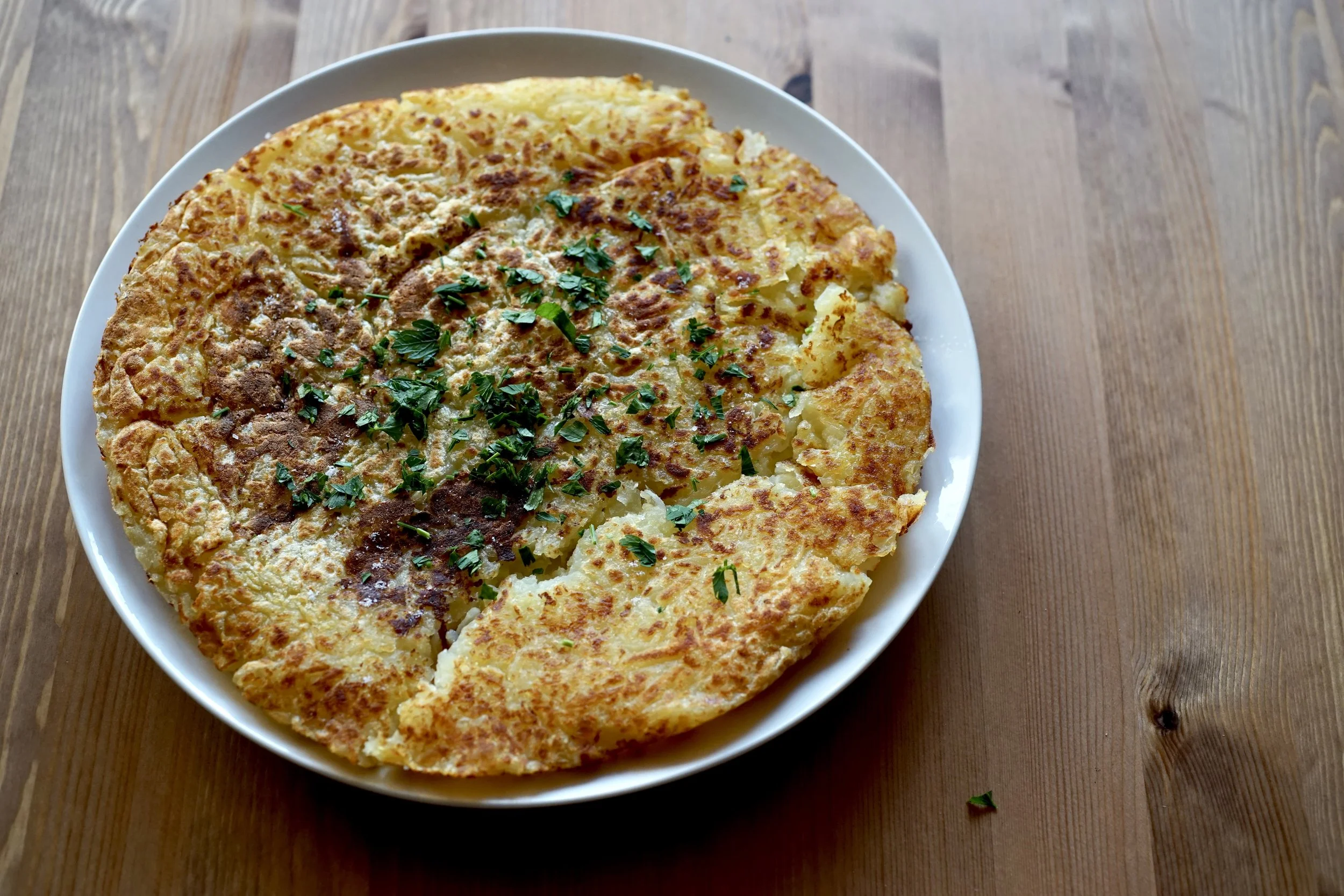
It was Swiss farmers who first enjoyed Rösti—for breakfast. Today, this grated, fried potato pancake is enjoyed at any time of day, either as its own meal or as a side dish.
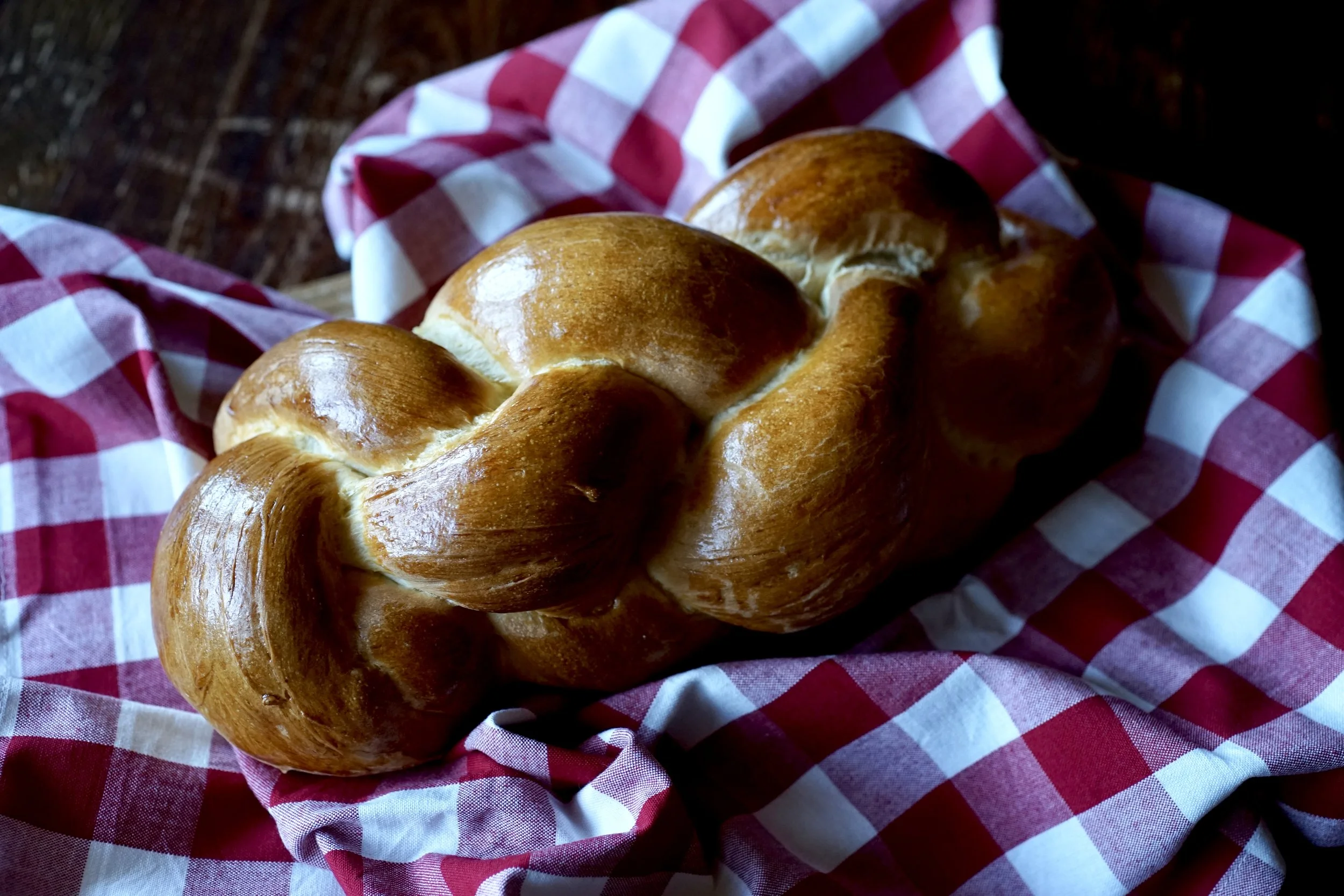
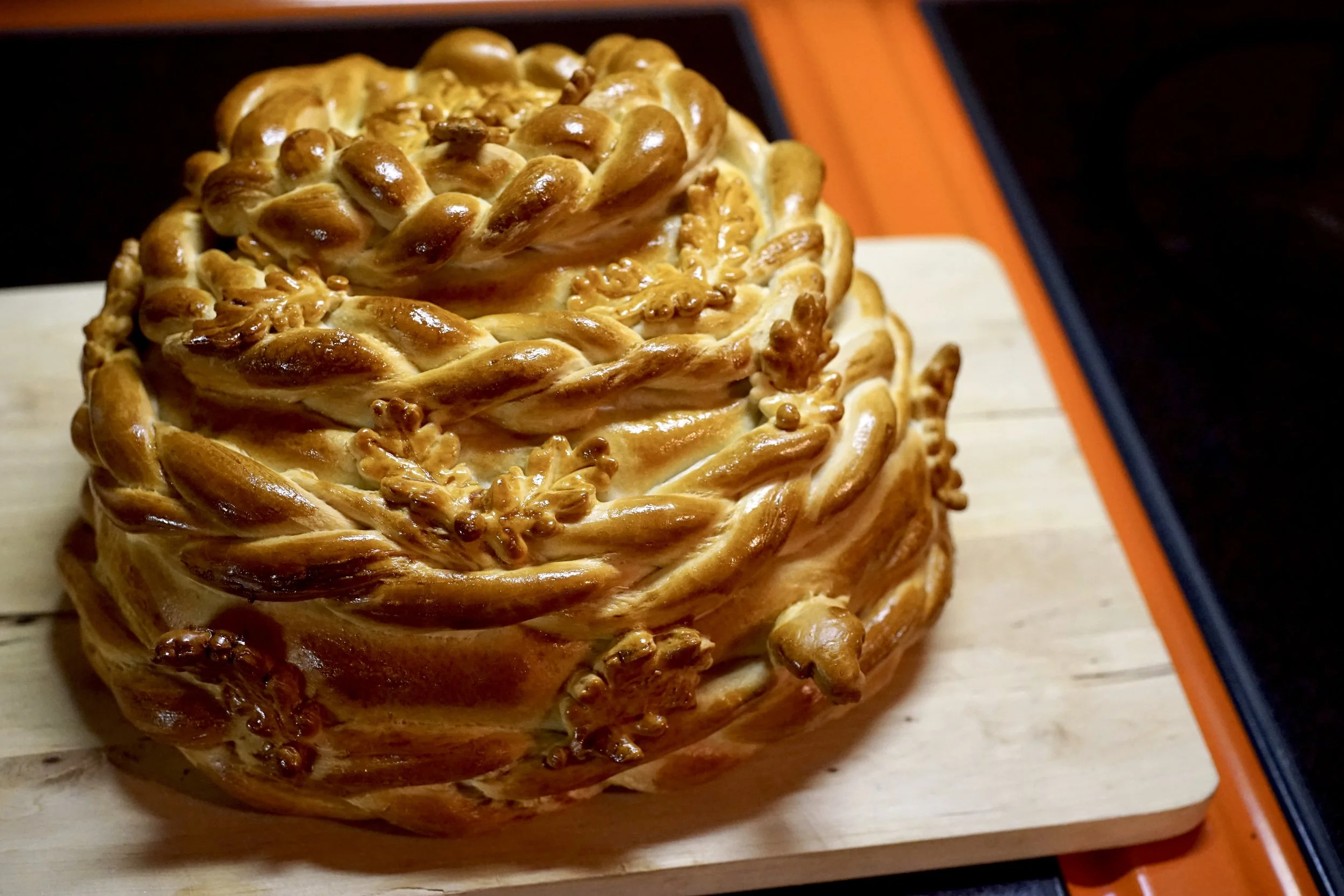
Easily Switzerland's most famous bread, Zopf is enjoyed in all regions of the country, particularly the Emmental, where butter is treasured and added to the bread with abandon, and the braids are often giant and sold by the metre.
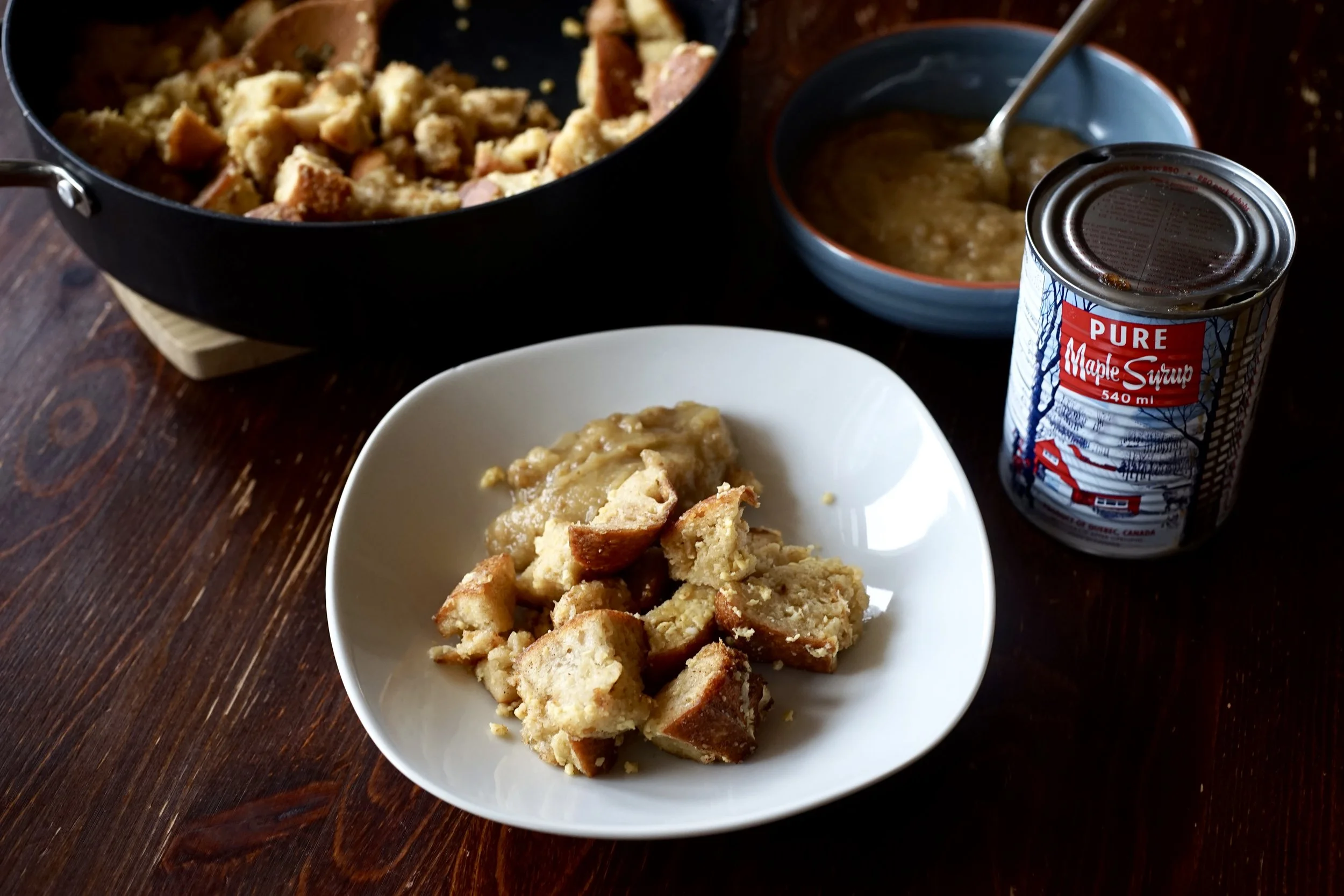
Vogelheu (literally, bird's hay) is a classic Swiss dinner and the perfect way to use up leftover bread and incorporate seasonal fruits into a meal.
It's basically bite-sized french toast.
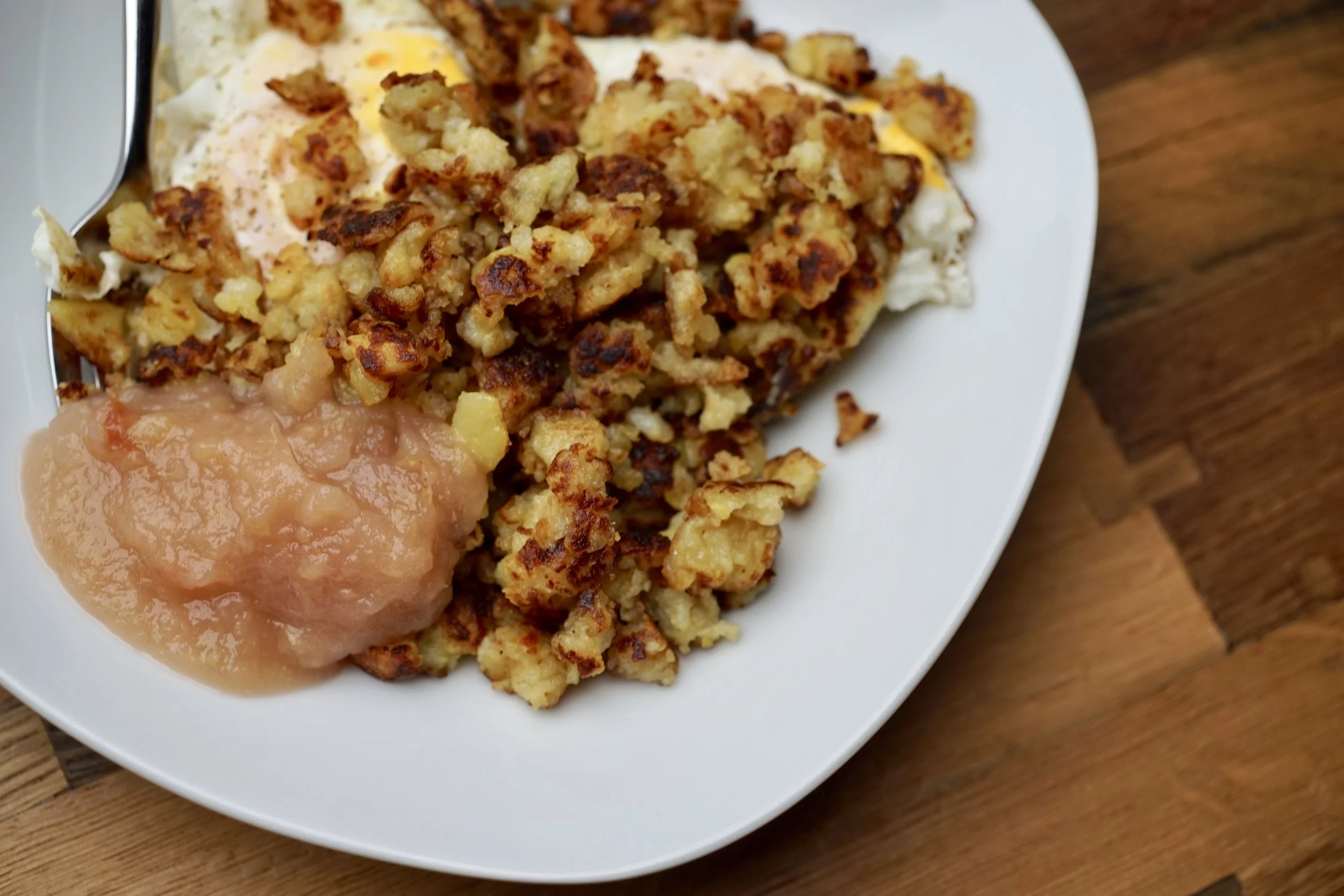
This classic Bündner dish is made up of buttery potato niblets, served with cheese, apple or cranberry sauce, and milky coffee.
What better way to celebrate St Fridolin, patron saint of Glaurs, than with the flaky, double stuffed puff pastry Glarner Pastete? Half filled with plums and half with almond paste, it's beloved in the canton and made in numerous bakeries throughout the region.
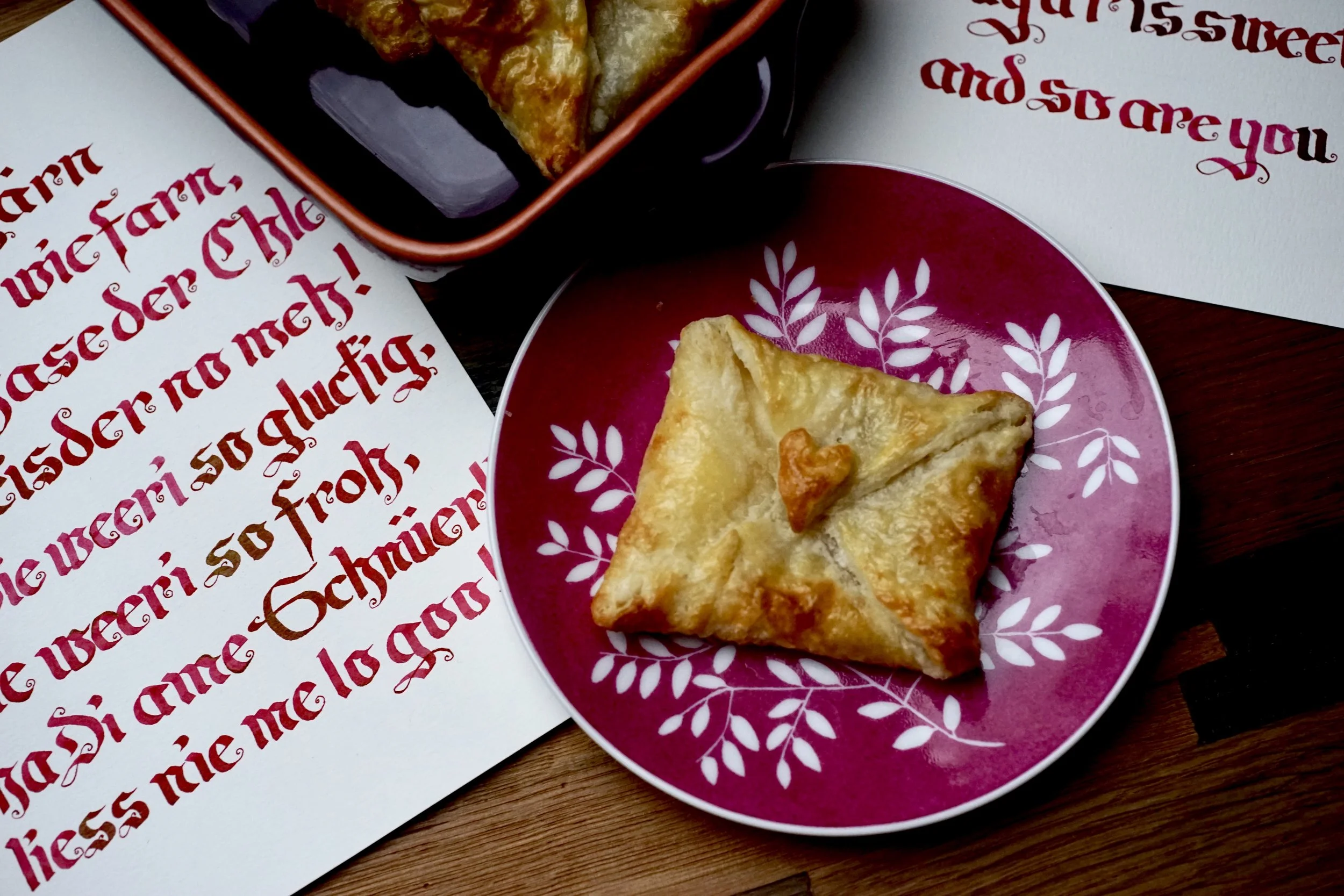
These love letters from canton Solothurn are a perfect treat for your Gal- or Valentine.
Schinken im Teig just means ham in dough. Here the pork is first studded with dried fruit and carefully wrapped with bacon.
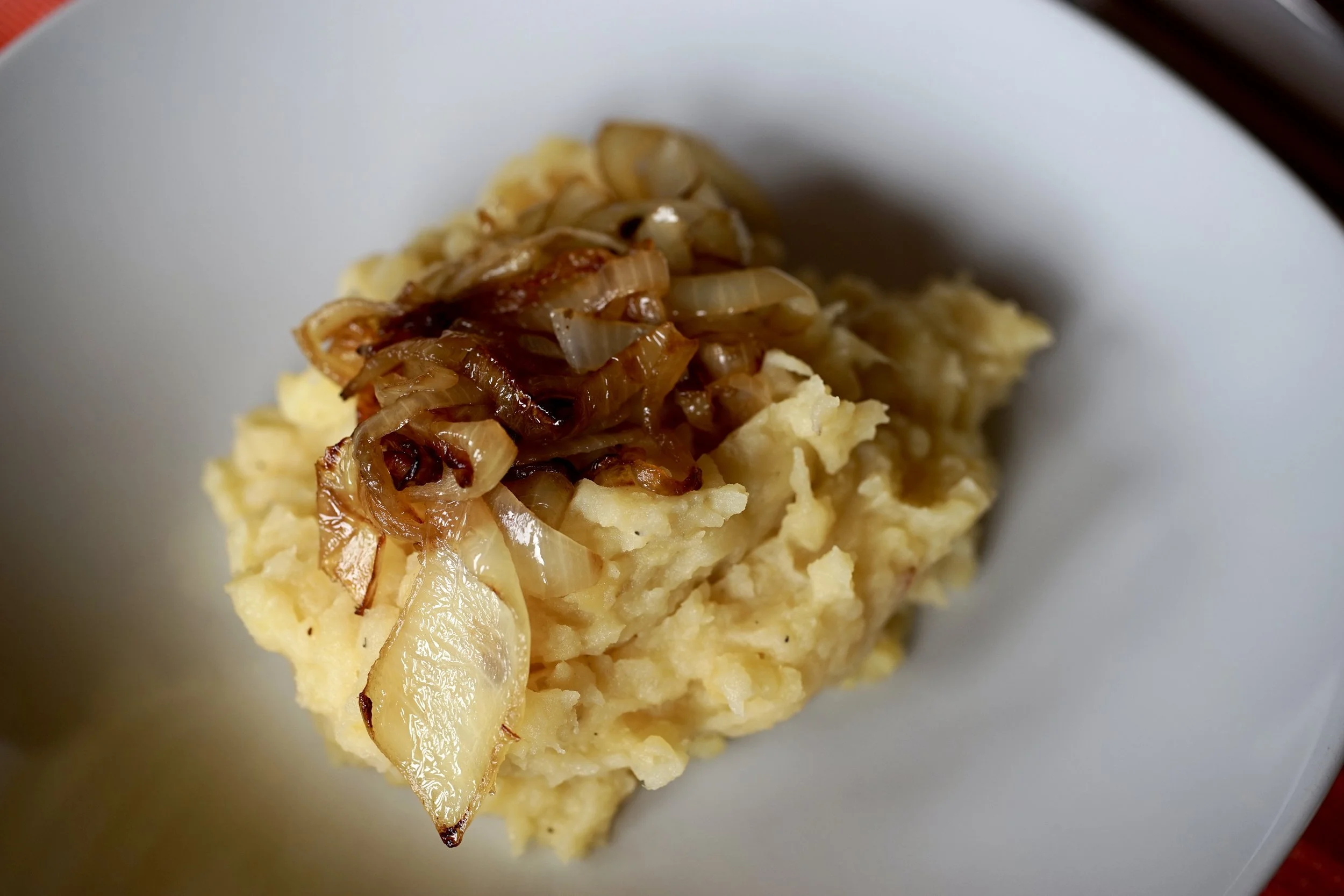
With a few humble ingredients you can make this classic dish from canton Uri—pear mashed potatoes, crowned with onions.
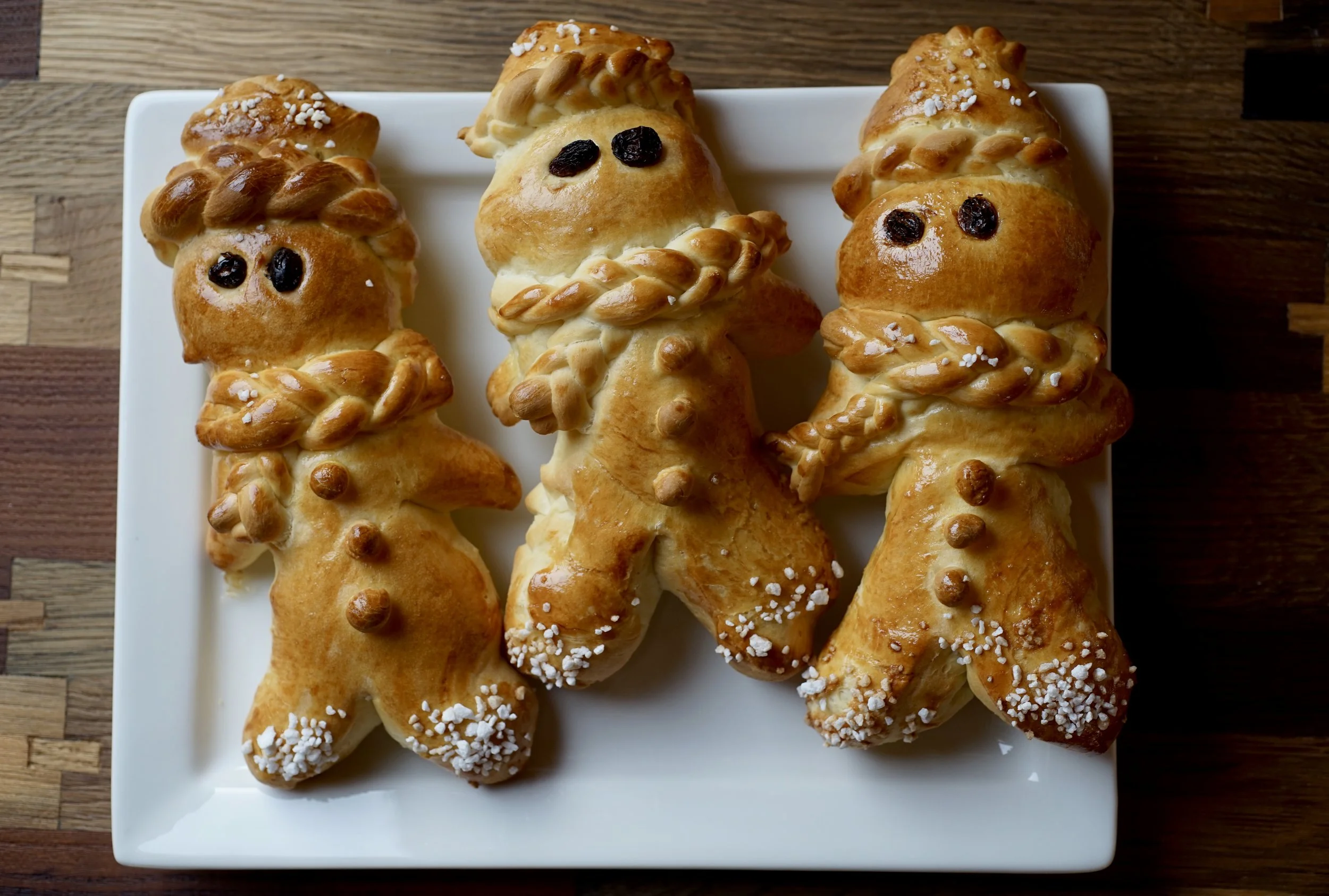
Grittibänz, sweet doughy bread boys, accompany the visit from Samichlaus on December 6th.
Sometimes my Swiss friends ask me questions about North American baked goods like: "what's the difference between a cupcake and a muffin?"
And I ask them questions like: "What's the difference between a Torte and a Kuchen?"
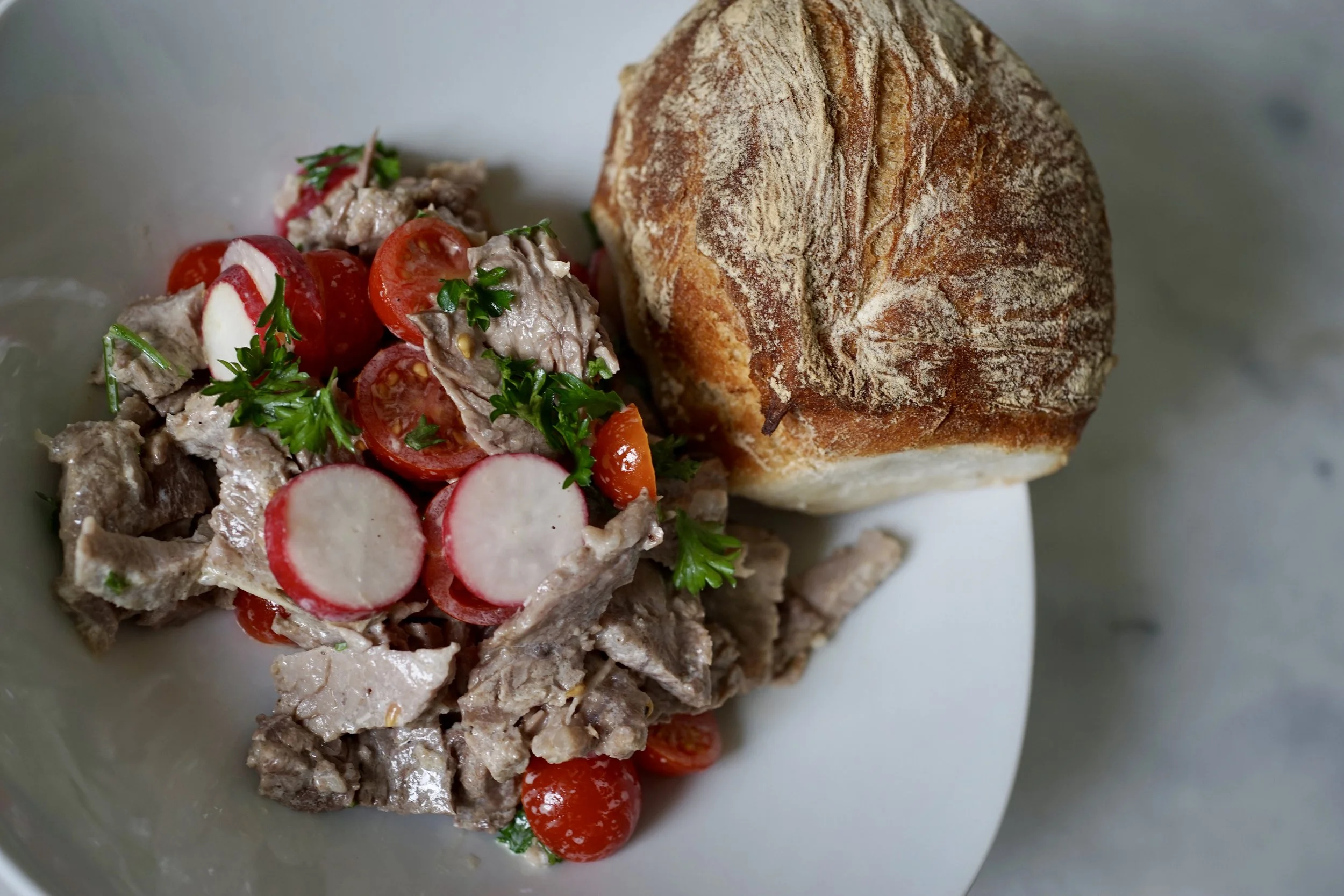
When I asked Sam about his favourite Swiss summer dishes the classic, meaty, Siedfleischsalat was at the top of his list.
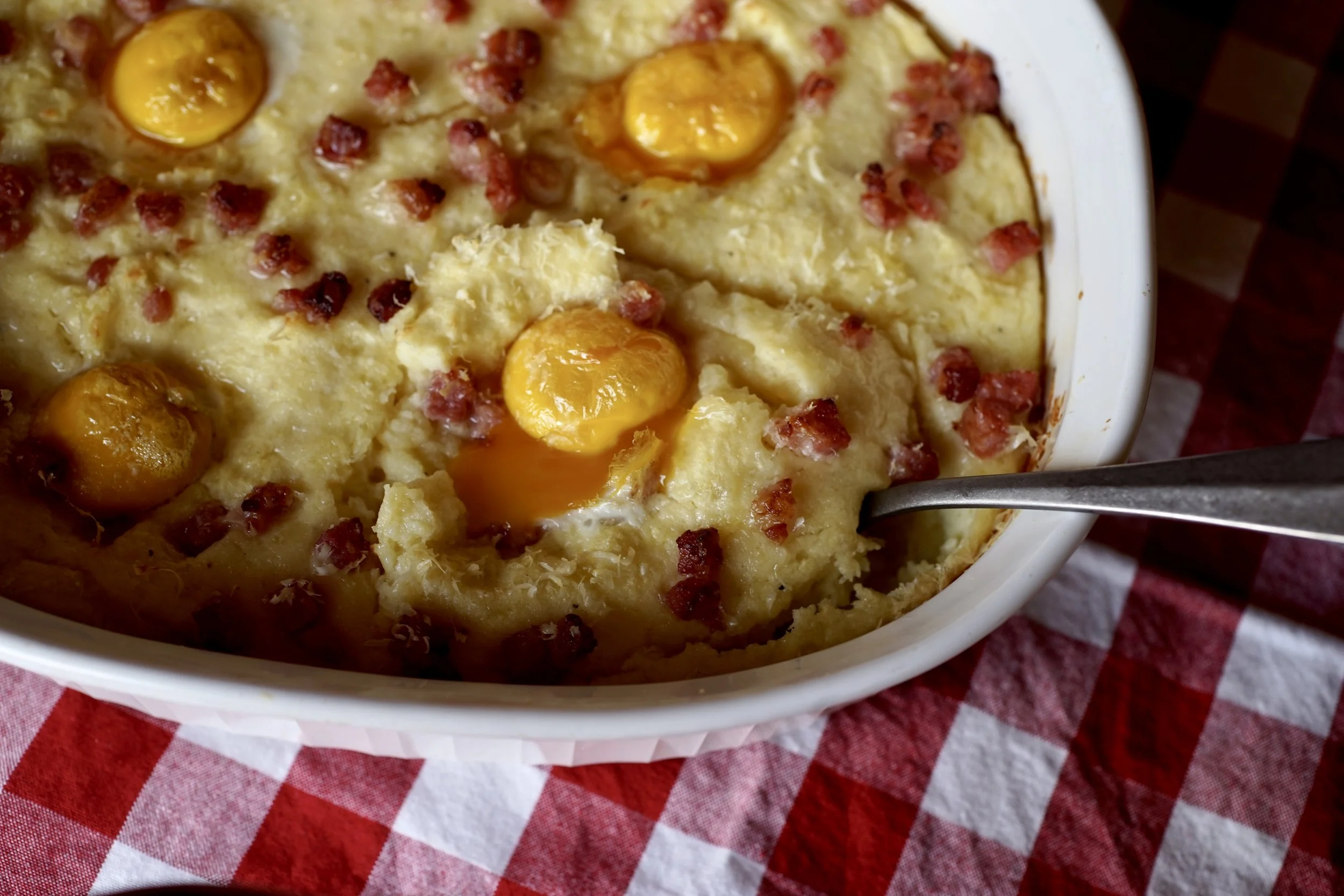
Polenta is yellow cornmeal that's cooked over low heat until it becomes a delicious, tender mash. It belongs, with chestnuts and risotto, to the traditional peasant foods of Ticino.
Wandering bakers ventured forth from Graubünden and eventually made it home—then baked this delicious caramel and walnut tart.
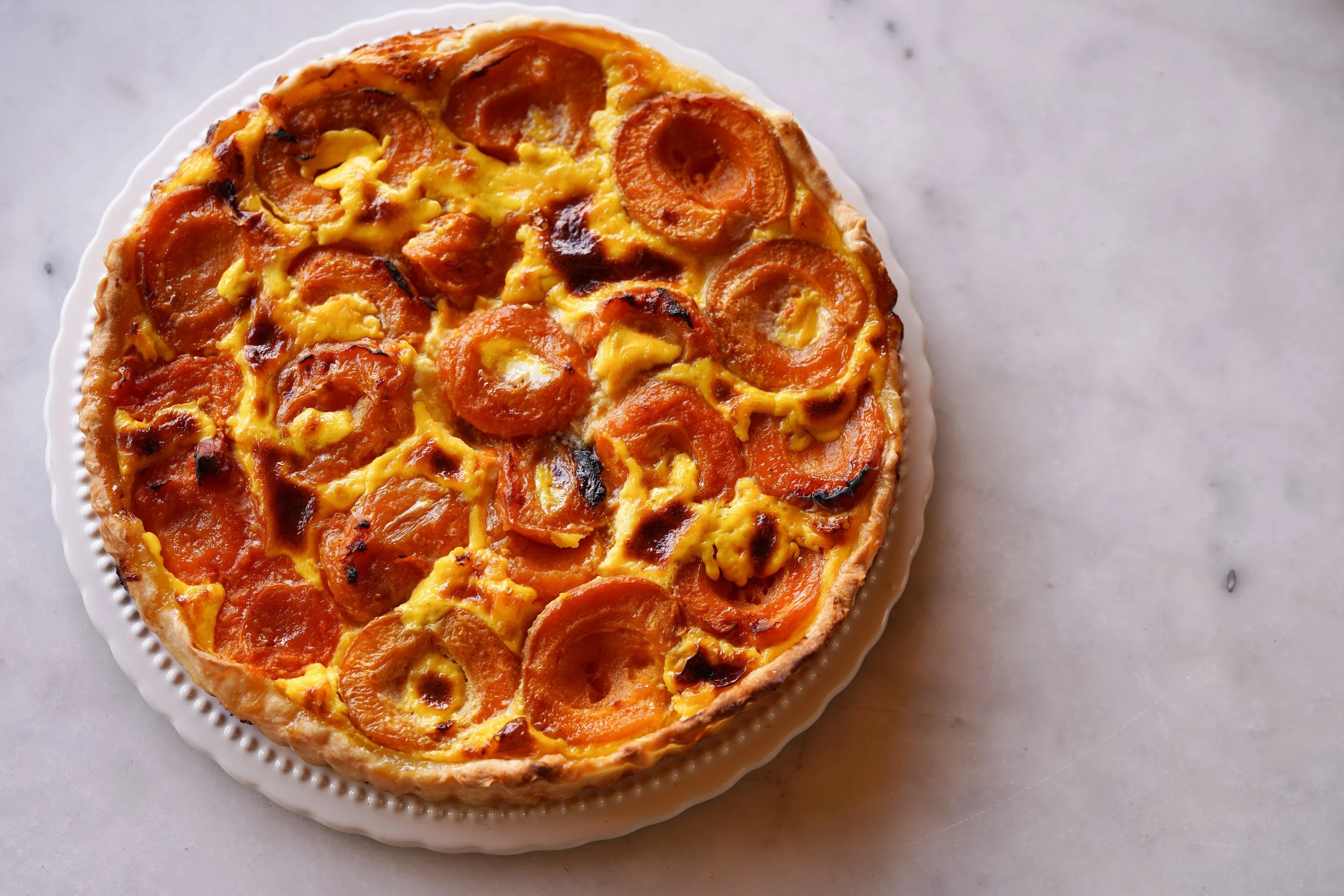
Wähe makes an excellent breakfast, lunch or dinner. Although you can make it with a variety of fruits, here's one of the classics: apricot.
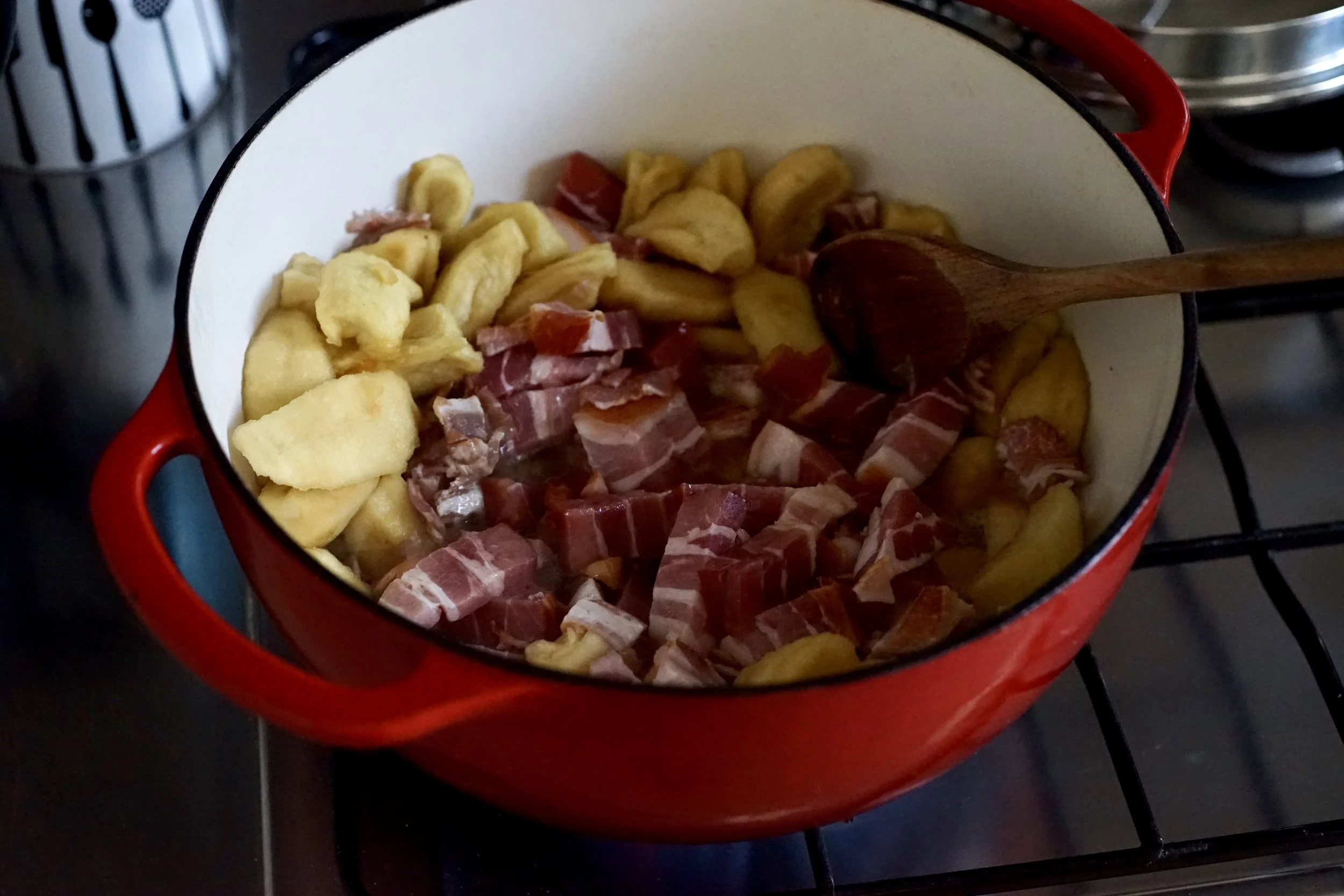
The name Schnitz und Drunder (which to me evokes a metal song or German comedy duo) varies from region to region, but the contents are basically the same—potatoes, dried fruit, and often bacon or smoked meat.
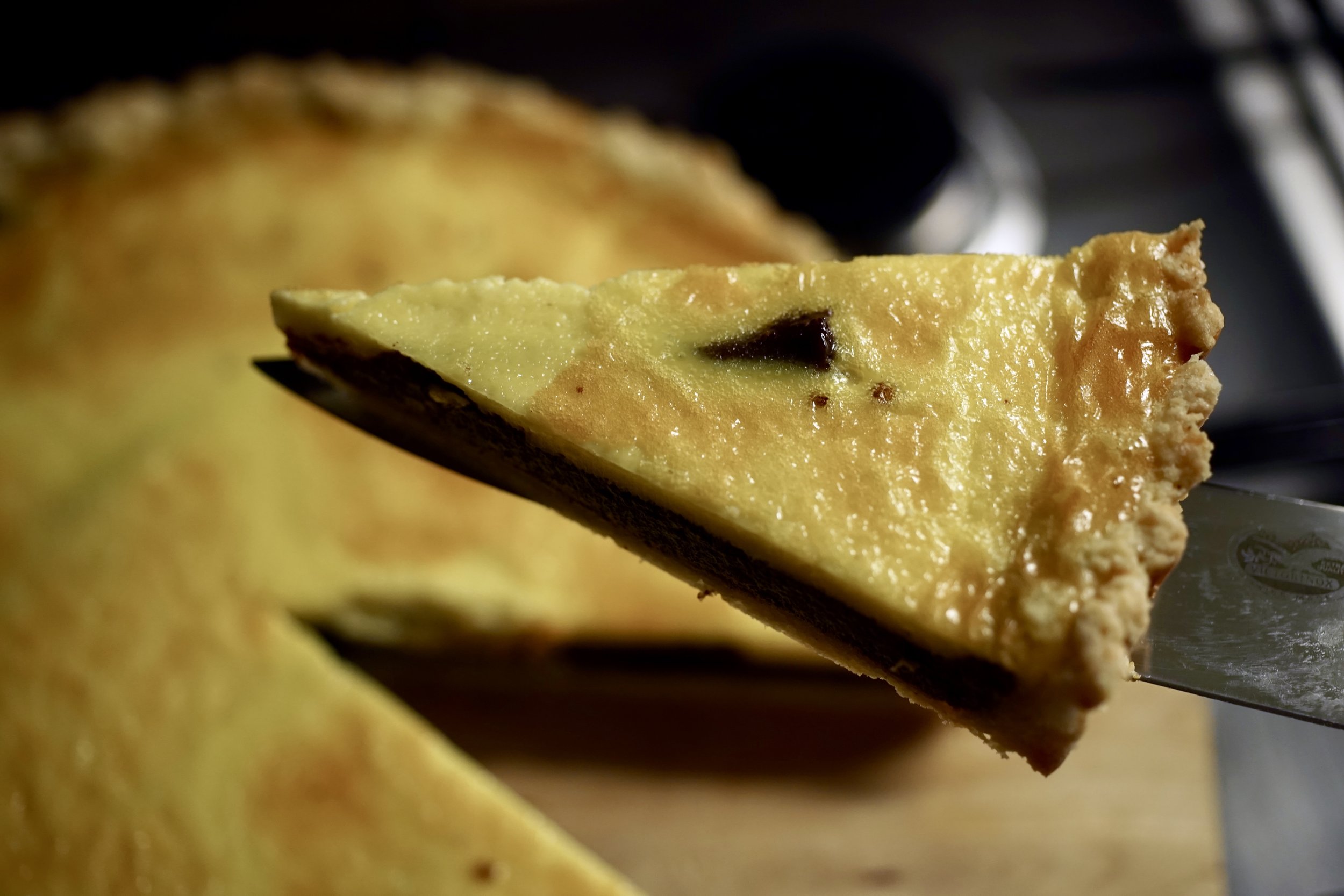
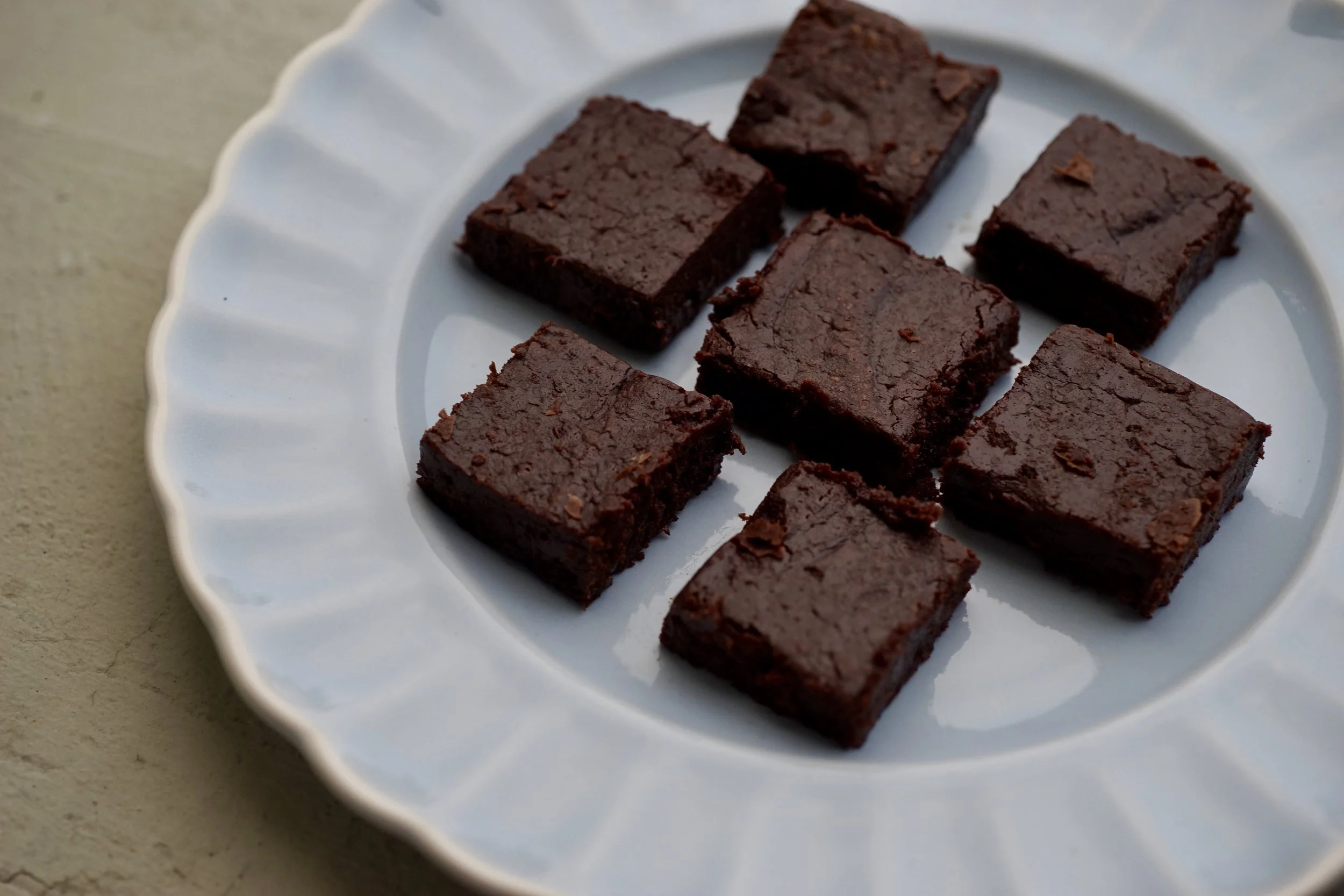
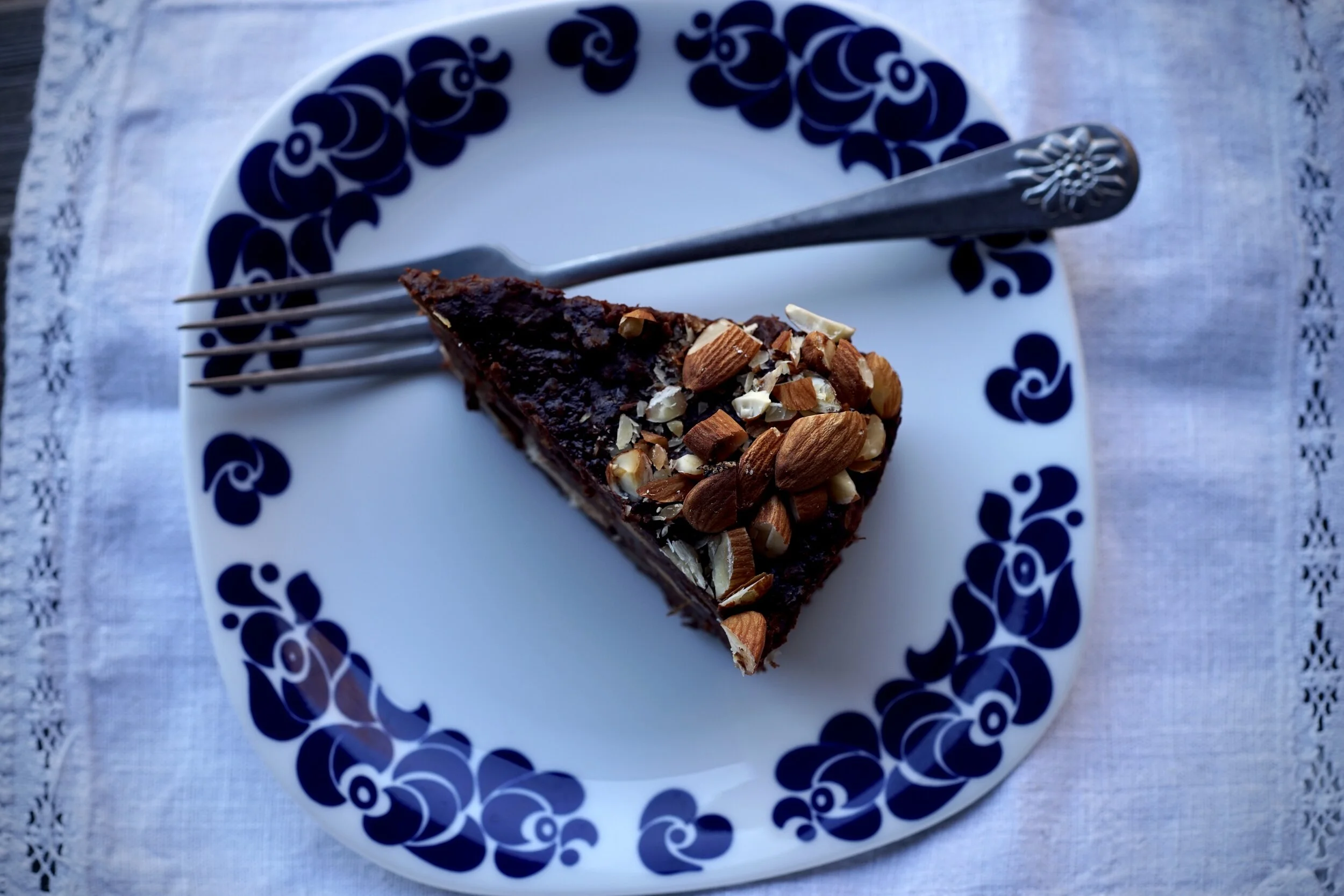
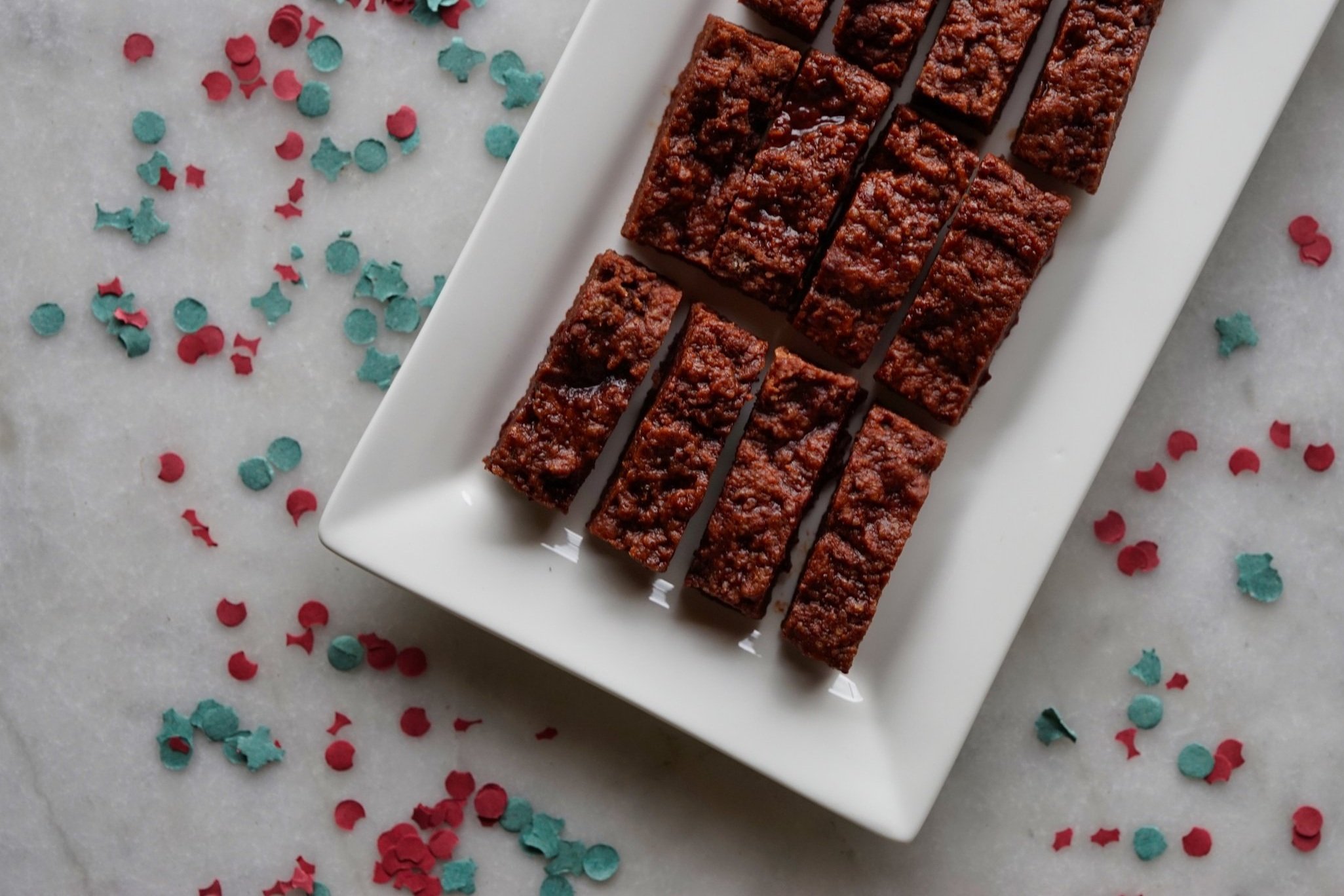
I was pretty convinced that Switzerland could not do brownies—but that was before I found a recipe for Basler Schoggitorf.
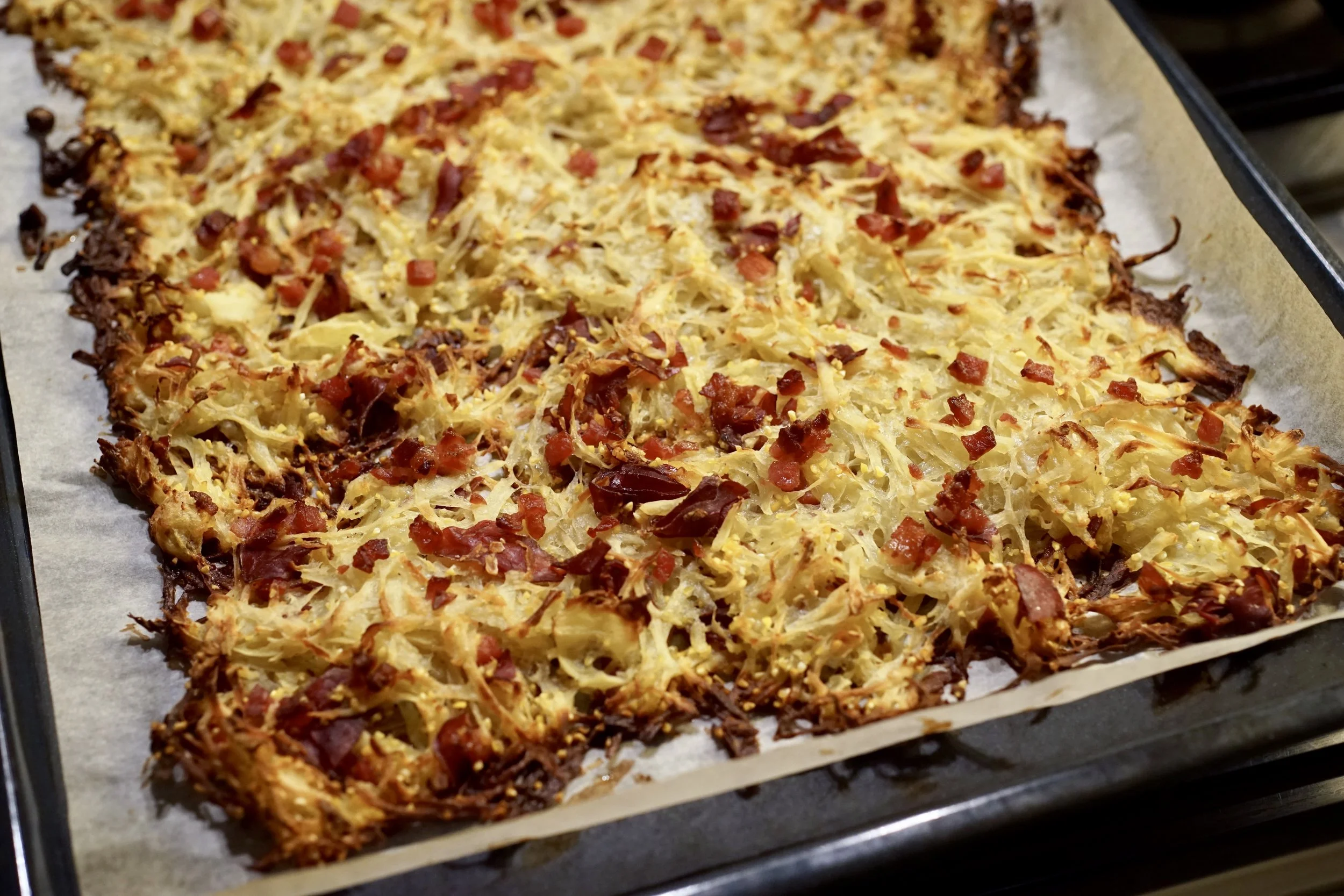
Plain in Pigna removes the two most annoying aspects of Rösti-making. Having day old boiled potatoes on hand, and the dreaded flip.
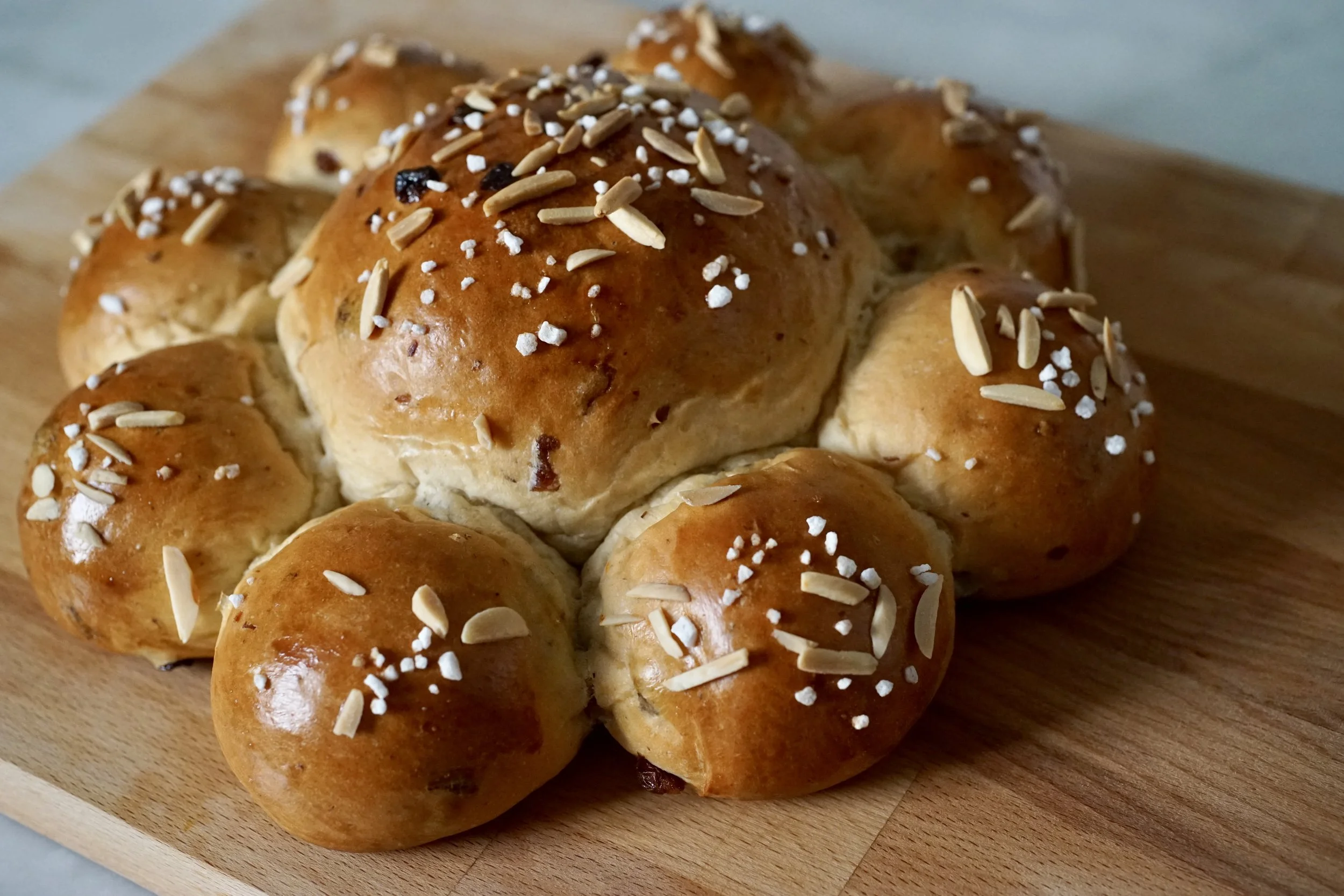
Swiss families celebrate the sixth of January, Epiphany, by eating Dreikönigskuchen. This holiday celebrates the three kings finally reaching Bethlehem, and so a small plastic king figurine is baked into the bread. Whoever finds it is king for the day.
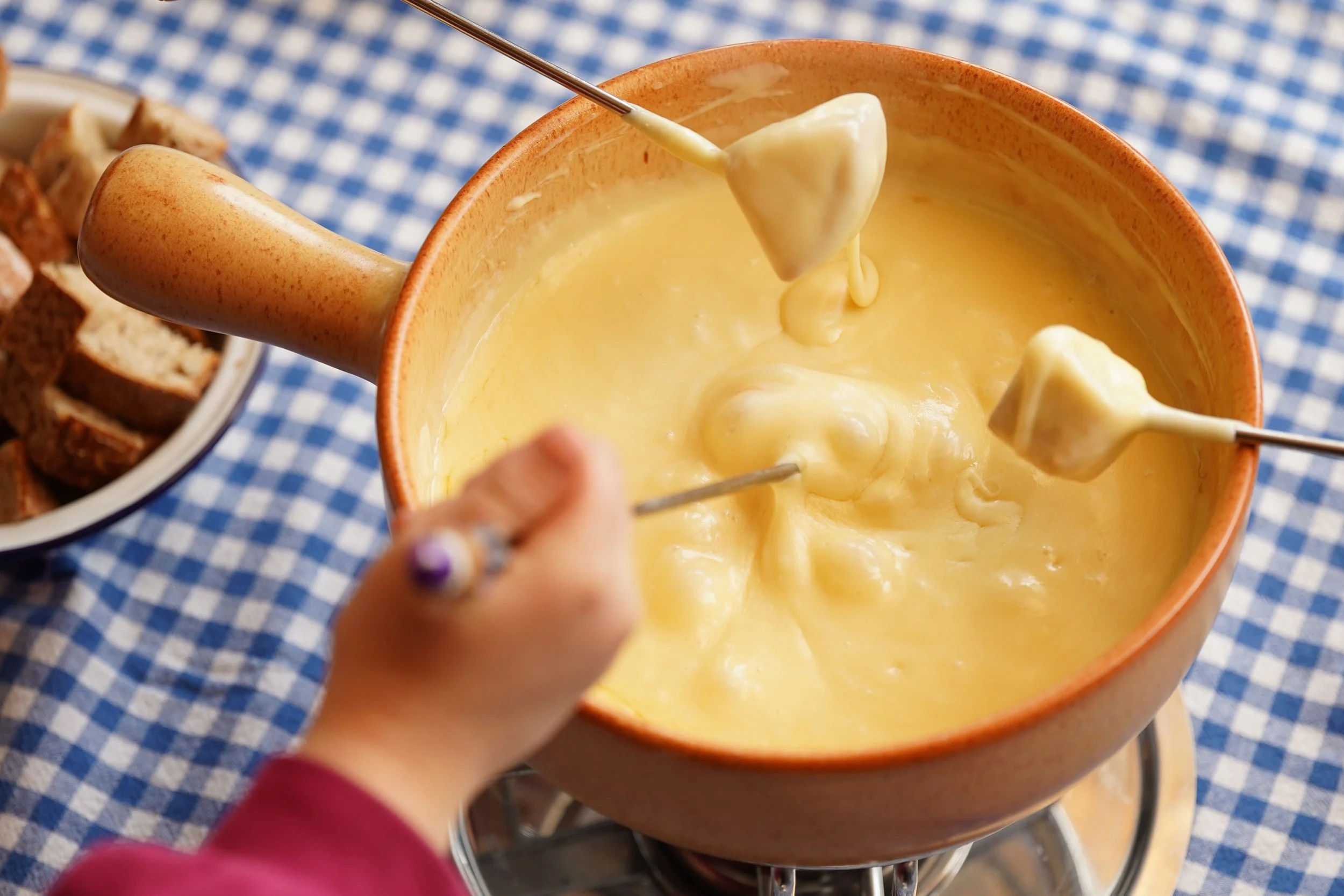
In Switzerland there typically isn't a set food to eat during the holidays, but somewhere between Christmas and New Year most Swiss families eat a fondue. Whether Cheese or Chinoise, forks are dipped.
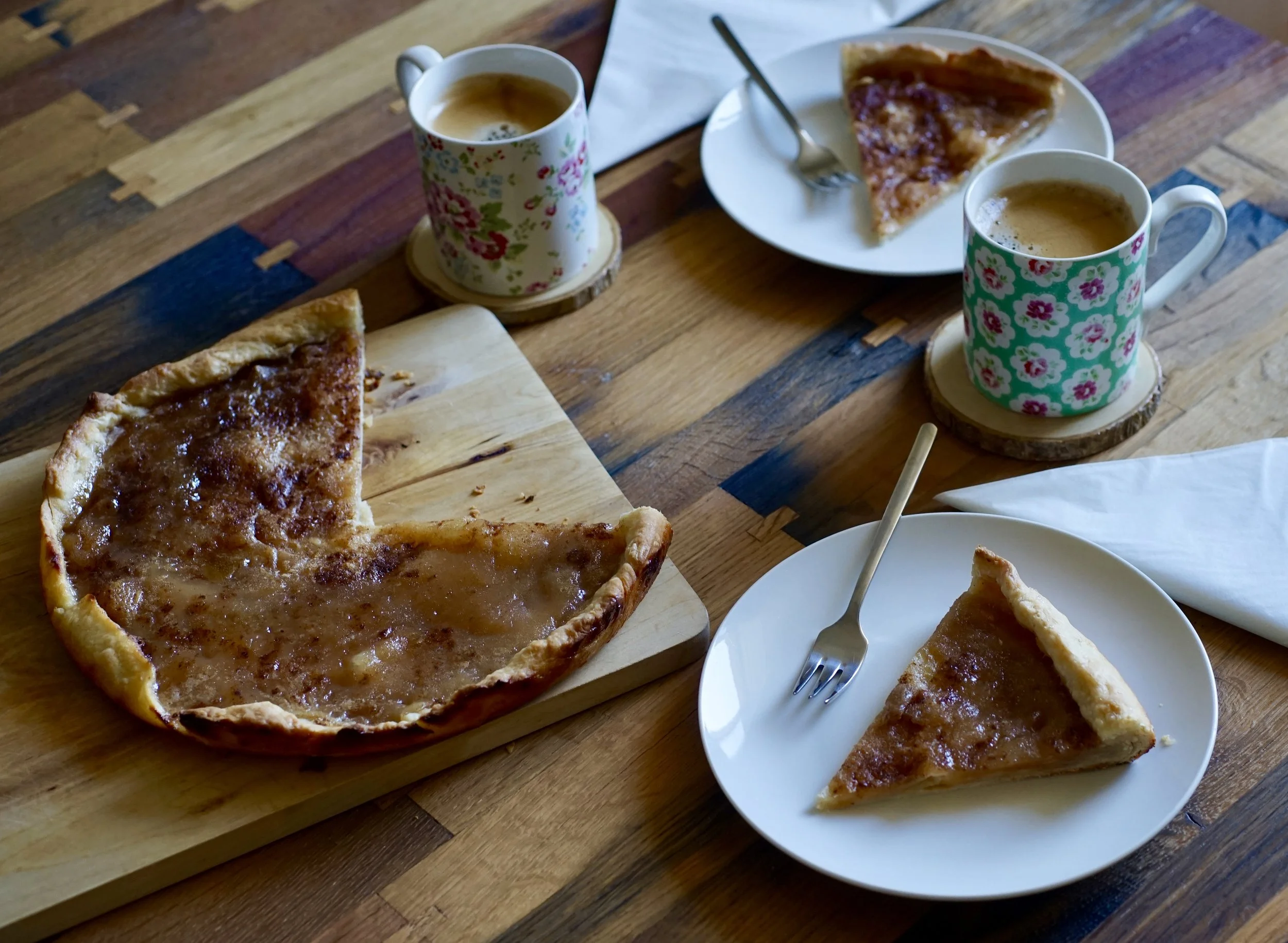
Grated apples, toasted nuts and cinnamon are all stuffed into a sweet crust. This perpetually juicy tart, named for Zürich’s clergy houses, is an apple-lover’s dream.
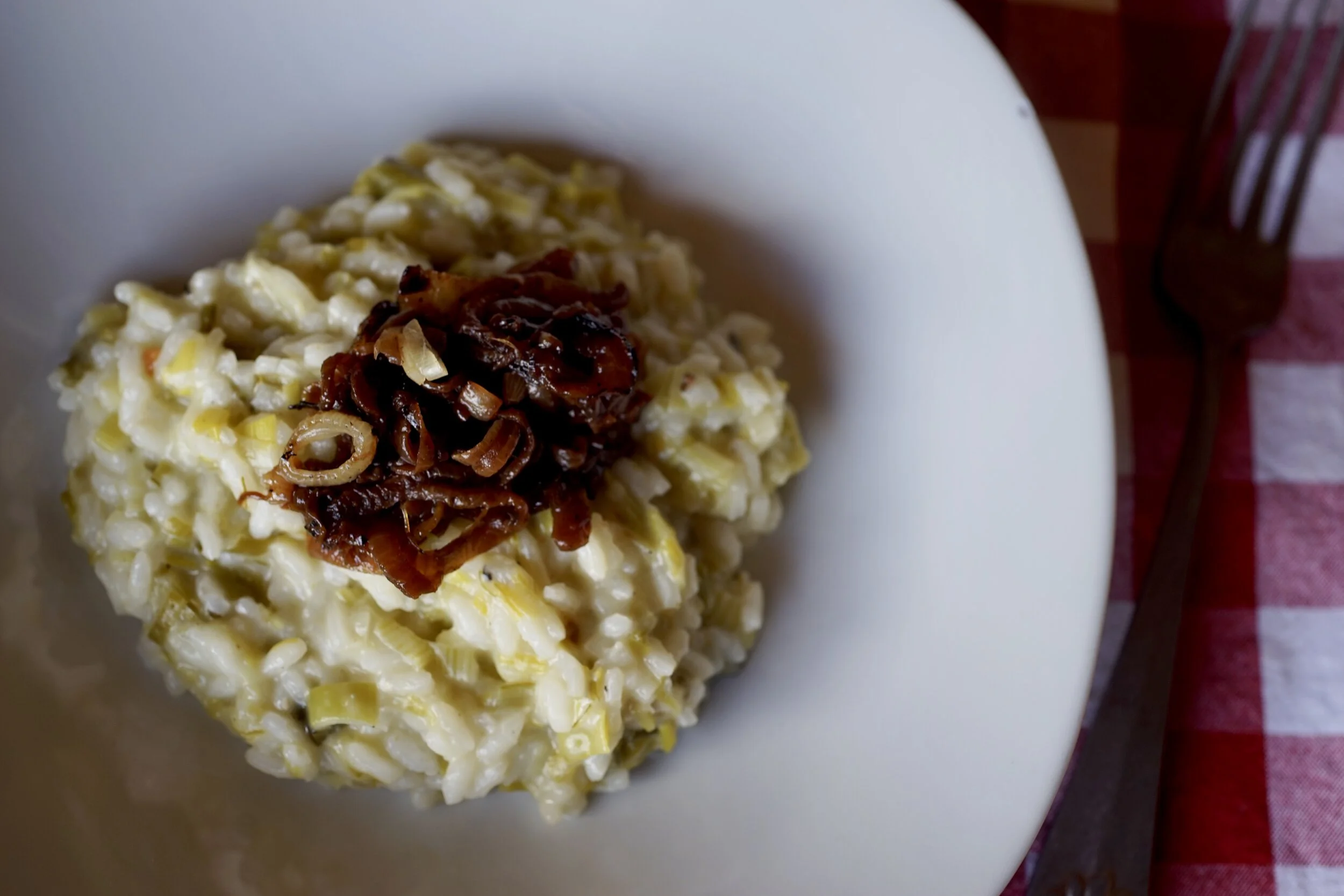
A dish of many names, Rispor from canton Uri is basically leek risotto, heavy on the leeks, with a big pile of grated Sbrinz cheese stirred in at the end.
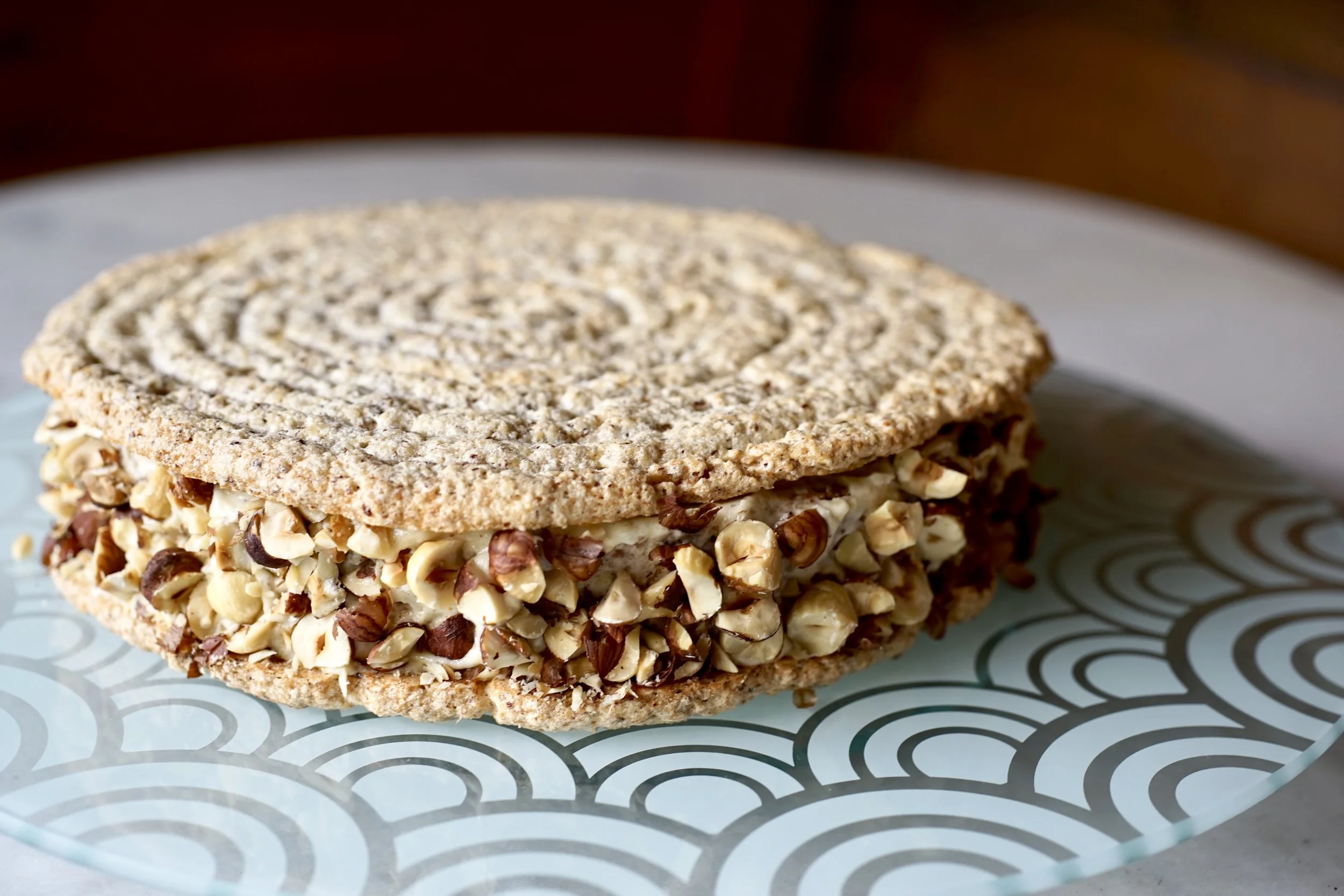
Glimmering in Swiss bakery windows are the weighty Vogelnestli (bird’s nests), with a buttery base and nutty meringue border filled with jam.
This is a classic bread pudding cake from Ticino, with as many versions as there are Nonnas in the canton.
Fabiana’s Lucernese gingerbread is a fan favourite among her five children, numerous grandchildren, and Sam’s family, who lived next door for over a decade.
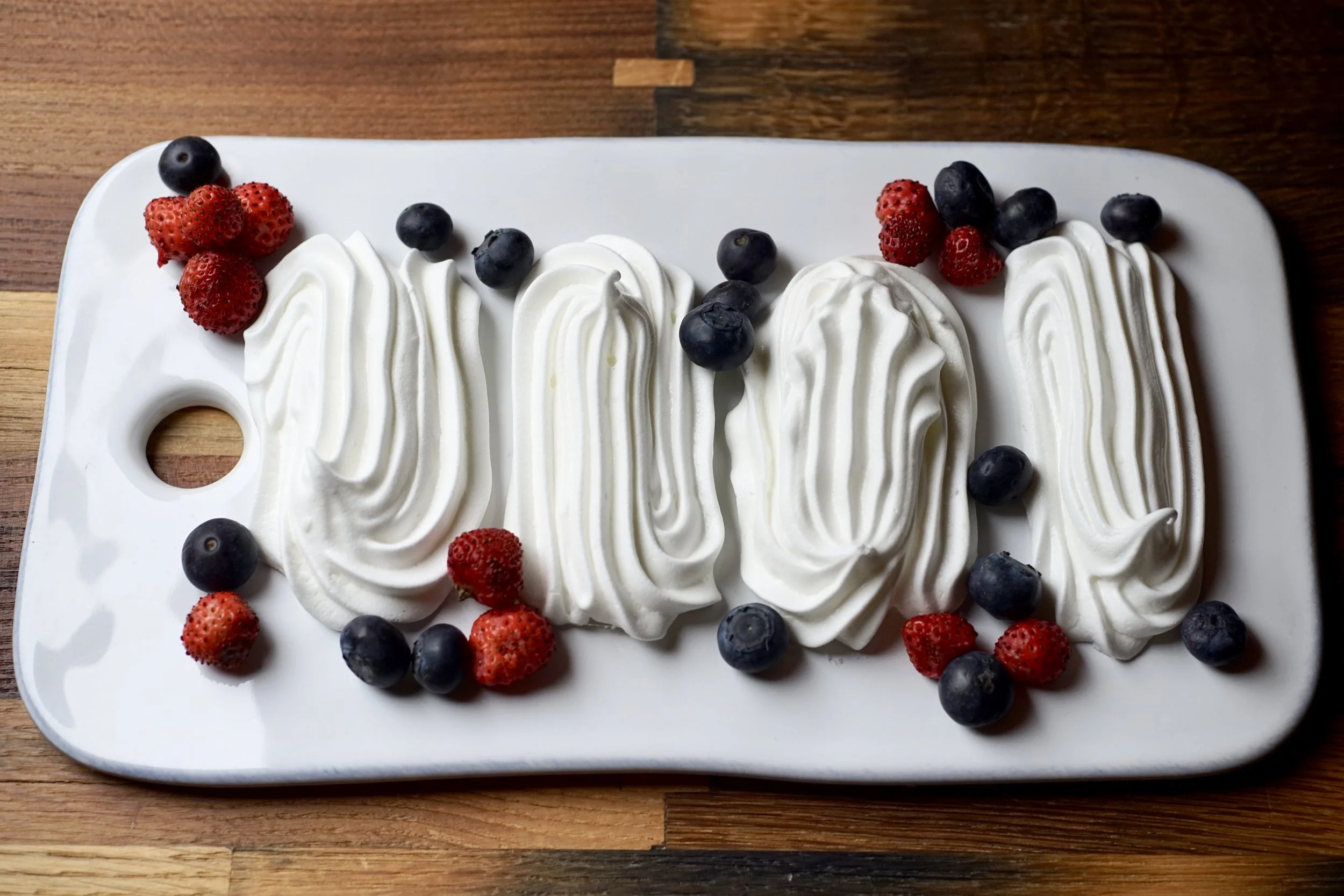
If you live in the Emmental, there is only one place for Merängge: Kemmeriboden.
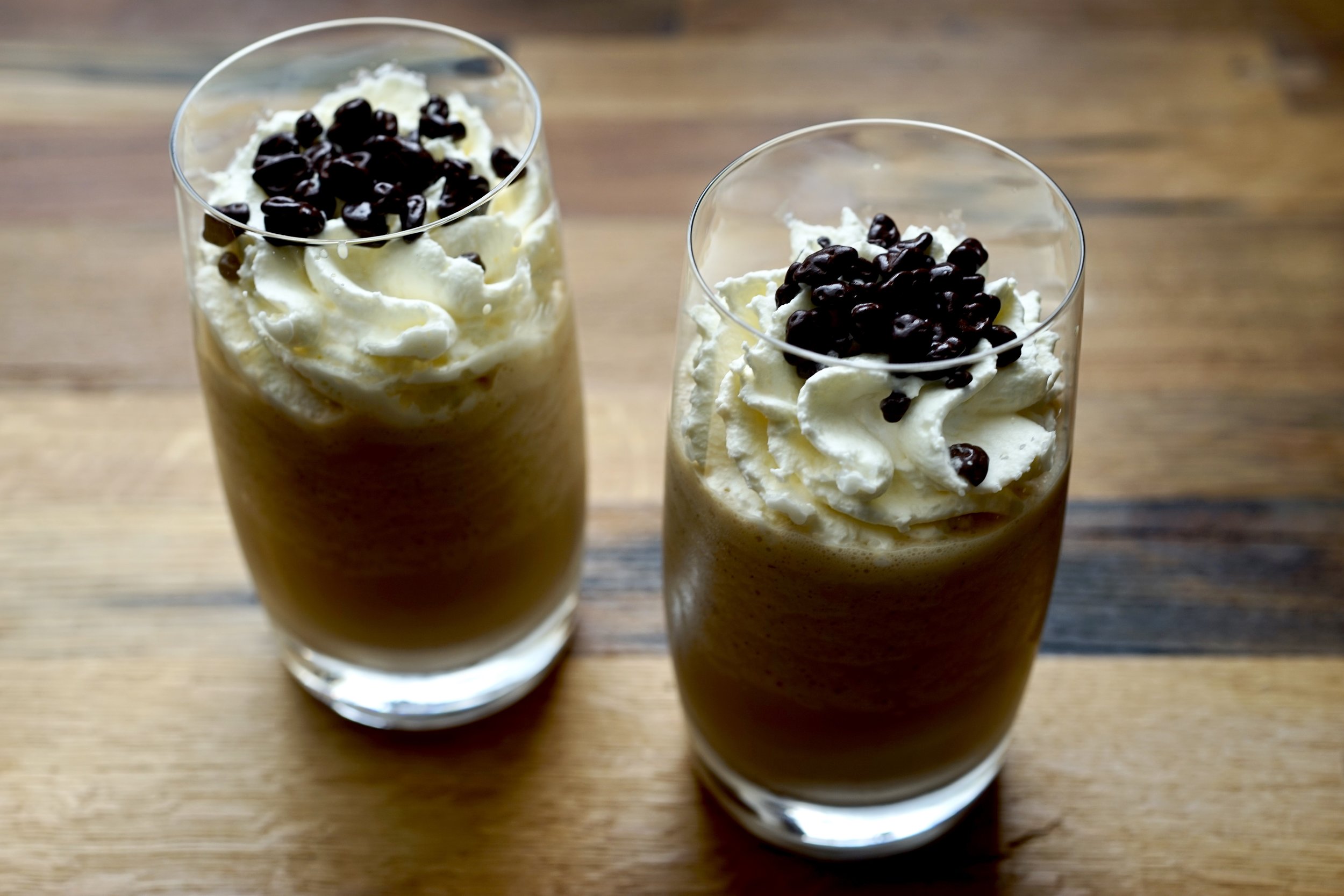
Nothing beats the sophisticated Eiskaffee as a treat on a hot summer’s day in Switzerland.
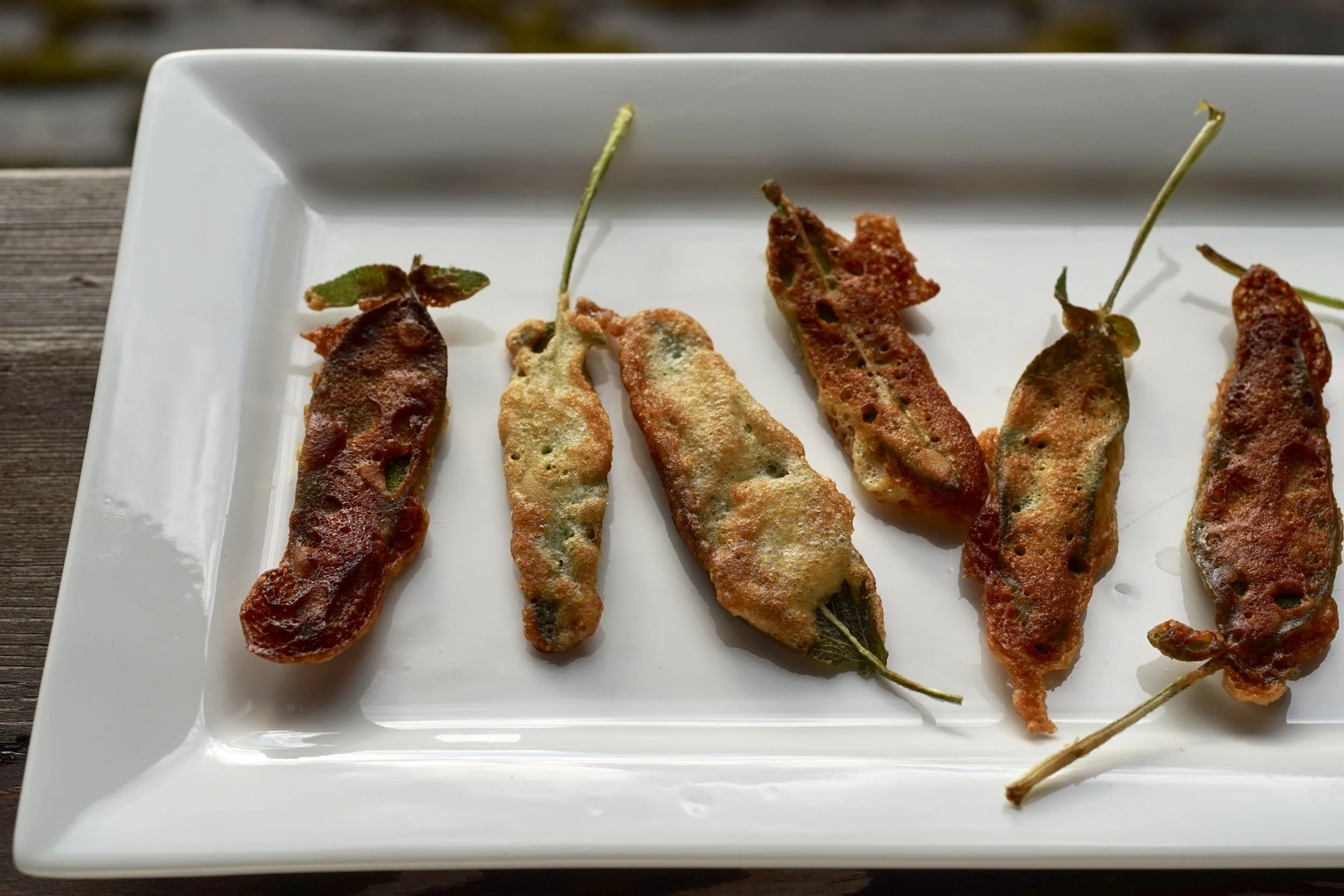
A classic dish that has been around for centuries, these fried sage leaves whose name translates to “sage mice”, are so called because they resemble the little critters, with the stems as tails.
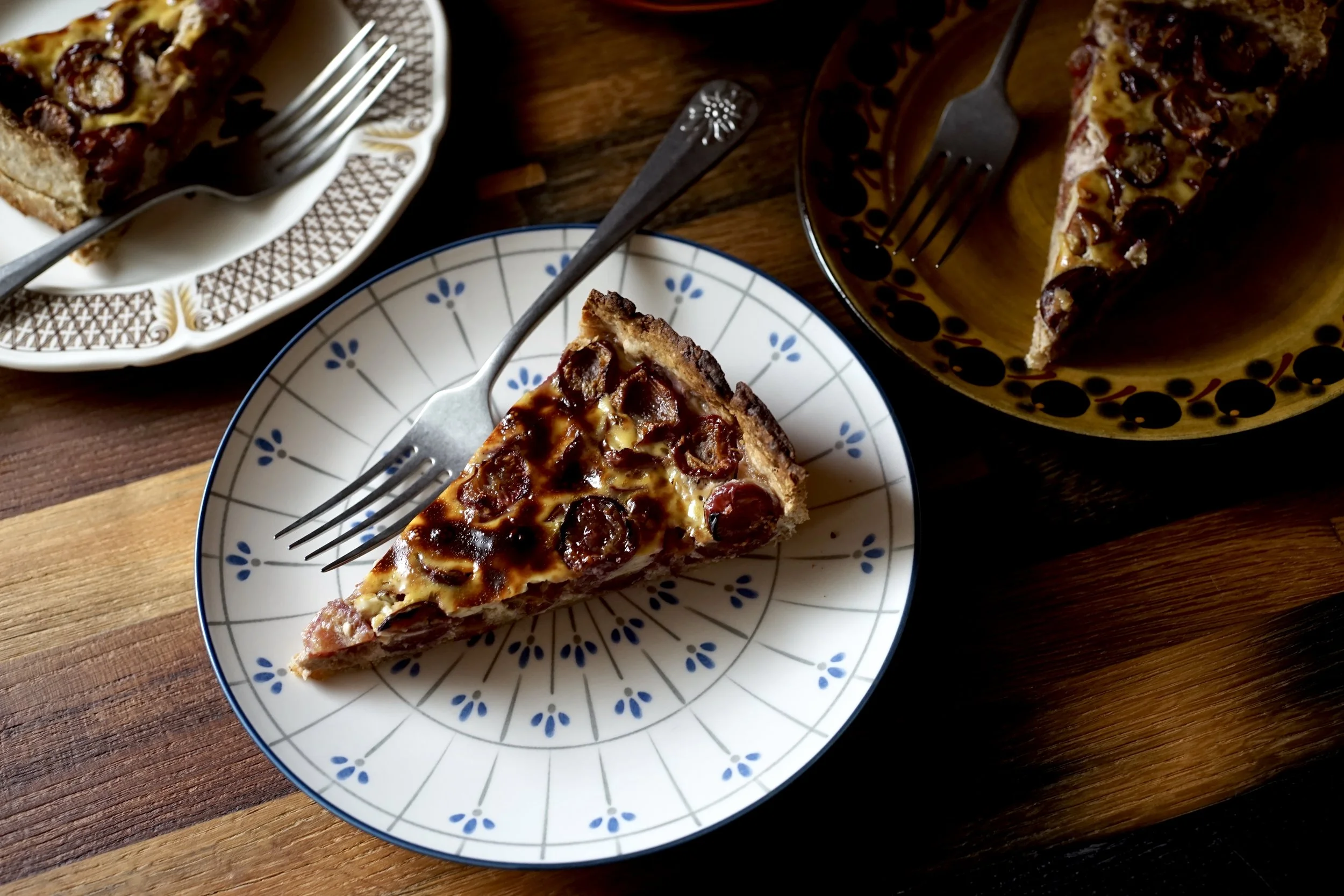
Whether you call them Chriesi or Chirsi (or cerise for that matter) Swiss cherry season is in full swing.
One of Switzerland’s favourite meals is one of its simplest, Gschwellti mit Chäs, boiled potatoes with cheese.
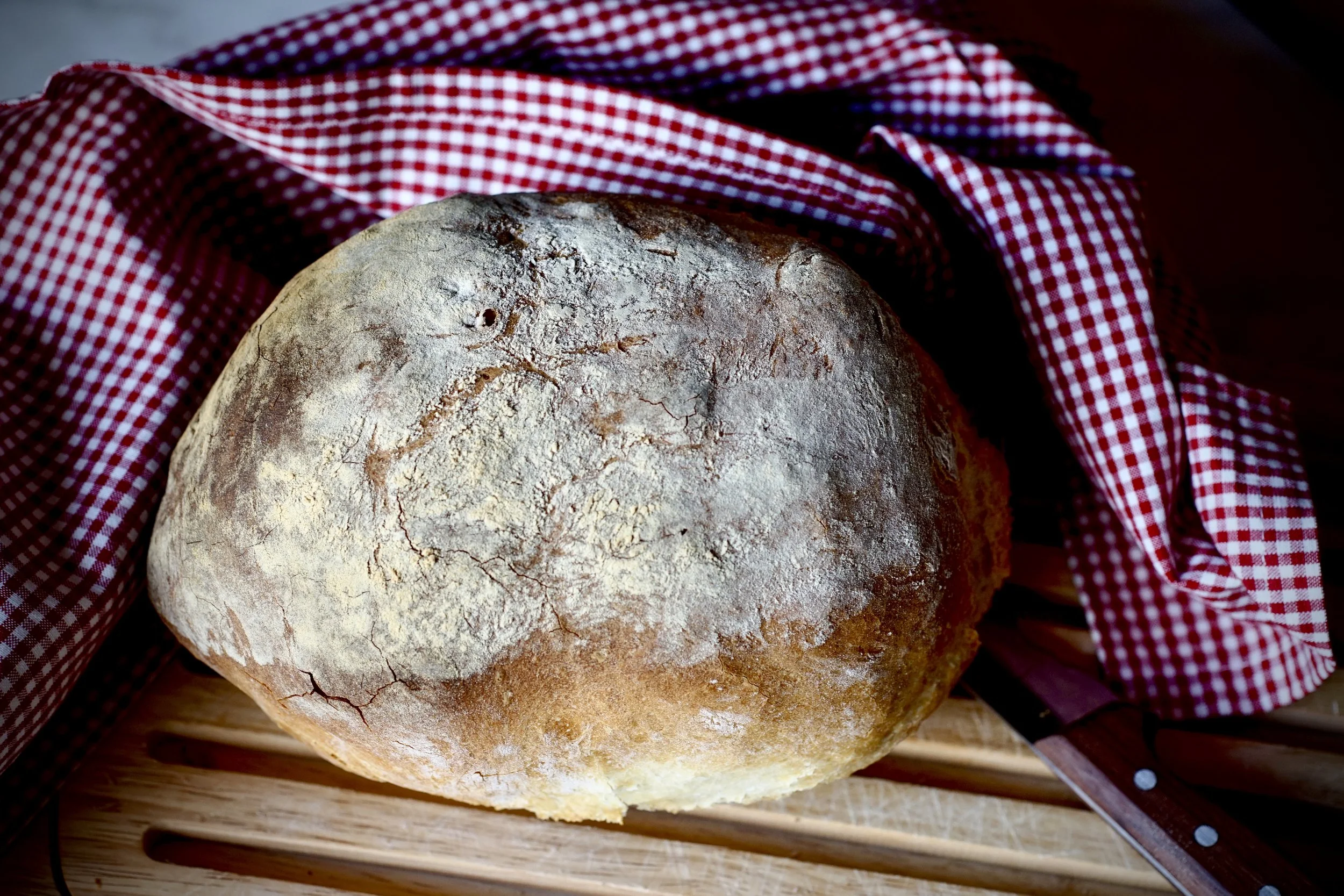
Slicing a loaf of Solothurnerbrot means a satisfying crunch and a generous spray of crumbs.
Quick and easy, this cheesy meal will see you through the last few snowy days of the year.
This beefy dish comes from Einsiedeln, home to a famous abbey—and Switzerland’s most famous alchemist.
I have long avoided making deep-fried Zigerkrapfen, but this year I found myself with a slab of Ziger in one hand and my little Bernese cookbook of 1749 in the other.
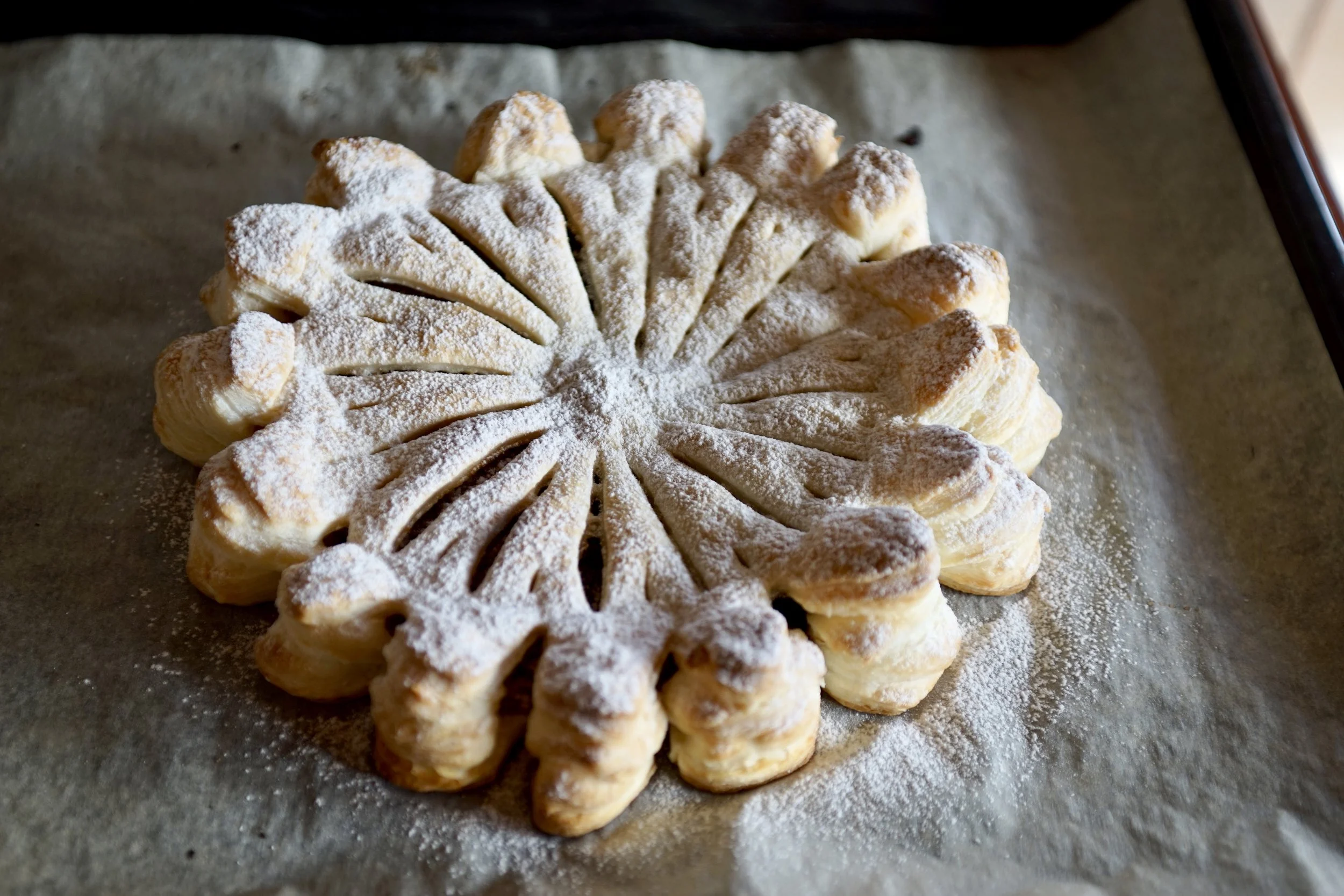
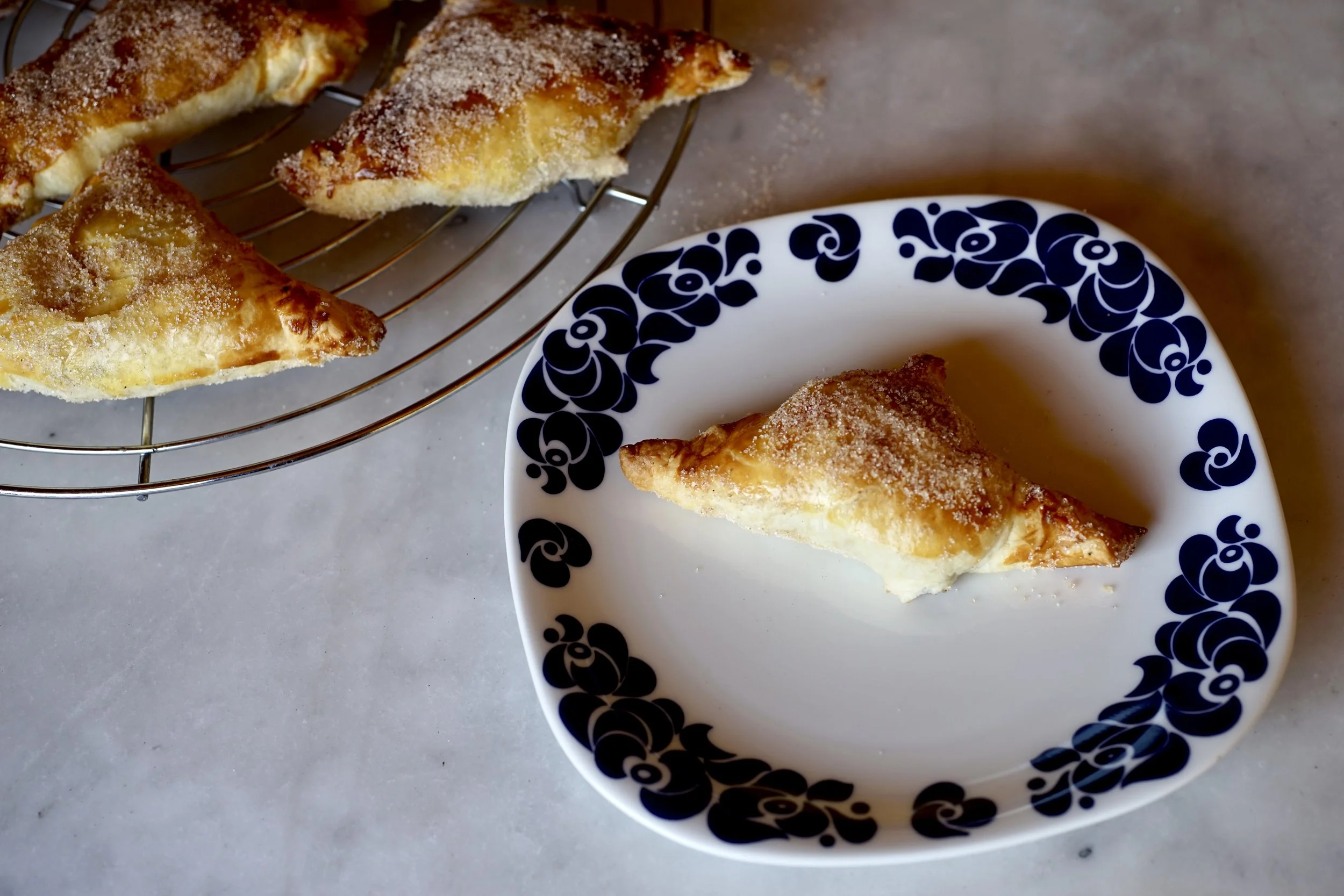
A puff pastry alternative was born.
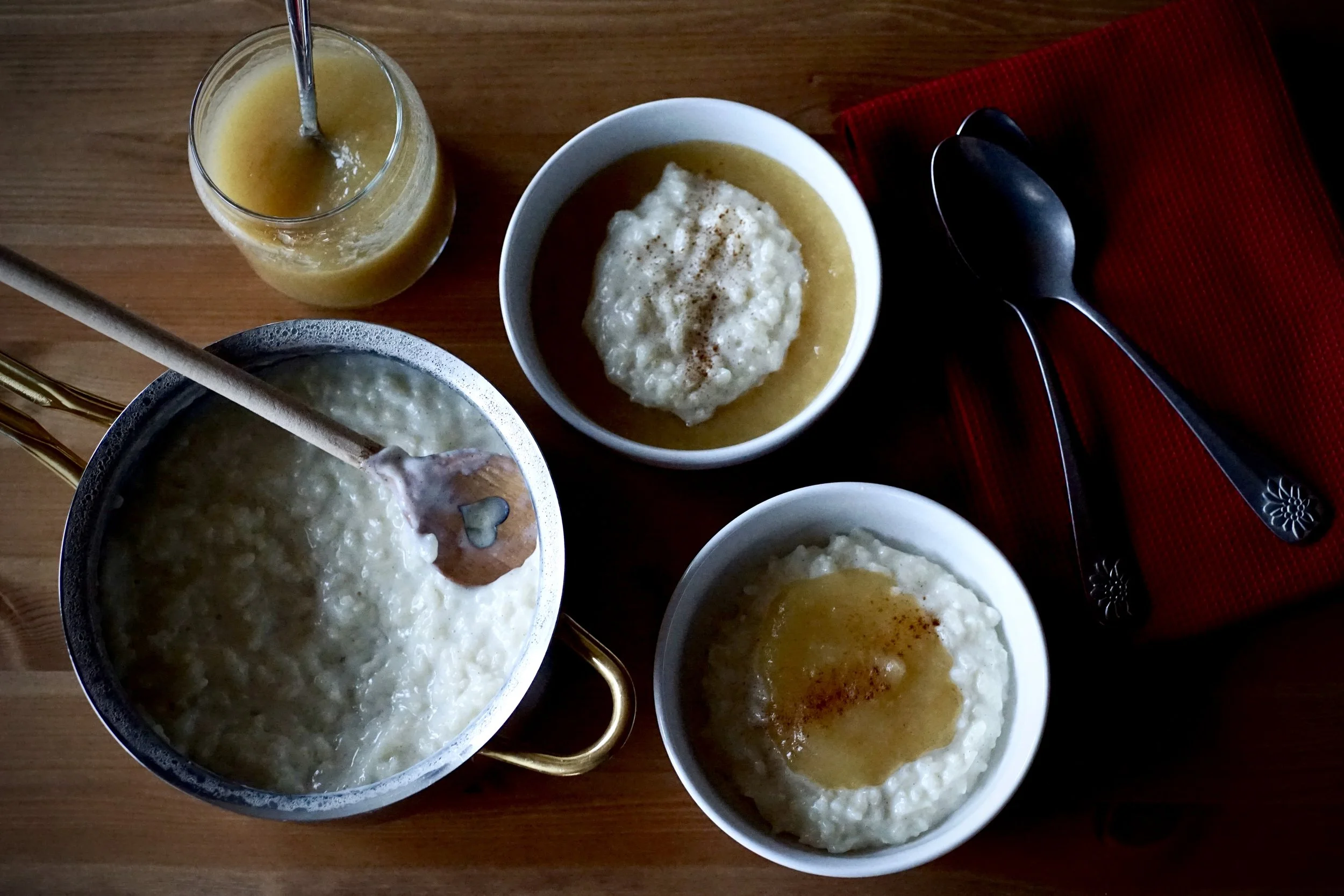
Rice pudding on a bed of applesauce and sprinkled with cinnamon sugar. Classic comfort food.
It’s at Chilbis, weekly markets, yearly markets, Christmas markets, and any other sorts of general festivities, where you’re bound to find Magenbrot, pieces of Lebkuchen with a sugary coating, often in bright pink bags.
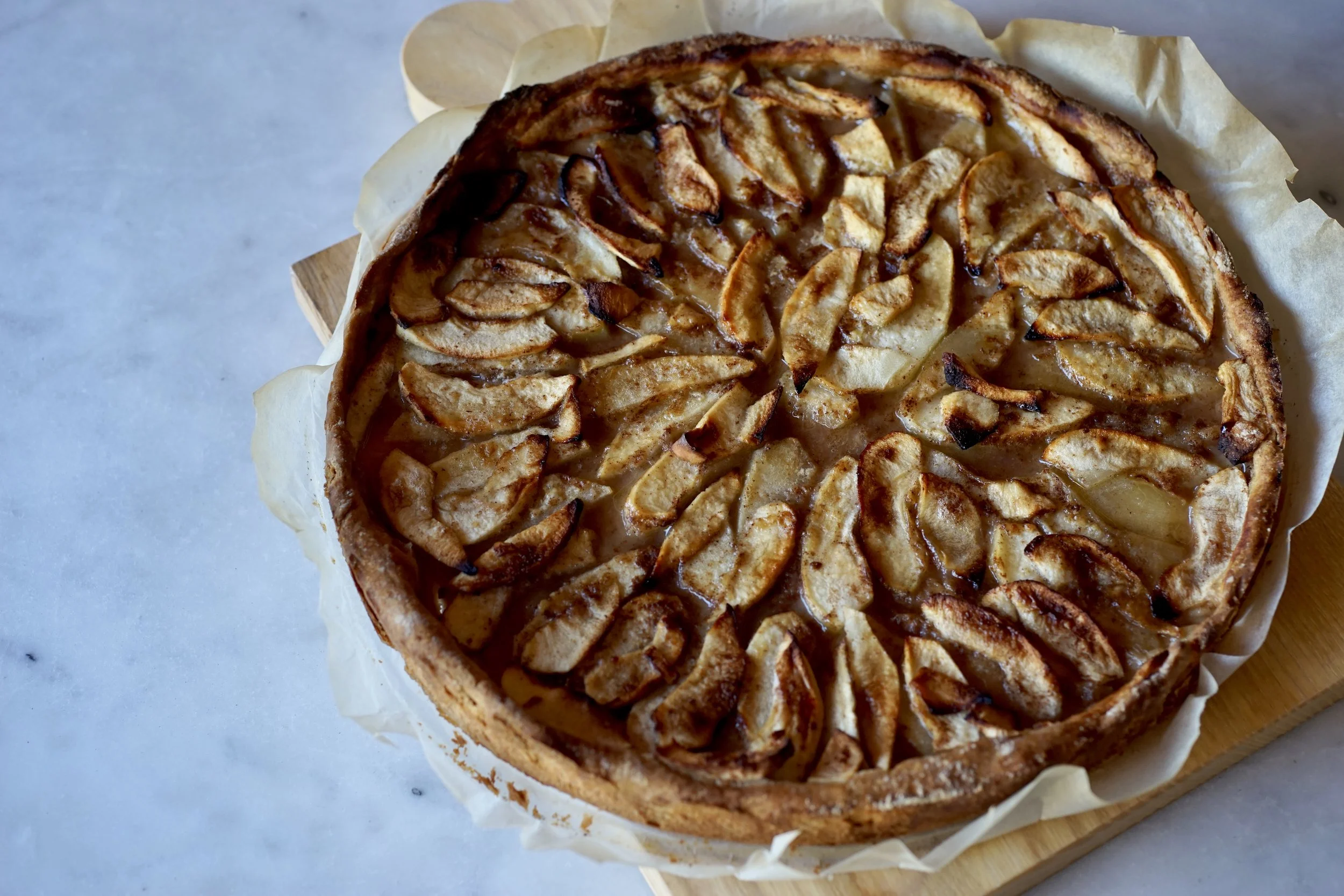
Switzerland’s beloved open-faced apple pie, with custard and non-custard filling.
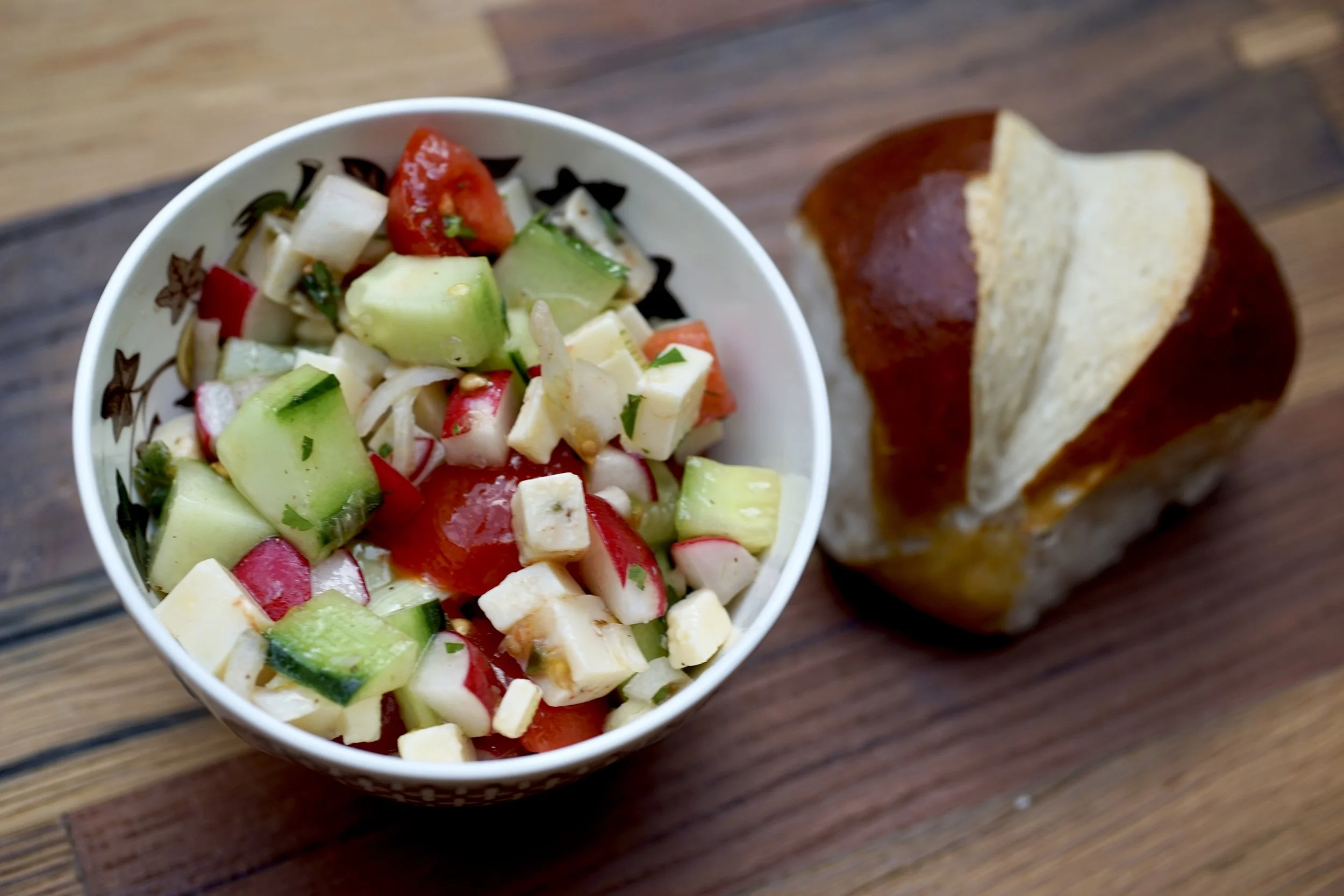
On hot days in Switzerland, like in many other countries, people eat salad.
But because it's Switzerland, sometimes a lot of cheese is involved.
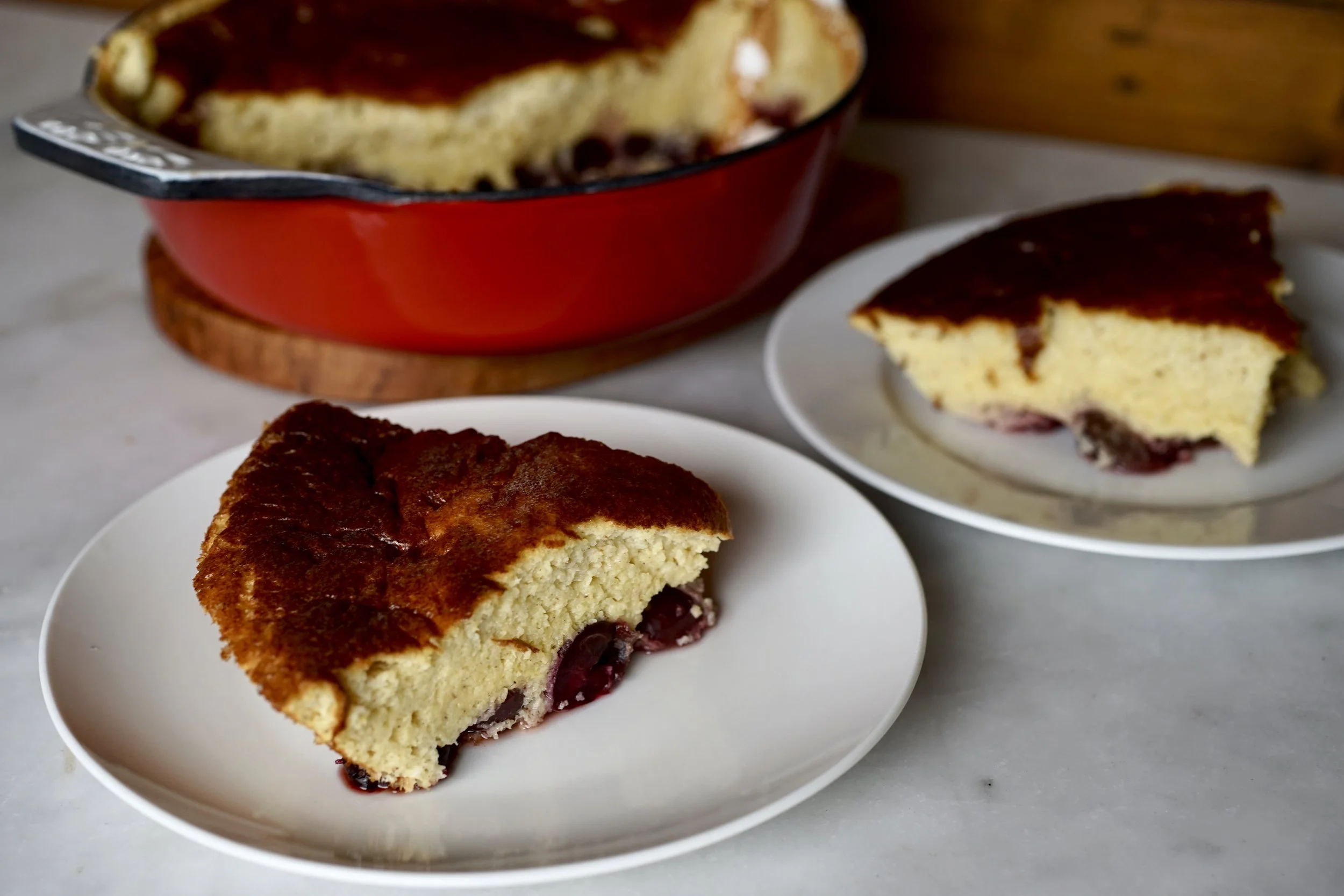
This cherry dish is the oldest surviving cherry recipe from the canton of Zug, and was first published in the late 18th century.
The name is misleading—vin cuit (cooked wine) is actually a thick syrup made from boiling down pears, sometimes apples, and rarely grapes, until they become dark, sweet, sticky, and molasses-y. Traditionally, this was done in big copper pots over open fires.
The classy Swiss have an more elegant Götterspeise than their German neighbours (whose 'food of the gods' is basically Jello). Here, it's a layered dish of compote, custard, and biscuit (often Zwieback), similar to the British Trifle. Yum.
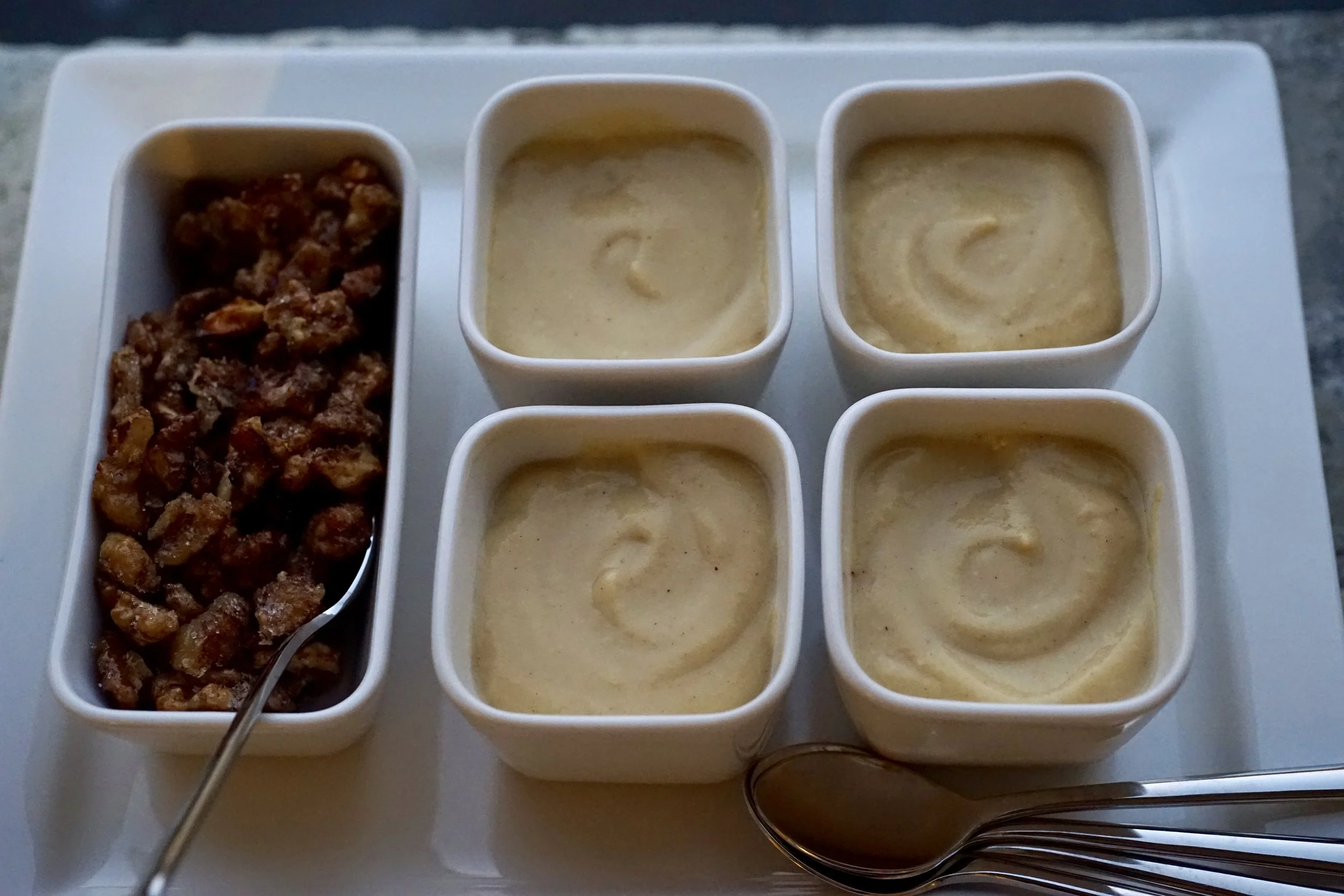
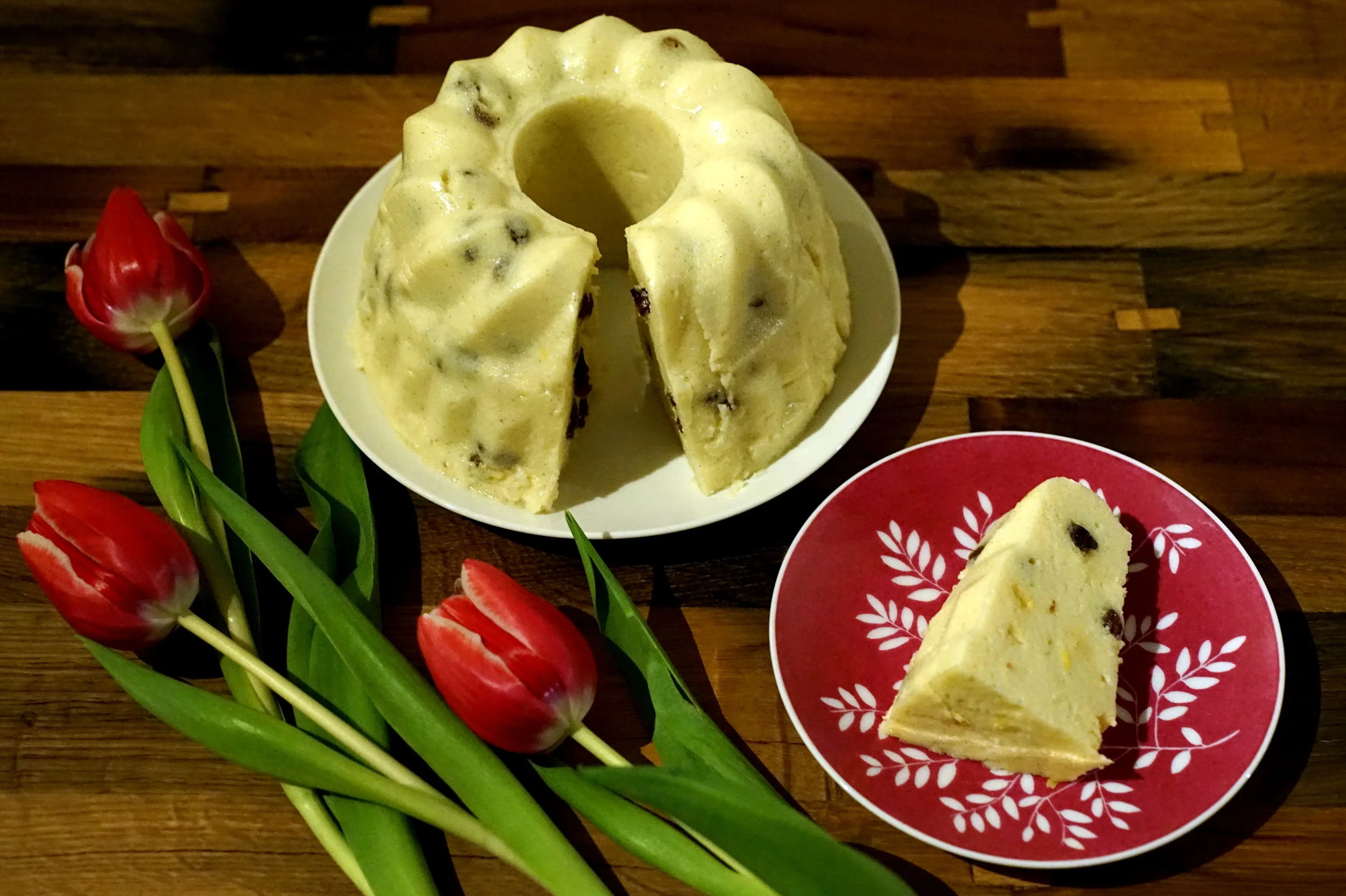
The Griessköpfli is akin to rice pudding (creamy, raisiny), but firmer, and therefore sliceable. It is dazzlingly toppable—pour over anything from boozy sauces to fruit compotes or caramels, or eat it plain and revel in its comforting simplicity.
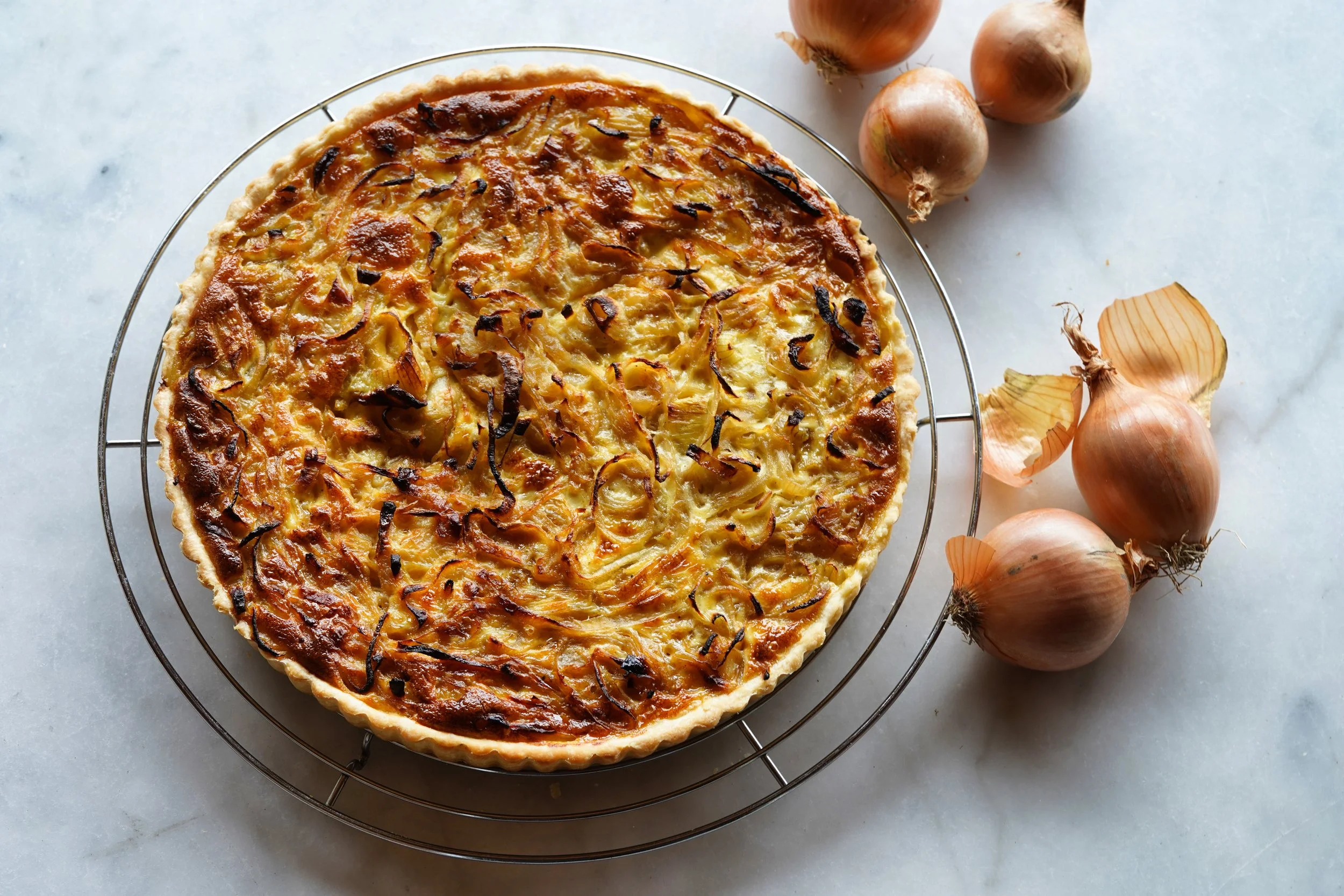
This onion tart is one of the traditional foods served at Bern's famous onion market.
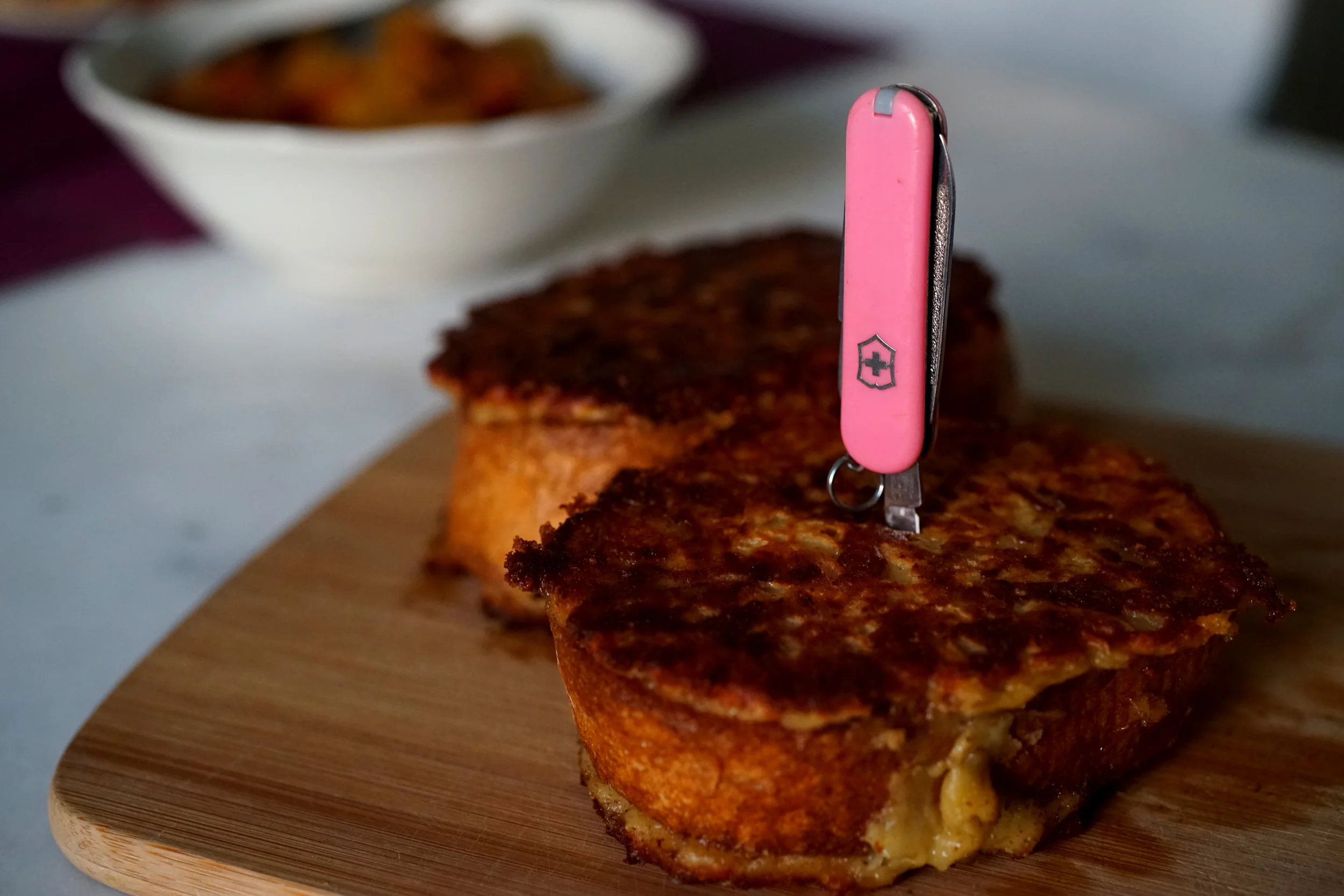
As far as I can tell, the Swiss Army is fuelled by Kambly biscuits and Käseschnitten.
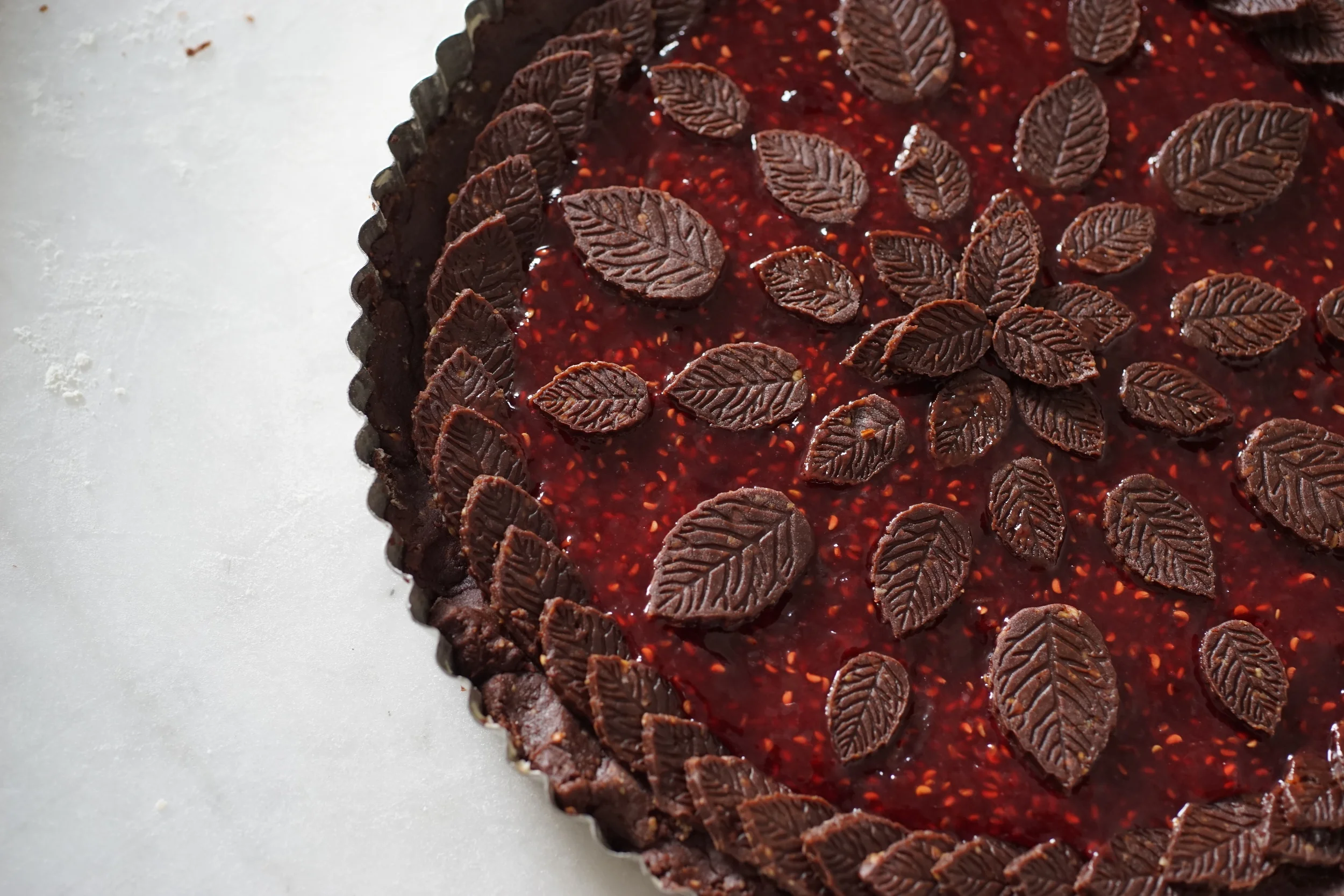
It's hard to imagine anything better than the Linzer Torte, so imagine my surprise at discovering the St Galler Klostertorte, its cousin from over the alps, made Swiss by adding, of course, chocolate.
The two best ways to sell dessert, a chef once told me, are to make it either nostalgic or do-it-yourself. Either something that tastes like childhood or something you have to actively do: pour something, roast a marshmallow, etc. The Coupe Dänemark hits all the buttons, and perhaps the combination of flavours, chocolate and vanilla, along with the simple act of pouring a sauce, make it the perpetual favourite it is today.