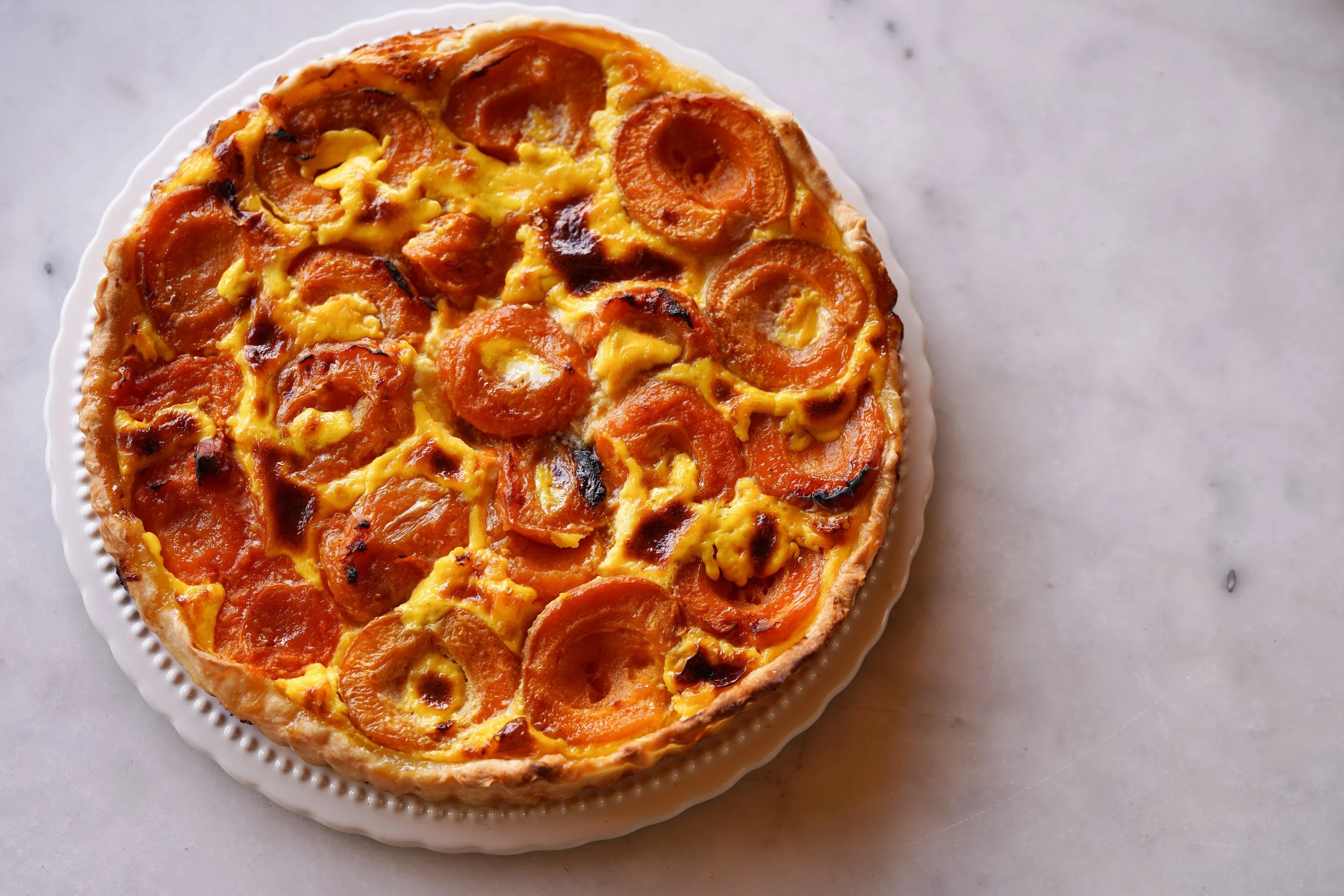

Trübeliwähe

In my Aunt’s alpine garden near Flumserberg, her red currants, or Trübeli, are wrapped in green mesh to protect them from hungry birds. We have one big bush, but the nearby birds seem less interested in these ruby jewels and more interested in waiting a few weeks to absolutely decimate our blueberry bushes.
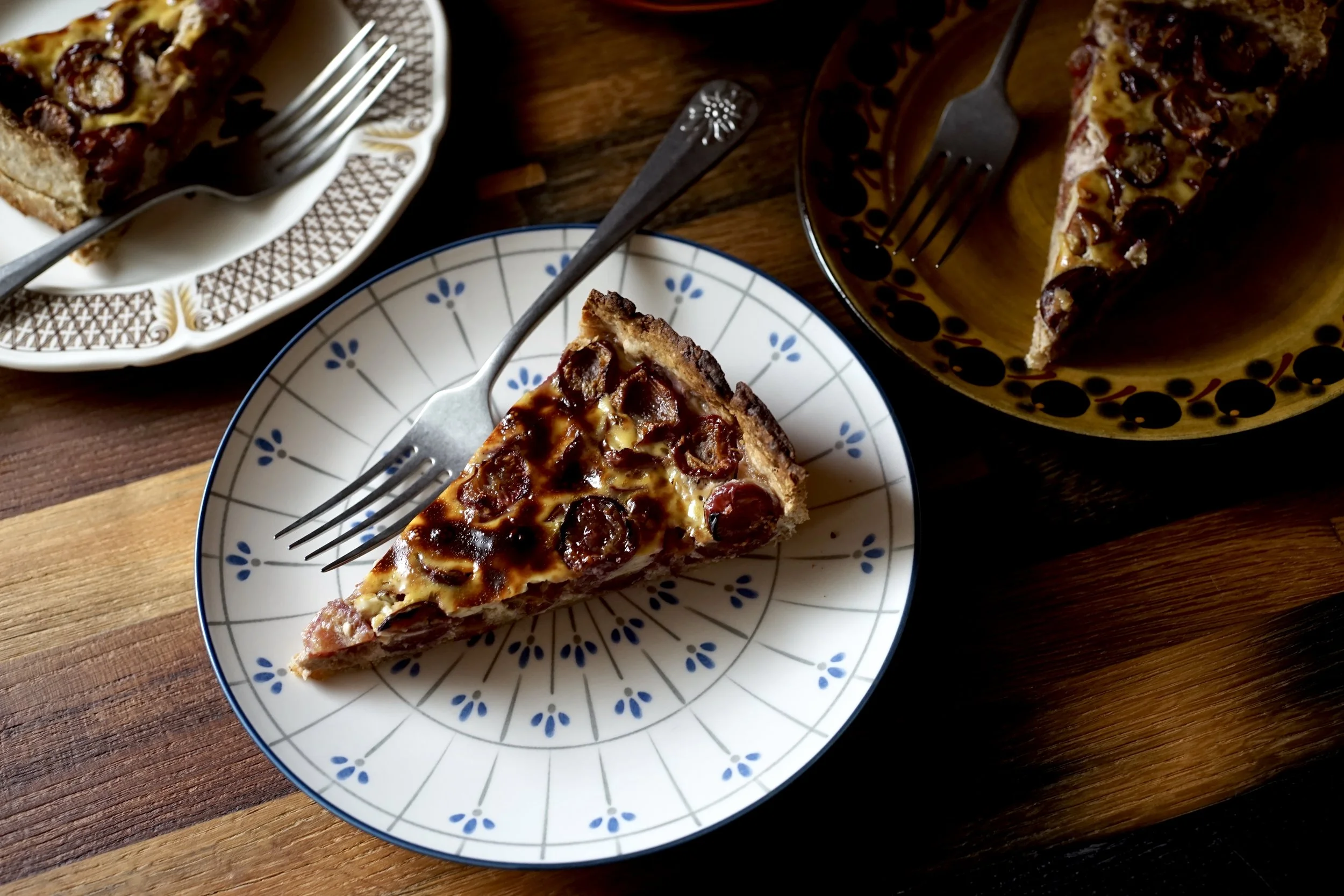
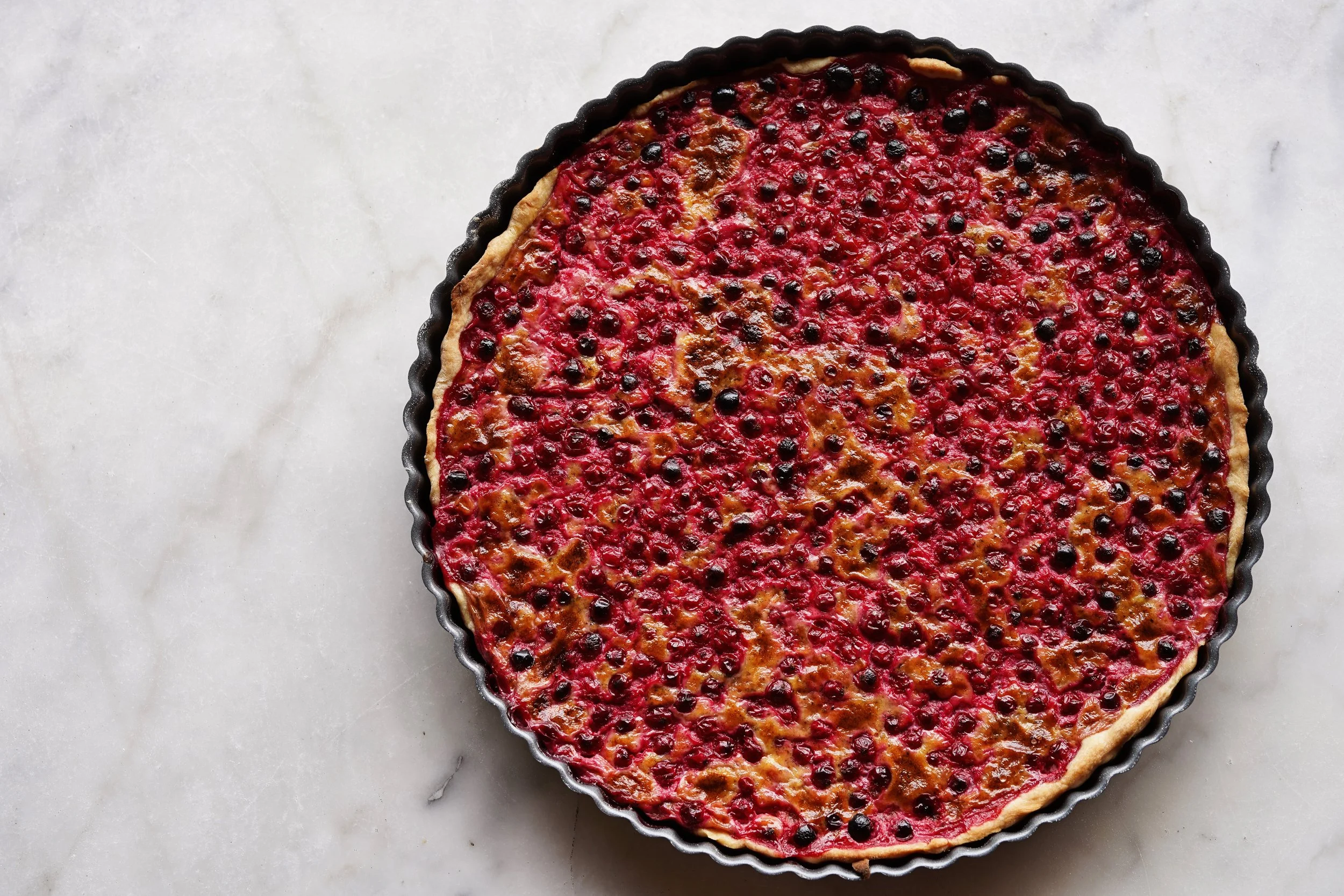
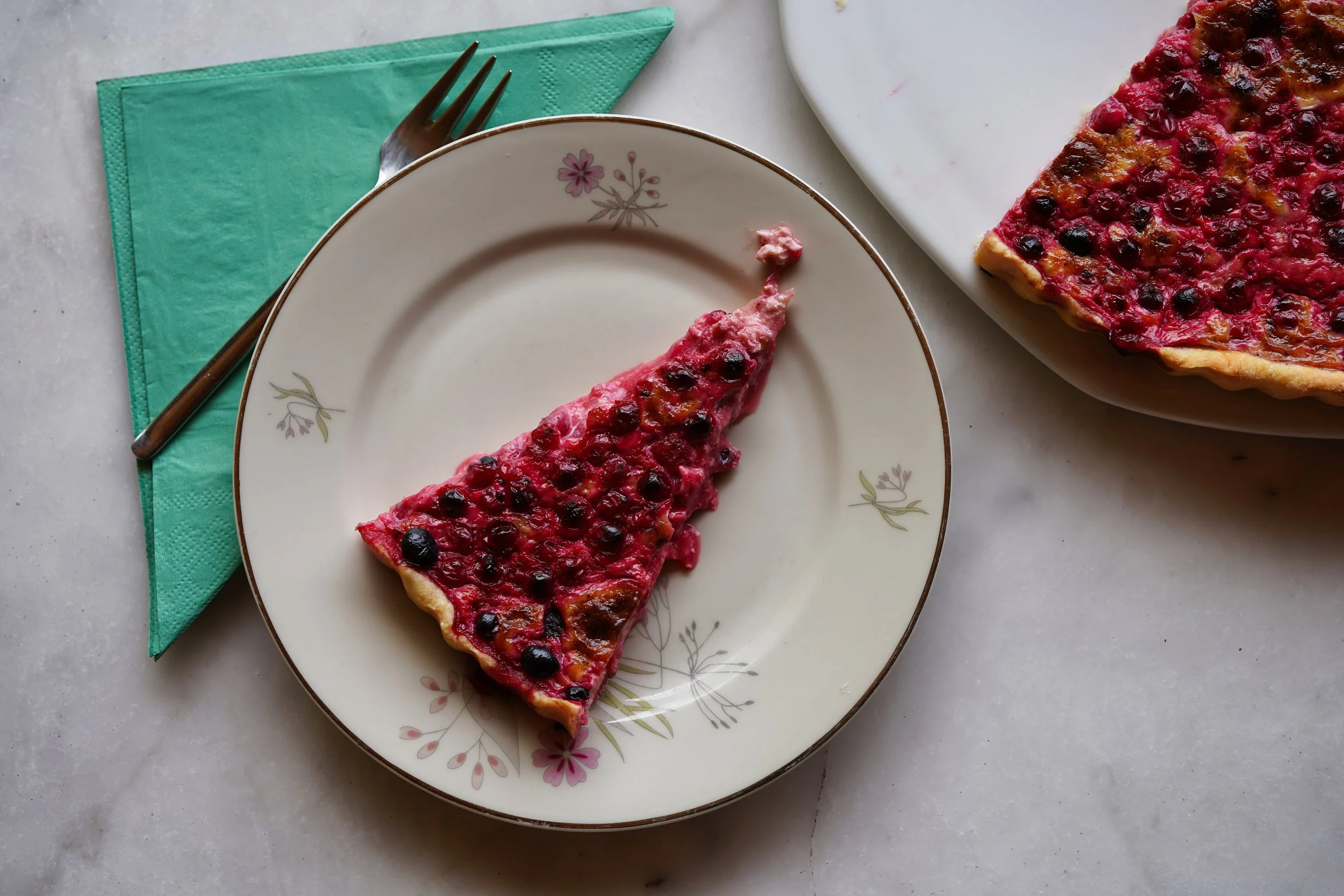
My aunt makes jelly and syrup from the berries (perfect for filling her Christmas Spitzbuben), but another favourite is this gorgeous Wähe, where you can use fresh or frozen berries.
The currants are juicy, so bake using bottom heat to prevent a soggy bottom. You can use ground almonds or hazelnuts on the base of the tart—though another option would be ground walnuts, which pair wonderfully with currants

For the pastry:
200 g flour
2 tbsp sugar
1 tsp salt
80 g butter
125 ml cold water
For the filling:
2 eggs
125 ml milk
125 ml cream
2 tbsp sugar
1 tsp vanilla paste or extract
3 tbsp ground nuts
500 g red currants
In a large bowl, whisk together the flour, sugar, and salt.
Add the cold butter in pieces and rub into the flour mixture with your fingers until you have small flakes.
Make a well in the middle of the flour and add the water. Mix this gently until a dough forms. Try not to overwork the dough or it will become tough.
Press the dough into a disc, wrap, and let cool in the fridge for about an hour.
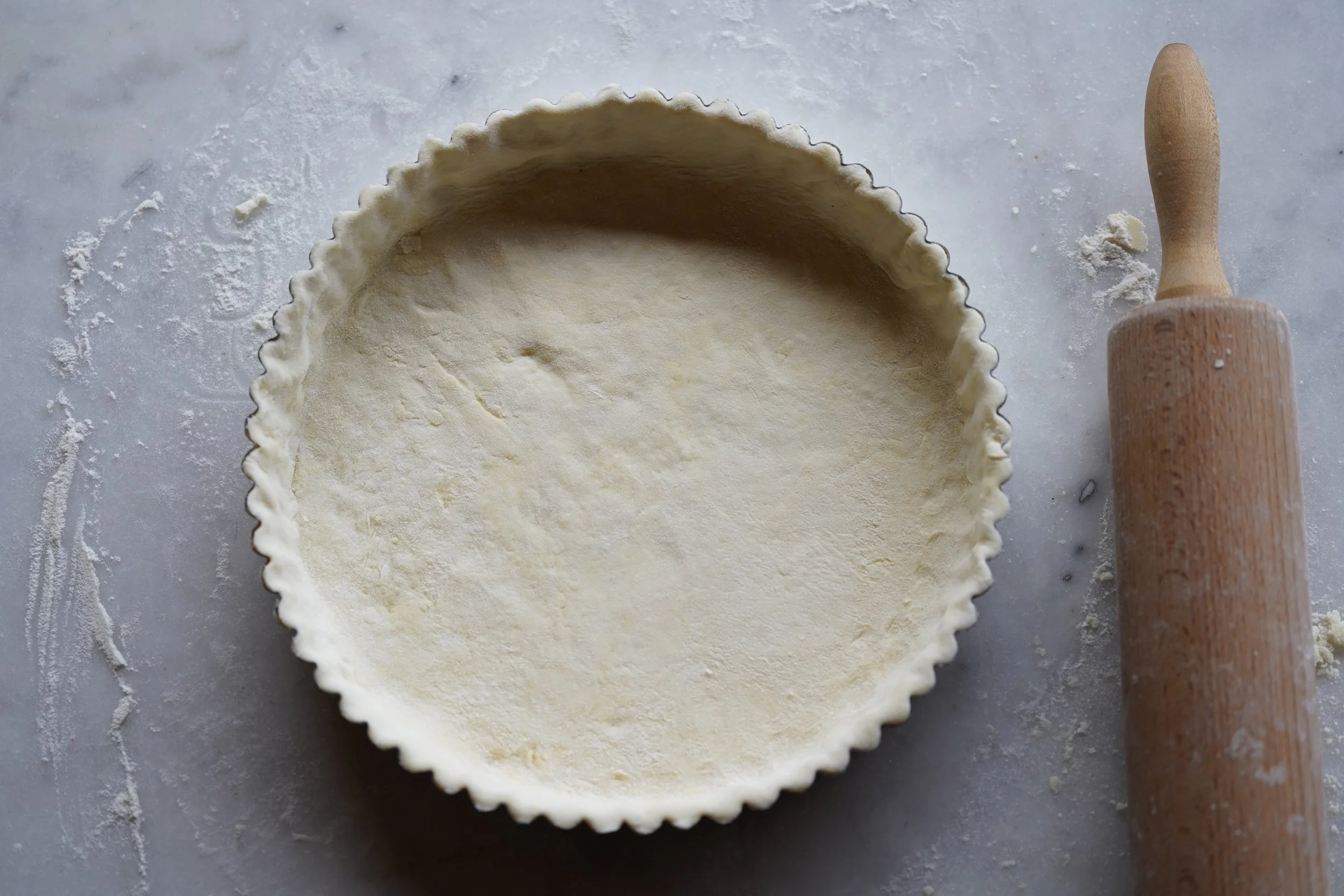
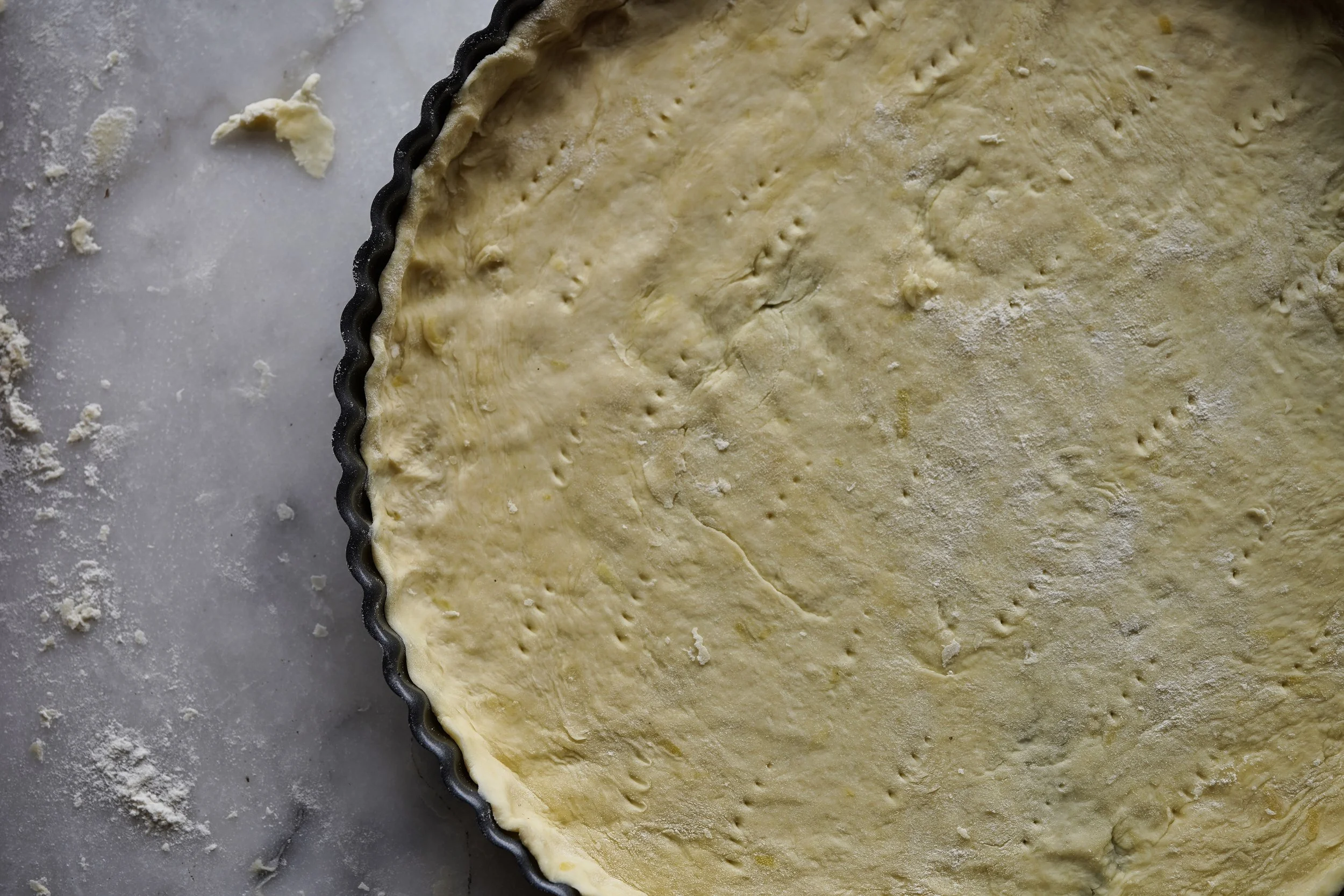
Roll out your dough and line a 28 cm (11-inch) round tart pan, then keep the tart shell cool (preferably in the freezer) until you have the filling ready.
Preheat oven to 200 C / 400 F / gas mark 6, with bottom heat.
Whisk together the eggs, milk, cream, sugar, and vanilla.
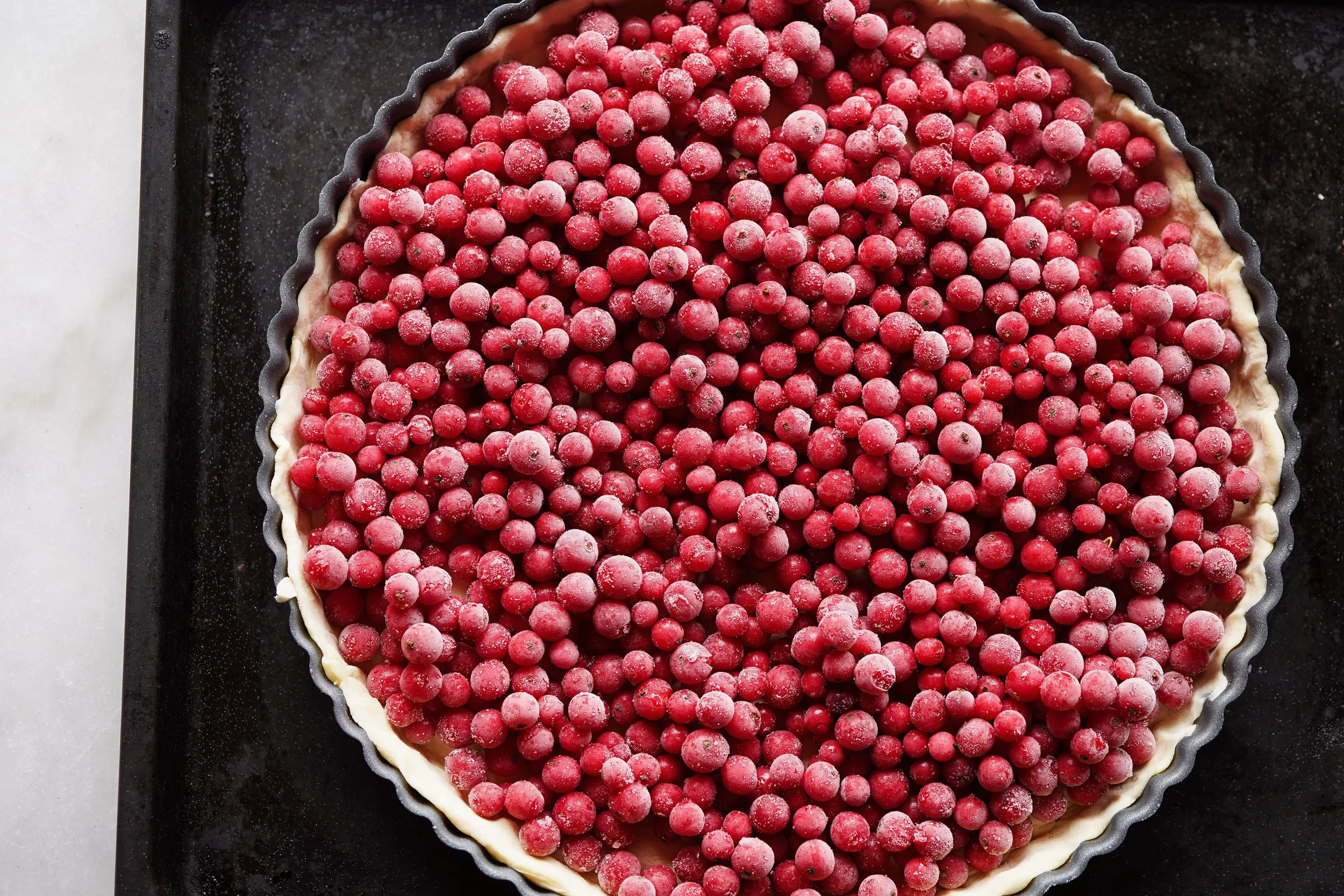
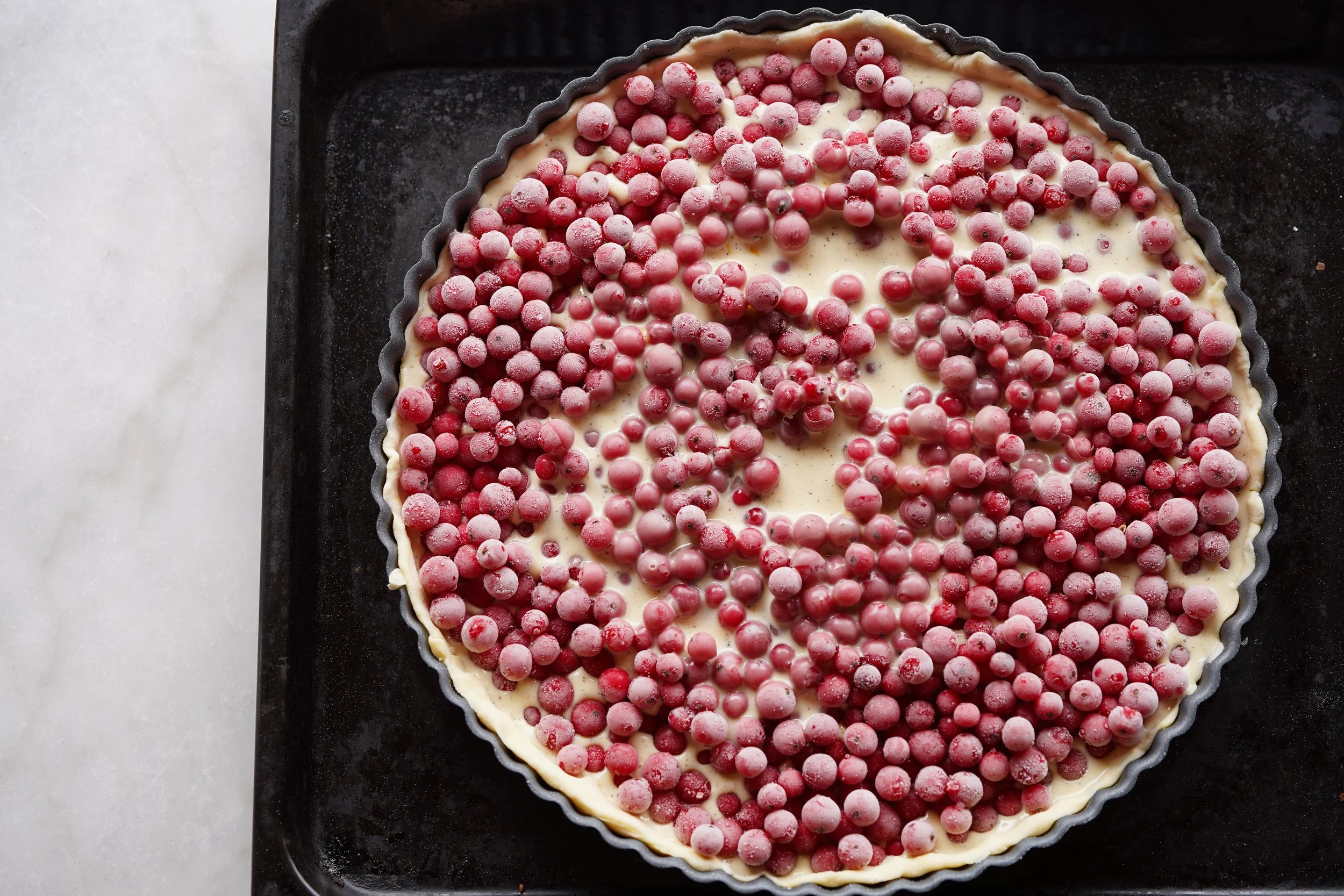
Place your tart pan on a parchment-lined baking sheet then sprinkle with nuts and then currants. Pour in the liquid.
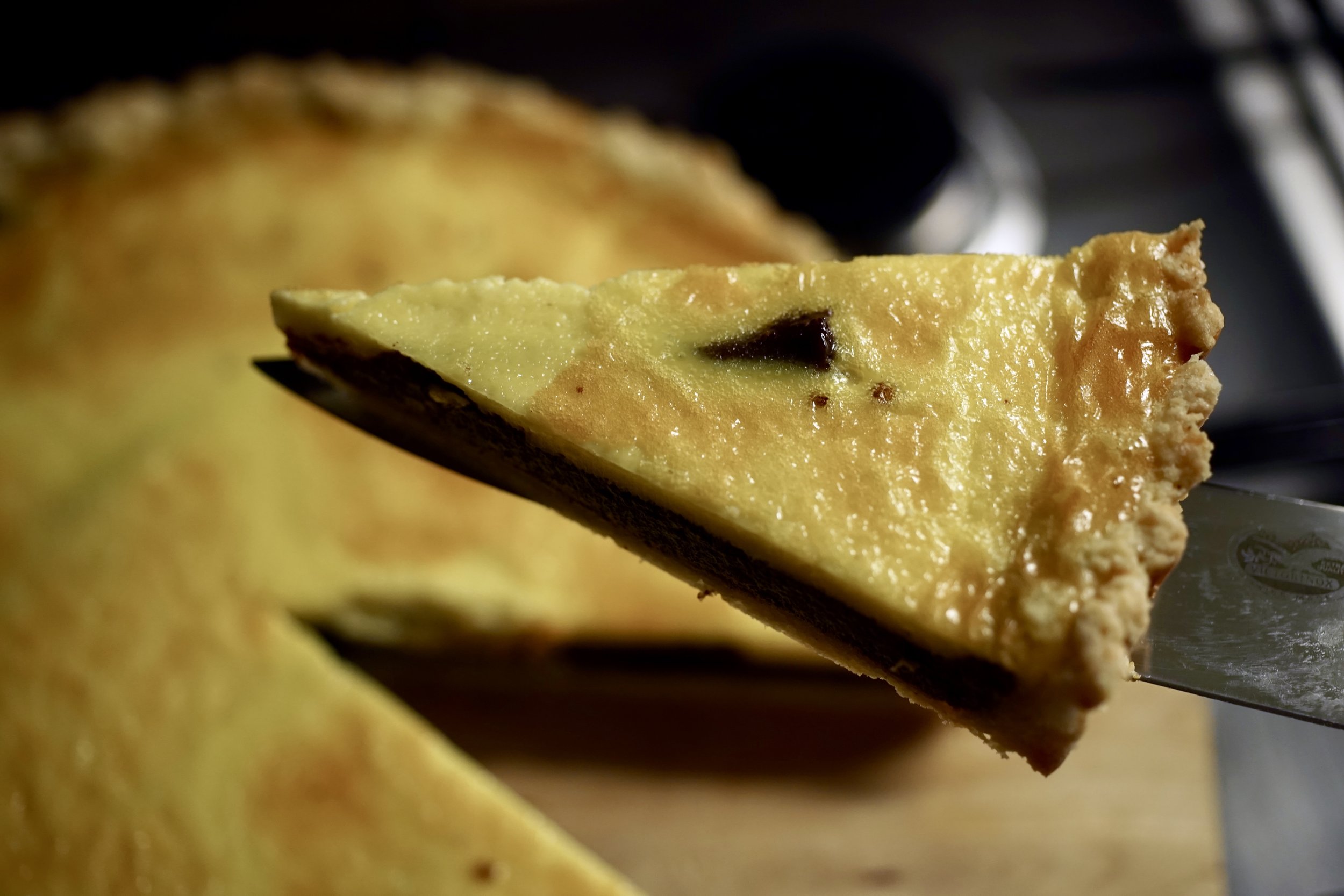
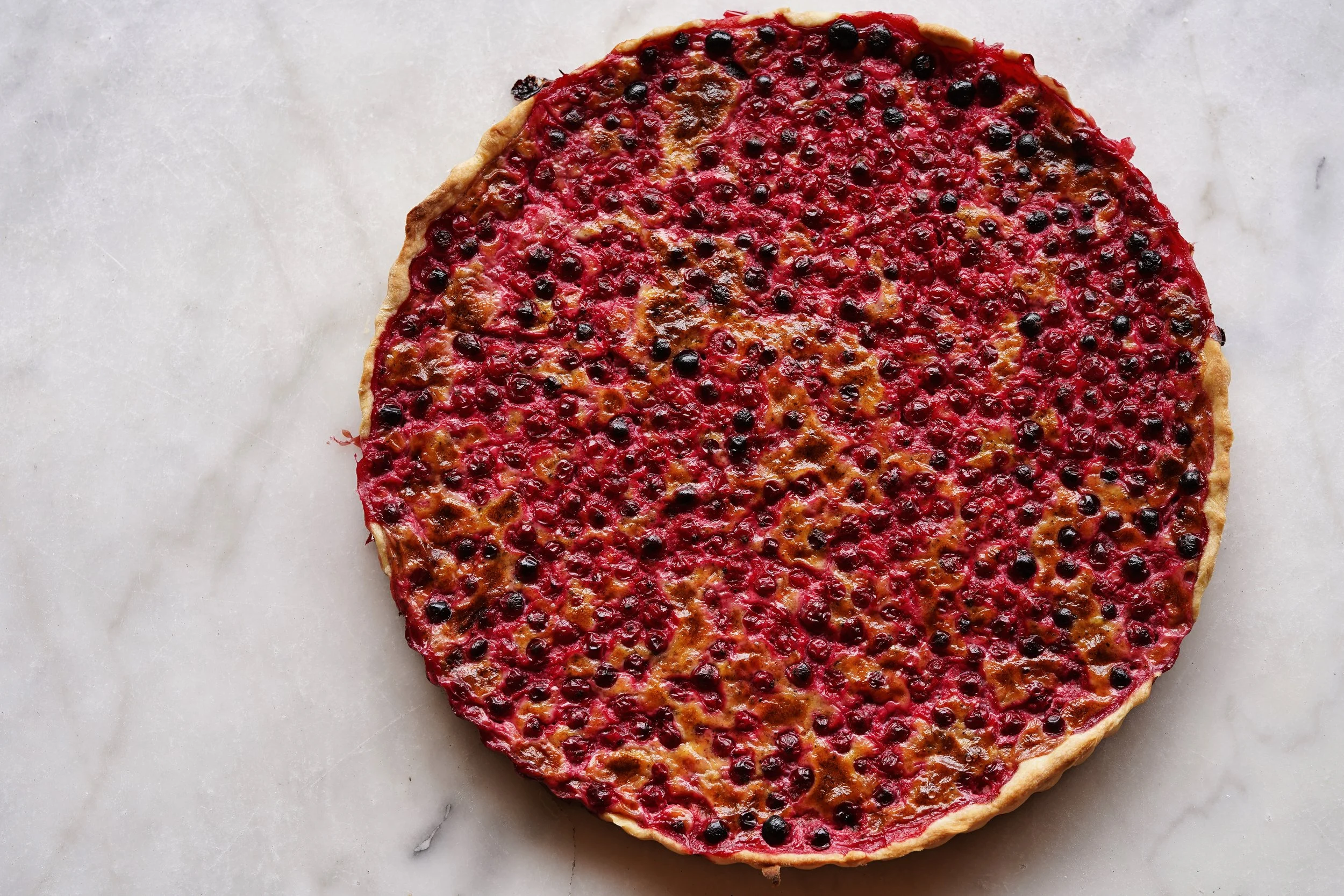
Bake in the bottom half of the oven for about 40-45 minutes, or until the liquid has set.
If your berries are particularly sour, you can garnish with an additional sprinkling of sugar, either powdered or caster.
To save time, you can use use store-bought dough like Kuchenteig / pâte brisée / pasta per crostate to line your pan.
I like to use a mix of half milk and half cream for my Wähe, but feel free to use all milk or all cream.
Always place the tart pan on your baking sheet before pouring the liquid over.
For best results, and to avoid a soggy bottom, bake your tart in the bottom part of the oven, using bottom heat.
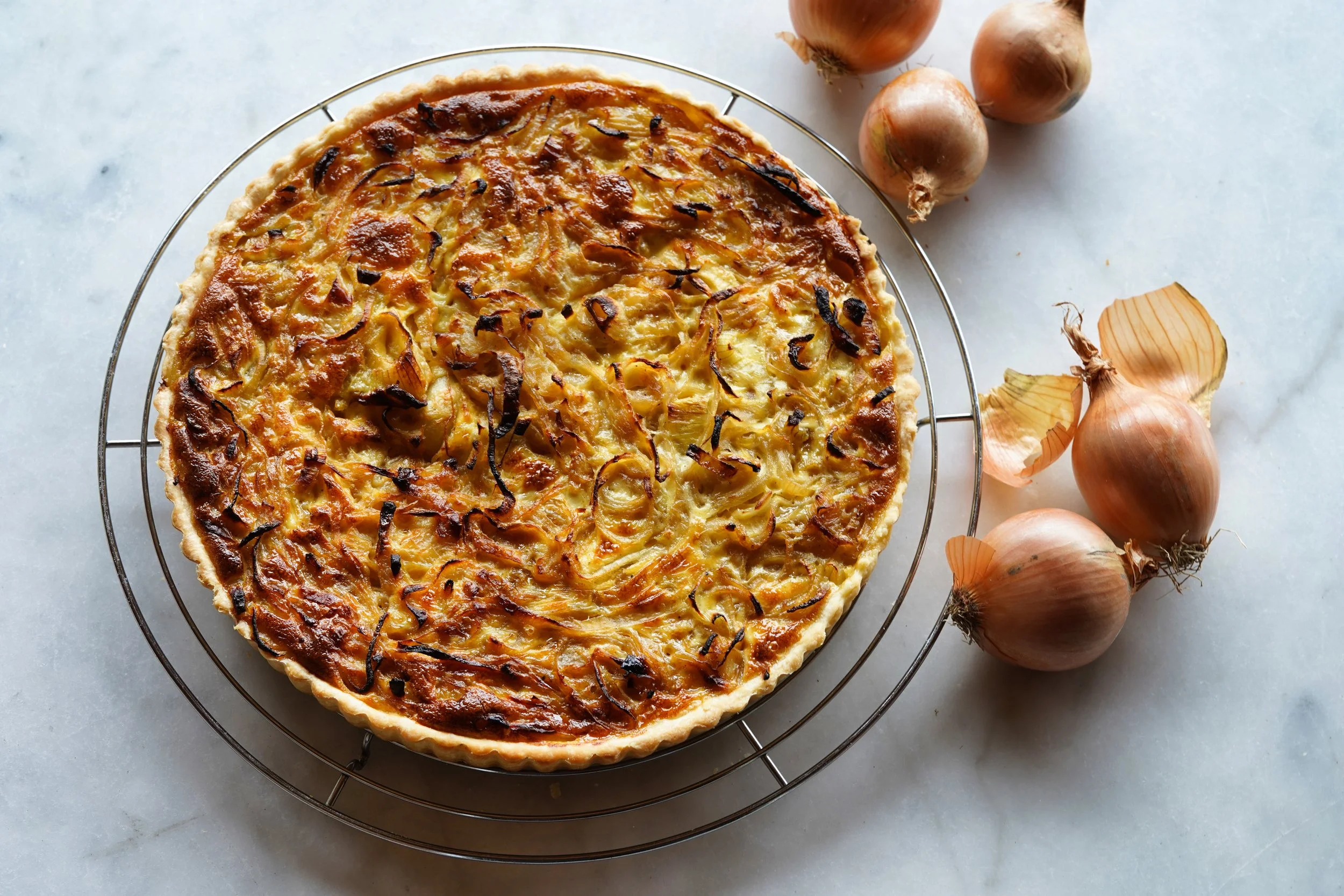
More Wähe?